Blog

Types of Upholstery: All Classifications Explained

Upholstery is not a single thing — it is a craft that spans a wide range of furniture types, materials, techniques and industries. Understanding how upholstery is classified helps when choosing a service, specifying a fabric, or simply trying to understand what a quote or product description is referring to. This guide covers every major classification system used in the trade.

Classification 1: By Furniture Type

The most common way to classify upholstery is by the type of furniture it covers.

Residential Seating Upholstery

The largest category. Covers all padded and fabric-covered seating used in domestic settings — sofas, armchairs, dining chairs, accent chairs, recliners and ottomans. This is what most people picture when they hear the word upholstery. It is divided further into:

  • Sofa and couch upholstery — the primary residential category
  • Chair upholstery — covers dining, office, accent and occasional chairs
  • Recliner upholstery — a technical sub-type requiring understanding of the mechanism

Bed and Bedroom Upholstery

Covers headboards, divan bed bases, and any fabric-covered bed frames. The padded element of a bed — the headboard panel and any fabric-covered side panels — is upholstery even though the object is a bed rather than a seat. Bed upholstery is a distinct service from sofa upholstery in terms of technique and material requirements.

Commercial and Contract Upholstery

Covers all upholstered furniture used in commercial settings — restaurants, hotels, offices, healthcare facilities and retail environments. Contract upholstery must meet stricter durability and fire safety standards than residential upholstery. The fabrics used are graded differently, the foam specifications are often higher, and the volume of work is typically larger.

Outdoor and Garden Upholstery

Covers cushions, seat pads and fixed covers for outdoor furniture. Outdoor upholstery uses UV-resistant, water-repellent and mould-resistant fabrics specifically engineered for exterior use — standard interior fabrics will not survive the UAE’s outdoor conditions.

Automotive Upholstery

Covers all fabric, leather and vinyl work inside vehicles — car seats, door panels, headliners, dashboards and centre consoles. Automotive upholstery is a specialist branch requiring knowledge of vehicle-specific patterns and materials.

Marine and Aviation Upholstery

Covers boat, yacht and aircraft interiors. Marine upholstery uses fabrics specifically engineered to resist saltwater, UV, mould and constant moisture exposure. Aviation upholstery is the most regulated, with strict material certifications required.

Classification 2: By Material

Upholstery is also classified by the primary covering material used.

  • Fabric upholstery — woven textiles including polyester, cotton, linen, velvet, chenille, microfibre and performance fabrics
  • Leather upholstery — genuine leather in full-grain, top-grain and corrected-grain grades. Our leather sofa upholstery service covers all grades.
  • Faux leather / PU leather upholstery — synthetic leather-look materials; more affordable but less durable than genuine leather
  • Vinyl upholstery — PVC-based covering commonly used in marine, automotive and commercial applications; waterproof and easy to clean
  • Alcantara / microsuede upholstery — premium synthetic suede-like materials used in high-end automotive and residential applications

Classification 3: By Technique

Within the craft itself, different upholstery techniques produce different results and require different skills.

Traditional / Hand Upholstery

The historical method, still practised by specialist craftspeople for antique and high-end furniture. Traditional upholstery uses natural materials — jute webbing, coil springs, horsehair padding and hessian — built up in layers over a wooden frame, all hand-tacked and hand-sewn. It produces a result that can last for decades but is significantly more labour-intensive and expensive than modern methods.

Modern / Foam Upholstery

The contemporary standard method. Polyurethane foam is cut to shape and bonded or attached to the frame, wrapped in Dacron batting, and covered with fabric or leather applied using pneumatic staple guns. Modern upholstery is faster, more consistent and more affordable than traditional methods. It is what the vast majority of domestic furniture uses.

Tufted Upholstery

A decorative technique in which buttons are pulled through layers of foam and fabric to create a dimpled pattern — diamond tufting being the most common. Tufting is used decoratively on sofas (notably Chesterfield styles), headboards and accent chairs.

Channel Upholstery

A technique in which vertical or horizontal channels are created in the fabric and foam, producing a ribbed, linear pattern. Common in mid-century modern furniture and contemporary dining chairs.

Classification 4: By Application Setting

  • Domestic / Residential upholstery — household furniture for private use
  • Contract / Commercial upholstery — furniture for public or business use, subject to higher standards
  • Hospitality upholstery — hotels, restaurants and entertainment venues; high-use, must combine durability with aesthetics. Our hotel furniture upholstery and restaurant chair upholstery services are specifically designed for this sector.
  • Healthcare upholstery — clinical waiting rooms, treatment chairs and medical equipment; requires antimicrobial and cleanable-surface fabrics
  • Transport upholstery — vehicles, aircraft, marine vessels

Classification 5: By Structural Role

A final classification distinguishes between:

  • Fixed upholstery — permanently attached to the furniture frame; cannot be removed without tools. The back and arms of most sofas are fixed upholstery.
  • Loose upholstery / loose covers — removable covers that slip over the frame. Slipcovers are the most common form of loose upholstery. They allow the furniture to be recovered or washed without permanent attachment.
  • Cushion upholstery — the fabric covering of removable seat and back cushions. These are often replaced separately from the fixed upholstery on the frame.

Why Classification Matters

When requesting a quote or service, being clear about which type of upholstery you need prevents misunderstandings. Saying “I need my dining chairs reupholstered” tells a workshop you want chair upholstery work in a residential setting. Saying “I need contract-grade upholstery for twenty restaurant chairs” tells them something entirely different in terms of material specification, volume and pricing. The classification determines the fabric grade, the technique, the pricing and the turnaround time.

Velvet Upholstery: Pros, Cons & How to Care for It (Complete Guide)

Velvet has been one of the most sought-after upholstery fabrics for centuries – associated with luxury, richness and that unmistakable depth of colour that no other fabric quite replicates. In recent years it has made a strong comeback in interior design, appearing on everything from statement sofas to dining chairs to headboards. But velvet is also one of the more demanding upholstery fabrics to live with. This guide covers everything you need to know before choosing velvet – and how to look after it properly if you already have it.

What Is Velvet Upholstery?

Velvet is a woven fabric with a dense, cut pile – thousands of tiny loops cut at an even height to create a soft, smooth surface that catches light and changes appearance depending on the direction you view it from. Originally made from silk, modern upholstery velvet is most commonly made from polyester, cotton, or a blend of both. The specific type of velvet makes a significant difference to how it performs in everyday use.

The main types of upholstery velvet you will encounter:

  • Cotton velvet: Soft, breathable and with a more matte appearance. Natural but prone to crushing and marking.
  • Polyester velvet:More resilient than cotton, resists crushing better and is easier to clean. The most common choice for furniture.
  • Crushed velvet: The pile has been deliberately pressed in multiple directions, creating a textured, shimmery effect. More casual in feel.
  • Mohair velvet: Luxurious, extremely durable, with a distinctive sheen. Expensive but among the best upholstery velvets available.
  • Performance velvet: A newer category – velvet-look fabric engineered with moisture and stain resistance. Much more practical for everyday use than traditional velvet.


The Pros of Velvet Upholstery

Exceptional Appearance

No other fabric delivers the visual richness of velvet. The depth of colour – whether you choose deep navy, emerald green, dusty rose or warm ochre – is simply not achievable in linen, polyester or leather. Velvet makes a sofa or chair a focal point in a room rather than just a functional object. In Dubai’s interior design market, jewel-toned velvet sofas have consistently been among the most requested reupholstery choices.

Comfort and Warmth

The dense pile of velvet is genuinely soft to the touch in a way that few other upholstery fabrics match. It also retains warmth, making it comfortable in air-conditioned environments – a practical consideration in the UAE where indoor temperatures are often kept very cool.

Versatile in Style

Velvet works across a wide range of interior aesthetics – from traditional and Victorian through mid-century modern to contemporary maximalist. A well-chosen velvet fabric can transform an older sofa frame into something that looks entirely current, making it an excellent choice for reupholstery projects where you want to update the look of a piece without replacing it.

Good Acoustic Properties

The dense pile absorbs sound rather than reflecting it, which contributes to a quieter, more comfortable room – relevant for home cinemas, bedrooms and living rooms in open-plan apartments.

The Cons of Velvet Upholstery

Marks and Crushing

The pile of velvet shows every indentation – from sitting pressure, cushion placement, and even resting your hand. These marks are usually temporary and can be brushed out or steamed, but it means velvet requires more attention than most fabrics to maintain its appearance. If you are weighing this against other options, the leather vs fabric comparison is worth reading – leather is the most commonly chosen alternative precisely because it requires far less daily upkeep.

Attracts Pet Hair and Dust

Velvet’s looped pile is a magnet for pet fur, dust and lint. If you have cats or dogs that use the sofa, velvet will show it clearly and require regular brushing. This is the most common complaint from velvet sofa owners.

More Demanding to Clean

Many velvets are dry-clean only or require careful spot-cleaning. Water marks are a real risk – incorrect cleaning technique can leave permanent watermarks or disrupt the pile in a way that is very difficult to reverse. Professional cleaning is strongly recommended for velvet upholstery.

Vulnerable to Sunlight

In the UAE in particular, prolonged sun exposure through windows can fade velvet significantly and weaken the pile fibres. South and west-facing rooms with large windows require UV-protective film or curtains if velvet upholstery is used. For a full overview of which fabrics handle Dubai’s climate best, see our guide on the best fabrics for Dubai’s climate.

How to Care for Velvet Upholstery

Daily Maintenance

Brush velvet regularly with a soft-bristled upholstery brush, always working in the direction of the pile. This lifts the pile, removes dust, and prevents crushing from becoming permanent. A lint roller is useful for surface debris and pet hair between brushes.

Dealing With Crushing

If the pile has been crushed by sitting or pressure, hold a clothes steamer or steam iron (on the lowest setting, never touching the fabric directly) a few centimetres away and gently steam the affected area. Then immediately brush the pile back into place with a soft brush. This technique restores the pile in most cases.

Cleaning Spills

Act immediately. Blot – never rub – with a clean white cloth to absorb as much liquid as possible. Do not use circular rubbing motions as these will damage the pile. For water-based spills, blotting is usually sufficient. For oily stains, a tiny amount of dry-cleaning solvent on a cloth (tested on a hidden area first) can be effective. For anything more serious, call a professional upholstery cleaner.

What to Avoid

  • Never machine wash or soak velvet upholstery fabric.
  • Avoid rubbing – always blot and brush.
  • Keep away from direct, prolonged sunlight.
  • Never use heat from an iron directly on velvet.
  • Avoid harsh chemical cleaners – they strip the pile backing.

Is Velvet a Good Choice in Dubai?

The UAE climate presents two specific challenges for velvet: intense sunlight and air conditioning. Velvet fades in direct sun, and the cool indoor temperatures mean you will actually get good use of velvet’s warmth – unlike in humid tropical climates where it might feel oppressive. If your sofa is positioned away from direct windows, or your windows have UV film, velvet is a perfectly viable choice in Dubai homes. Many of the luxury villas and hotel interiors across the UAE use velvet extensively for exactly this reason.

Reupholstering in Velvet

If you love the look of velvet but your current sofa fabric is worn, faded or damaged, reupholstering is an excellent option. A professional upholsterer will replace the covering with new velvet while keeping your existing frame and foam – typically at a fraction of the cost of buying a new velvet sofa. Our sofa upholstery service covers all areas across Dubai and the UAE, with free pickup and delivery and a wide range of velvet swatches to choose from in person before any work begins.

Summary

Velvet upholstery is genuinely beautiful and comfortable, but it asks something in return: regular maintenance, careful cleaning, and protection from direct sunlight. If you are prepared for that, it can look stunning for many years. If your household has energetic pets or young children who are hard on furniture, performance velvet – which gives the same aesthetic with significantly more practical resilience – is the smarter choice.

How to Clean Upholstery at Home: A Complete Guide for Fabric and Leather Sofas

Regular upholstery cleaning is one of the most effective things you can do to extend the life of your sofa and keep it looking its best. Dust, oils from skin and hair, food particles and allergens build up in upholstery fabric over time – even when the sofa looks clean on the surface. This guide walks through the right approach for the most common upholstery types, what to use, and crucially, what not to do.

Step One: Check the Cleaning Code

Before you put anything on your sofa, look for the care label. Most upholstered furniture has a cleaning code tag, usually on the underside of the seat cushion or the sofa frame. Understanding this code prevents accidental damage:

  • W – Water-based cleaners are safe to use.
  • S – Solvent-based (dry) cleaners only. Water will mark or shrink this fabric.
  • WS or SW – Either water-based or solvent-based cleaners can be used.
  • X – Vacuum only. No liquids of any kind – professional cleaning required.

If there is no label, treat the fabric as code S until you can identify it. When in doubt, test any cleaner on a hidden area first – the underside of a back cushion or the inside of an arm.

How to Clean Fabric Upholstery

What You Will Need

  • Vacuum cleaner with upholstery attachment
  • Soft-bristled brush
  • Clean white cloths (avoid coloured cloths that might transfer dye)
  • Mild upholstery cleaner (spray foam type is easy to control) or a solution of warm water and a small amount of washing-up liquid for W-coded fabrics
  • A bowl of clean cold water for rinsing

The Process

1. Vacuum thoroughly first: Use the upholstery attachment and work methodically across all surfaces, including the sides, back and underneath the cushions. Get into the crevices along the arms and seat joints where debris accumulates. This step is not optional – applying any liquid to a dusty sofa pushes the dirt deeper into the fibres.

2. Brush the fabric lightly: A soft-bristled brush lifts the pile and loosens any dry debris that the vacuum missed. Work in the direction of the fabric weave.

3. Apply cleaner to the cloth, not the sofa: Spray or apply your cleaner to a clean white cloth until it is damp but not soaking. Never spray directly onto the sofa, as this risks over-saturating the fabric and padding underneath – which leads to damp smells and potential mould, particularly in Dubai’s climate.

4. Work in sections: Clean one section at a time using circular motions, starting from the outside of any stained area and working inwards. This prevents the stain spreading further. Do not scrub – use moderate pressure in short strokes.

5. Rinse with a clean damp cloth: Follow up with a cloth dampened in plain water to remove any cleaner residue. Residue left in the fabric attracts more dirt faster.

6. Dry thoroughly: Use dry cloths to absorb as much moisture as possible, then allow the sofa to air dry completely before using it. In Dubai, the air conditioning can actually help speed up drying. Do not use a hair dryer on high heat as this can shrink or distort the fabric fibres.

Dealing with Specific Stains

Food and drink stains: Act immediately. Scoop up any solid material first with a spoon, then blot the liquid with a clean cloth – never rub. Work from the outside in. Warm water with a drop of washing-up liquid works well for most food stains on W-coded fabrics.

Grease and oil: Sprinkle a small amount of baking soda or cornflour onto the stain and leave for 15-20 minutes to absorb the oil before vacuuming away. Follow with a dry-cleaning solvent on a cloth for remaining residue.

Ink: Rubbing alcohol on a cloth, blotting carefully, works for many ink stains – but test on a hidden area first as some fabrics will discolour.

Urine (pets or children): Blot immediately, then apply a solution of water and white vinegar to neutralise the odour. An enzyme-based upholstery cleaner is most effective for full removal. Avoid steam cleaning urine stains as heat can set the smell permanently into the fibres.

How to Clean Leather Upholstery

Leather requires a different approach from fabric. Water alone can dry out natural leather and cause cracking over time. For a sofa that has seen years of use, professional leather sofa upholstery cleaning and conditioning by a specialist will restore it far more effectively than any home method.

What You Will Need

  • Vacuum with soft brush attachment
  • Clean soft cloths
  • Dedicated leather cleaner (pH-neutral)
  • Leather conditioner

The Process

1. Vacuum first: Remove all loose debris from the surface and seams using the soft brush attachment. Grit left on leather can cause micro-scratches during cleaning.

2. Wipe with a slightly damp cloth: For light cleaning, a lightly damp cloth is often sufficient to remove surface dust and oils. Wring the cloth out well – leather should be wiped, not soaked.

3. Apply leather cleaner: Put a small amount of pH-neutral leather cleaner onto a soft cloth and work in circular sections. Do not use general household cleaners, baby wipes, or cleaning sprays – these often contain alcohol or silicone which strips the leather’s natural oils and causes premature cracking.

4. Dry immediately: Follow each section with a dry cloth to remove moisture. Never let water sit on leather.

5. Condition the leather: This is the step most people skip, and it is the most important for long-term leather care. Apply a leather conditioner every three to six months to keep the leather supple and prevent cracking. In Dubai, the combination of dry air conditioning and occasional humidity makes conditioning particularly important.

What to Avoid on Leather

  • Never use baby wipes – they contain alcohol which dries out leather
  • Avoid furniture polish, silicone sprays or general purpose cleaners
  • Never saturate leather with water
  • Keep leather out of direct sunlight to prevent fading and drying

When to Call a Professional

DIY cleaning handles regular maintenance well, but there are situations where professional upholstery cleaning is the right choice. If you are unsure whether your sofa has reached that point, this checklist of signs it is time for a professional clean is a useful reference. As a general guide, call a professional when:

  • Deep-set stains have been there for weeks or months
  • Odours persist after home cleaning (particularly pet odours)
  • Velvet, silk or other delicate fabrics are marked X in the care code
  • Water has previously caused damage or watermarks
  • A full deep-clean is due — ideally once or twice a year for high-use sofas

Professional steam cleaning for upholstery reaches deep into the padding and batting in a way that home cleaning cannot, removing allergens, dust mites and deeply embedded oils that surface wiping never touches.

How Often Should You Clean Your Sofa?

  • Vacuum: Weekly for high-use sofas, bi-weekly for lighter use.
  • Surface clean: Monthly, or immediately after spills.
  • Deep clean: Every six to twelve months depending on use, pets and number of people in the household.
  • Leather conditioning: Every three to six months.

Regular cleaning not only keeps your sofa hygienic and looking good – it genuinely extends the life of the fabric. Embedded oils and grit break down fibres over time, so consistent maintenance is a direct investment in how long your sofa lasts. When cleaning is no longer enough and the fabric itself needs replacing, our team offers full upholstery services across Dubai with free pickup and delivery.

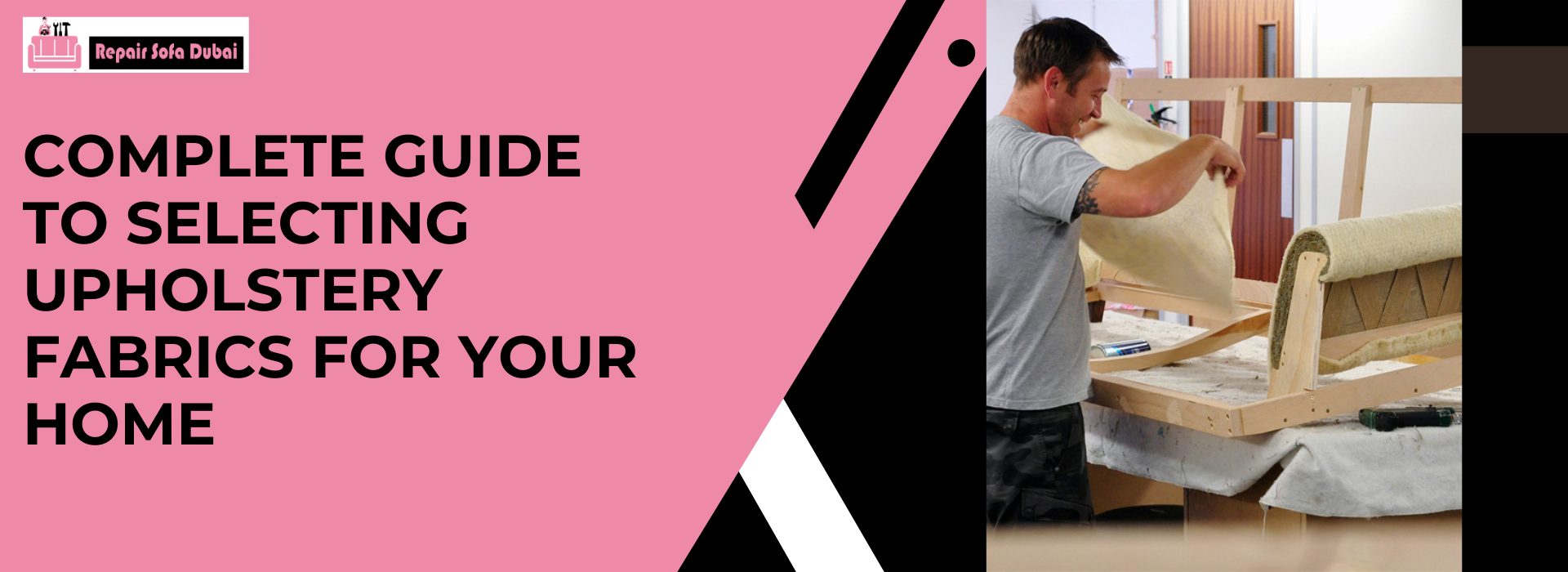
How to Choose Upholstery Fabric for Your Home?

Choosing upholstery fabric in Dubai, UAE comes down to matching three factors to the piece of furniture: durability rating, climate suitability, and how the piece actually gets used day to day. Get these three right and almost any fabric style, from linen to leather, will perform well for years. Get them wrong, and even an expensive fabric can look worn out within a single season. This guide covers every major fabric type, how Dubai’s climate changes the calculation, and how to choose differently for a sofa, a chair, and a bed, since each carries different demands.

What factors matter most when choosing upholstery fabric in Dubai, UAE?

The factors that matter most are durability, climate suitability, usage pattern, comfort, budget, and ease of cleaning, roughly in that order of importance for most households. Durability and usage pattern should be decided first, since they narrow the fabric options before comfort or aesthetics come into play.

Durability determines how long the fabric will look good under actual use, measured through double rub counts and fiber strength. Climate suitability determines whether a fabric will fade, dry out, or trap heat in Dubai’s specific conditions. Usage pattern accounts for children, pets, and guest frequency, since a formal sitting room and a daily family sofa have very different real-world demands, even if they’re the same size and shape.

Comfort and texture matter once the practical filters have narrowed the list, and budget sets the final boundary on which of the remaining options make sense.

What are the main types of upholstery fabric in Dubai, UAE?

The main upholstery fabric types are leather, velvet, linen, cotton, microfiber, performance fabric, and chenille or boucle weaves. Each performs differently across durability, comfort, and maintenance, which is why most upholsterers recommend matching fabric type to the specific piece rather than choosing one fabric for an entire home.

Leather

Leather offers a classic, long-lasting look and wipes clean easily, making it a strong choice for households with spills or heavy daily use. Full-grain leather in particular can last 15 to 25 years with proper conditioning, though it comes at a higher price point than most fabric alternatives.

The durability comes from the density of the hide itself rather than a woven structure, which is why leather resists punctures and tears better than most fabrics. In Dubai specifically, leather needs regular conditioning to prevent drying and cracking from constant air conditioning, since low humidity indoors pulls moisture out of the material faster than in more humid climates.

Velvet

Velvet adds a rich, soft texture and a formal appearance, making it popular for statement sofas and accent chairs rather than everyday family furniture. Modern performance velvets resist stains and crushing far better than traditional velvet, closing much of the durability gap that once made velvet a riskier choice for daily use.

The pile structure that gives velvet its texture is also what makes it show wear patterns from repeated sitting in the same spot, so velvet performs best on pieces that see moderate rather than constant use, such as a formal living room sofa or a bedroom accent chair.

Linen

Linen offers a breathable, natural feel that suits Dubai’s climate well, since the loose weave allows better airflow than tighter synthetic fabrics. It is less durable than leather or performance fabrics on its own and benefits from a protective treatment if used on a high-traffic piece.

Because linen is a natural fiber, it also tends to soften and develop character over time rather than looking simply worn, which some homeowners prefer for a lived-in aesthetic. Blended linen fabrics, combining linen with polyester or cotton, address the durability gap while keeping much of the breathable feel.

Cotton

Cotton provides a soft, comfortable feel at a moderate price point but stains more easily than synthetic or treated fabrics unless it has a stain-resistant finish applied. It works well for guest rooms and lower-traffic furniture where the softer feel matters more than heavy-duty performance.

Microfiber and performance fabric

Microfiber and other performance fabrics are engineered specifically for stain resistance and durability, making them one of the strongest choices for households with children or pets. These synthetic fabrics repel liquids before they soak in, giving more time to wipe up spills before they set into a stain.

Performance fabrics achieve this through a tightly woven or coated fiber structure that resists absorption, unlike natural fibers that soak up spills on contact. The trade-off is a less premium feel compared to natural fabrics, though modern performance blends have narrowed this gap considerably in recent years.

Chenille and boucle

Chenille and boucle weaves offer a textured, cozy feel that has become popular for contemporary sofas and accent chairs. Both hold up reasonably well to daily use, though the raised texture can trap pet hair and dust more than a flat weave, requiring more frequent vacuuming.

How does Dubai’s climate affect upholstery fabric choice?

Dubai’s climate affects fabric choice mainly through intense UV exposure and low indoor humidity from constant air conditioning, both of which accelerate fading and material breakdown faster than in more temperate climates. Fabrics placed near windows or in rooms with direct sunlight need UV resistance, specifically, not just general durability.

Solution-dyed fabrics, where color is added to the fiber before it’s woven rather than applied afterward, resist sun fading significantly better than standard-dyed fabrics. This matters more in Dubai than in most climates, since strong, near-constant sunlight fades untreated fabric within one to two years in south or west-facing rooms.

Low indoor humidity from air conditioning also dries out natural materials like leather and untreated linen faster than in humid climates, which is why leather furniture in Dubai homes needs more frequent conditioning than the same piece would need in a coastal or temperate region. Fabrics with synthetic fibers are less affected by this humidity swing, since they don’t rely on natural moisture content to stay supple.

How to choose upholstery fabric for a sofa in Dubai, UAE

For a sofa, prioritize durability and stain resistance first, since sofas see the most consistent daily use of any upholstered furniture in a home. A double rub count of 15,000 or higher, paired with a stain-resistant finish, covers most household needs, with performance fabric, leather, or treated linen blends all performing well.

Family sofas used daily by children, pets, or frequent guests benefit most from microfiber or performance fabric, while a formal or rarely used sitting room sofa has more flexibility to prioritize appearance, opening up options like velvet or untreated linen. Our sofa upholstery services page covers the full range of fabrics we carry if you’re comparing options for a specific piece.

How to choose upholstery fabric for a chair in Dubai

For chairs, fabric choice depends heavily on the chair’s role, since a dining chair used daily faces very different demands than an accent chair used occasionally. Dining chairs benefit from performance fabrics or treated cotton blends with a double rub count matched to household size, while accent and bedroom chairs have more room for softer, less durable fabrics like velvet or boucle.

Pattern and texture scale also matter more on chairs than on larger furniture, since a chair’s smaller surface area shows large patterns differently than a full sofa would. We’ve covered chair-specific fabric selection, including pattern scale and double rub guidance by room type, in more depth in our guide to choosing fabric for chair upholstery.

How to choose upholstery fabric for a bed in Dubai

For beds and headboards, comfort and softness typically matter more than heavy-duty durability, since headboards experience far less direct contact than seating furniture. Velvet, linen, and boucle are all popular headboard choices, though a stain-resistant treatment is still worth considering for households with children who may climb on the bed.

Sun exposure is the main durability concern for beds rather than daily wear, since headboards positioned against a window wall fade over time even without heavy physical contact. If you’re upholstering a headboard or bed frame, our bed upholstery services page covers the fabric options we recommend most often for bedrooms.

How to choose fabric based on household usage in Dubai

Households with children or pets should prioritize performance fabric or leather with a double rub count above 15,000, while low-traffic formal spaces have more freedom to choose fabric based on appearance alone. Matching fabric to actual usage, rather than just the room’s intended purpose, prevents the most common source of premature wear.

A living room technically meant for guests but actually used daily by the family should be treated as high-traffic furniture regardless of its formal designation. This mismatch between intended and actual use is one of the most frequent reasons fabric wears out faster than expected within the first year or two.

What is a double rub count, and why does it matter?

A double rub count measures how many back-and-forth rubbing cycles a fabric can withstand in standardized abrasion testing before showing visible wear, and it’s the most reliable single number for comparing fabric durability across different materials and brands. Higher numbers indicate a more durable fabric, regardless of fiber type.

For residential furniture, a rating of 15,000 double rubs or higher is generally considered suitable for regular daily use, while fabrics used in commercial settings like hotels or restaurants typically need ratings above 30,000 to withstand constant turnover. This single number is often more useful than fiber type alone, since a well-constructed synthetic fabric can outlast a poorly woven natural fiber, despite natural materials often carrying a premium price.

Fabric comparison: durability, feel, and best use

Fabric Type Durability Climate Suitability Best For
Leather Very high (with conditioning) Needs regular conditioning indoors Daily-use sofas, family rooms
Performance Fabric / Microfiber Very high Excellent, resists humidity swings Family sofas, dining chairs, kids’ rooms
Linen (blended) Moderate Good, breathable Formal rooms, moderate-use furniture
Velvet Moderate to high (performance grade) Moderate, avoid direct sun Accent chairs, headboards, statement sofas
Cotton Low to moderate Good, but stains without treatment Guest rooms, low-traffic furniture
Chenille / Boucle Moderate Good Contemporary sofas, accent chairs

Is leather always the most durable upholstery fabric?

The short answer

No. Leather is highly durable overall, but tightly woven performance fabrics can match or outlast leather in Dubai’s specific conditions, particularly in sun-exposed or heavily air-conditioned rooms.

When leather is the better choice

Leather performs best in interior rooms away from direct sunlight, for households that can commit to regular conditioning, and where the classic look and easy wipe-clean surface matter more than climate-related maintenance.

When performance fabric outperforms leather

In rooms with direct sun exposure or very low indoor humidity from constant air conditioning, leather is more prone to fading and cracking than a well-rated performance fabric, which resists both UV damage and moisture loss more consistently.

The verdict

Leather remains an excellent choice for most Dubai homes, but it isn’t automatically superior to a high-rated performance fabric in every room. The right choice depends on sun exposure and how consistently the household is willing to condition the material, not on durability alone.

Frequently Asked Questions

How do I choose the best upholstery fabric for my home?

Choose upholstery fabric by matching three factors to the piece of furniture: durability rating (double rub count), climate suitability such as breathability and UV resistance, and how the piece is actually used day to day, including exposure to kids, pets, and sunlight.

Is leather always the most durable upholstery fabric?

No. Full-grain leather is highly durable but can crack in very dry, air-conditioned interiors and feels hot in direct sun, so tightly woven performance fabrics sometimes outlast leather in high-traffic, sun-exposed Dubai homes.

What double rub count is good for a sofa?

For residential sofas, a double rub count of 15,000 or higher is considered durable enough for daily household use, while fabrics rated above 30,000 double rubs are suited to commercial or very high-traffic settings.

What is the best upholstery fabric for Dubai’s climate?

Solution-dyed performance fabrics and tightly woven linen blends tend to perform best in Dubai, since they resist UV fading and handle humidity swings better than untreated natural fibers or low-grade synthetic fabrics.

Get Expert Help Choosing Your Fabric

Picking the right fabric in Dubai is easier with samples in hand and a technician who can assess how a specific piece actually gets used in your home. Our team brings fabric samples to your home or office, walks through durability and climate considerations for your exact furniture, and helps you land on a fabric that will still look good years from now. Visit our upholstery services page to browse our full fabric collection, or reach out for a free consultation and quote.
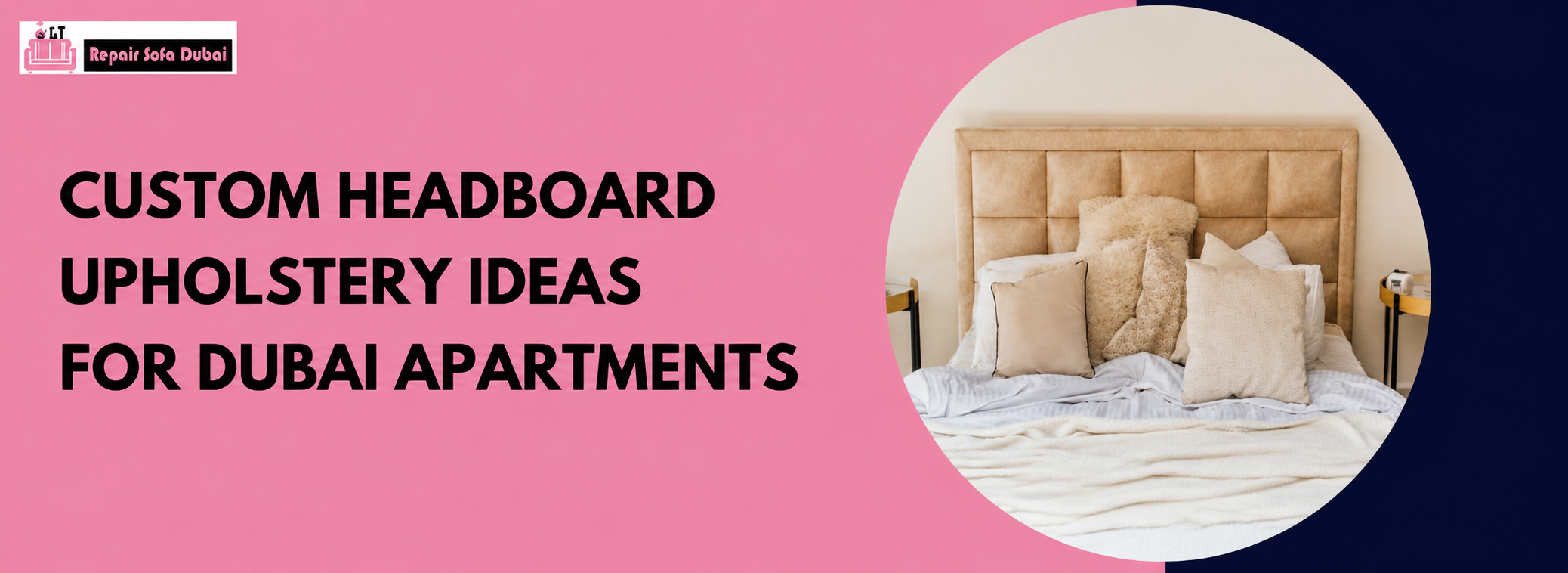
Custom Headboard Upholstery Ideas for Dubai Apartments

In most Dubai apartments, the bedroom is a personal space. It is where you unwind after a long day, where you wake up in the morning, and where the overall feel of the room either relaxes you or does not.

The headboard is the first thing you see when you walk into a bedroom. It is the backdrop behind your entire bed. And yet, so many people leave it plain, damaged, or completely mismatched with the rest of their room.

Custom headboard upholstery in Dubai gives you the chance to change that completely. Whether you live in a studio apartment, a two-bedroom flat, or a luxury villa, a well-designed upholstered headboard can transform the entire room.

Here are some of the best ideas for 2026 that actually work in Dubai apartments.

1. Button-Tufted Headboards for a Classic Look

Button tufting is one of the most timeless styles in headboard design. The fabric is pulled into deep, evenly spaced pleats, creating a pattern of soft diamond shapes across the surface.

This style works beautifully in Dubai apartments that have a classic or slightly formal interior design. It looks rich, intentional, and well put together. Velvet in deep colors like forest green, navy blue, or burgundy looks especially stunning with button tufting.

If your apartment has neutral walls and simple furniture, a button-tufted headboard in a bold color becomes the focal point of the entire room without any extra effort.

2. Straight Panel Headboards for a Modern Apartment

Not everyone wants something decorative. Many Dubai apartments have a clean, modern, minimal design. For these spaces, a straight, upholstered panel headboard works perfectly.

This is exactly what the name sounds like. A flat, padded panel covered in a single fabric with no buttons or stitching details. It looks sleek and contemporary.

Linen fabric in off-white, beige, or light grey works beautifully for this style. So does smooth leather or faux leather in white or cream. The result is a bedroom that looks like it was designed by a professional, even though the change was simple and affordable.

3. Tall Headboards to Make Rooms Feel Bigger

Many apartments in Dubai have standard ceiling heights, and one of the best apartment headboard design ideas to make a room feel larger is going tall with the headboard.

A headboard that extends almost to the ceiling draws the eye upward. It creates an impression of height and space that makes even a smaller bedroom feel more open and grand.

This style works with almost any fabric. Neutral tones keep it understated. A textured fabric like a boucle or thick weave adds depth without being overwhelming. Some people even extend the upholstery panel all the way from the floor to the ceiling for a fully dramatic effect.

4. Curved and Arched Headboards for a Soft Feel

One of the biggest headboard upholstery ideas for 2026 is the curved or arched shape. Instead of a rectangular panel, the top of the headboard follows a soft arch or rounded shape.

This has become very popular in Dubai apartments because it adds a sense of softness to the room. Sharp corners and straight lines are everywhere in modern apartments. A curved headboard brings in an organic, relaxed feeling that balances the space.

Dusty rose, warm terracotta, sage green, and warm white are all popular fabric choices for this style this year. Paired with soft lighting, a curved upholstered headboard makes a bedroom feel genuinely calm and inviting.

5. Two-Tone Headboards for a Creative Touch

If you want something a little more personal, a two-tone headboard uses two different fabrics or two different colors in one design. This could be a central panel in velvet surrounded by a border in leather. A lighter fabric could be used for the top half, while a darker shade would be applied to the bottom.

This style works best when the two materials or colors are chosen to complement each other rather than compete.

A professional upholstery service can advise on combinations that look intentional and polished rather than mismatched.

Two-tone designs are especially popular among Dubai residents who want their bedroom to feel unique and personalized without going into full custom furniture territory.

6. Quilted Headboards for Texture and Comfort

Quilted headboards use stitched lines across the fabric surface to create a pattern. Unlike button tufting, which creates deep indentations, quilting keeps the surface flatter while adding visual interest through the stitch pattern.

Diamond quilting, square quilting, and vertical channel stitching are all popular choices right now as part of the headboard upholstery ideas for 2026. Channel stitching in particular looks very clean and modern, making it ideal for contemporary Dubai apartments.

Velvet and faux leather both look excellent with channel stitching. The stitching lines catch the light differently depending on the angle, giving the headboard a subtle depth that looks expensive.

7. Matching the Headboard to the Rest of Your Bedroom

One thing that separates a truly well-designed bedroom from a random collection of furniture is how everything connects. When choosing your headboard fabric, think about your curtains, your bedding, and any armchairs or benches in the room.

You do not need everything to match exactly. That can actually look too stiff. But choosing a fabric that shares a color tone, texture family, or material with something else in the room creates a sense of intention and cohesion.

A professional headboard upholstery service in Dubai can bring fabric samples to your home so you can compare them against your actual curtains and walls before making a final decision.

The Right Headboard Changes Everything

A headboard upgrade is one of the easiest and most affordable ways to improve a bedroom. It does not require new flooring, new paint, or new furniture. One well-chosen, professionally upholstered headboard can make a room look completely different.

If you have been thinking about refreshing your bedroom in 2026, custom headboard upholstery in Dubai is the place to start.

The options are wide, the results are immediate, and the cost is far lower than most people expect.

Your bedroom is where your day ends and begins. It is worth making it look the way you actually want it to.

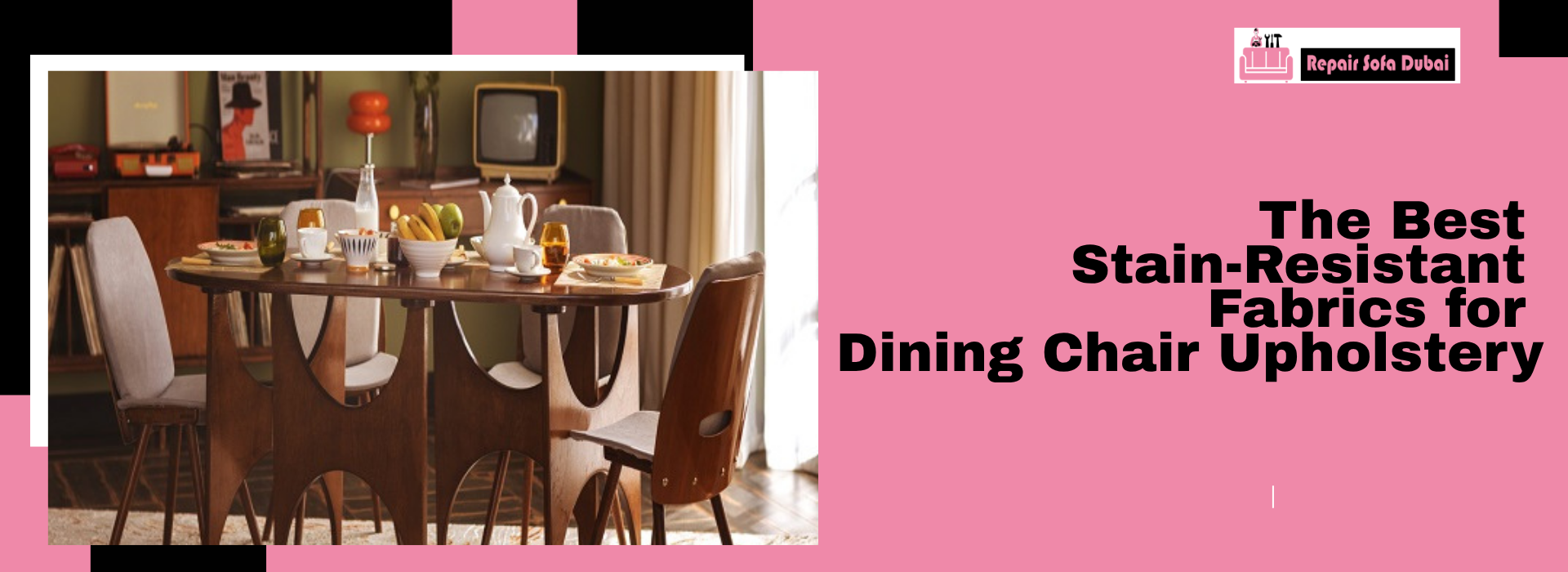
Best Stain-Resistant Fabric for Dining Room Chairs

Performance fabrics like Crypton and treated olefin, along with vinyl and faux leather, are the most stain-resistant options for dining chairs, since dining seating faces more concentrated food and liquid exposure than almost any other furniture in the home.

These materials resist absorption at the surface level, giving spills time to be wiped away before they set into the fibers. This guide covers exactly what makes a fabric stain-resistant, which materials perform best on dining chairs, and which ones to avoid regardless of how good they look in the showroom.

What makes a fabric stain-resistant?

A fabric is stain-resistant when its fiber structure or surface treatment prevents liquid from soaking in immediately, giving spills time to be wiped away before they penetrate and set. This comes from either the fiber type itself, such as synthetic fibers that don’t absorb liquid the way natural fibers do, or from a topical treatment applied to a woven fabric.

Synthetic fibers like polyester and olefin are naturally less absorbent than cotton or linen, since their molecular structure doesn’t draw in liquid the way natural plant fibers do. Treated fabrics, including Crypton and most FibreGuard-branded fabrics, achieve similar performance on a woven base fabric by applying a protective coating during manufacturing, which is why a treated cotton blend can perform close to a synthetic fabric while still keeping a natural look and feel.

What is the best stain-resistant fabric for dining chairs?

Crypton and other performance fabrics rank as the best overall choice for dining chairs, combining high stain resistance, odor resistance, and durability in a fabric that still feels and looks like traditional upholstery. Vinyl and faux leather offer even higher stain resistance for a lower price, at the cost of a less natural feel.

Performance fabric (Crypton and similar)

Performance fabrics are engineered specifically to resist liquid, odor, and bacteria at the fiber level, making them one of the strongest choices for households that host frequently or have young children. Crypton in particular resists staining from oil-based spills, which many other fabrics, even other synthetics, struggle with.

The performance comes from a sealed fiber structure that prevents liquid from reaching the fabric’s core, so spills sit on the surface rather than soaking through to the padding underneath. This also makes performance fabric easier to sanitize than standard fabric, since spills and bacteria stay near the surface rather than working into the material.

Polyester

Polyester is a widely used, affordable option that resists staining reasonably well, since spills tend to bead on the surface rather than absorb immediately. It dries quickly after cleaning, which helps prevent mold or mildew from developing in humid conditions.

Polyester’s performance depends heavily on weave tightness, with tightly woven polyester outperforming looser weaves noticeably on both stain resistance and durability. It’s a strong middle-ground choice for households that want good stain resistance without the higher cost of a dedicated performance fabric.

Vinyl and faux leather

Vinyl offers some of the highest stain resistance of any dining chair material, since its non-porous surface lets most spills wipe off immediately without soaking in at all. Modern vinyl has also improved significantly in appearance, with textures that closely mimic leather or woven fabric.

The trade-off is feel and breathability rather than stain performance, since vinyl doesn’t breathe the way woven fabric does and can feel warmer against skin during long meals. For households prioritizing easy cleanup above all else, particularly with young children, vinyl remains one of the most practical choices available.

Olefin

Olefin is a synthetic fiber that resists moisture particularly well, making it a strong choice in humid climates where mold resistance matters alongside stain resistance. Tea, coffee, and most food spills sit on the surface rather than soaking in, similar to polyester.

Because olefin resists moisture at the fiber level rather than through a surface treatment, its stain resistance doesn’t wear off over time the way some treated fabrics can after repeated cleaning. This makes it a durable long-term option for households in coastal or humid areas.

Leather

Leather wipes clean easily and resists most spills when properly conditioned, though it isn’t as universally stain-resistant as vinyl or performance fabric, since certain liquids like red wine or oil can stain unsealed or aniline leather if left too long. Full-grain leather with a protective finish performs noticeably better than unfinished or aniline leather.

Which fabrics should you avoid for dining chairs?

Untreated linen, silk, suede, and loosely woven natural fibers generally perform poorly on dining chairs, since they absorb liquid quickly and show stains permanently once a spill has set. These fabrics can still work in low-traffic dining spaces, but they’re a poor match for daily family use.

Linen in particular looks appealing for dining rooms but absorbs spills almost immediately unless it’s been treated with a stain-resistant finish, at which point it behaves closer to a treated cotton blend than pure linen. If the aesthetic of a natural fiber matters more than raw performance, choosing a treated version of that fabric is usually a better compromise than an untreated one.

Does stain-resistant mean stain-proof?

No. Stain-resistant fabric slows down absorption and gives more time to clean a spill before it sets, but it doesn’t make a fabric immune to staining if a spill is left untreated for an extended period. Even the most resistant fabrics benefit from prompt cleanup.

The practical difference shows up in response time rather than outcome. A stain-resistant fabric might tolerate a spill sitting for twenty or thirty minutes with no visible mark, while an absorbent fabric would already show staining within a minute or two. Beyond that window, however, even performance fabrics can develop stains if the spill is oil-based or highly pigmented and left long enough.

How does Dubai’s climate affect stain-resistant fabric choice?

Dubai’s combination of frequent entertaining, rich, oil-based cuisine, and humidity swings makes stain resistance and moisture resistance equally important when choosing dining chair fabric. Fabrics that resist oil-based stains specifically, such as Crypton, tend to outperform standard stain-resistant fabrics in households that cook and host often.

Humidity also plays a role beyond staining alone, since damp conditions can encourage mold growth in fabric that stays wet after cleaning. Materials like olefin and vinyl that dry quickly after wiping hold an advantage here over natural fibers, which retain moisture longer even after a spill has been cleaned up. For a broader look at how Dubai’s climate affects fabric choice across different furniture types, our complete guide to choosing upholstery fabric covers durability ratings and climate suitability in more depth.

Stain-resistant fabric comparison for dining chairs

Fabric Type Stain Resistance Feel Best For
Performance Fabric (Crypton) Excellent, including oil-based stains Soft, fabric-like Families, frequent hosting
Vinyl / Faux Leather Excellent, wipes clean instantly Smooth, less breathable Households with young children
Polyester Good Soft, versatile Everyday family dining
Olefin Good, strong moisture resistance Slightly textured Humid or coastal homes
Leather (finished) Moderate to good Classic, durable Formal dining rooms
Untreated Linen or Cotton Poor Natural, breathable Low-traffic formal spaces only

Is leather a good stain-resistant choice for dining chairs?

The short answer

Yes, but with conditions. Finished leather with a protective topcoat resists most spills well, while unfinished or aniline leather is considerably more vulnerable to staining.

When leather works well for dining chairs

Leather performs well when it has a protective finish, is conditioned regularly, and spills are wiped up promptly rather than left to sit. It suits formal dining rooms more than heavy daily family use.

When leather is a riskier choice

Unfinished, aniline, or nubuck leather absorbs oil and pigmented liquids more readily than finished leather, making it a poor match for households with young children or frequent messy meals.

Conclusion

Leather can be a strong stain-resistant choice for dining chairs as long as it’s finished leather rather than an unsealed variety, and as long as spills get attention promptly. For households wanting a lower-maintenance option with less risk, performance fabric or vinyl still edges out leather on raw stain resistance.

Get the Right Fabric for Your Dining Chairs

Choosing between these fabrics is easier with samples in hand and a technician who understands how your dining room actually gets used. Our team helps you weigh stain resistance, feel, and budget for your specific household, then handles the reupholstery from start to finish. Visit our dining chair upholstery service page to see our full fabric range, or explore our guide on choosing fabric for chair upholstery for more on durability ratings and pattern selection. Reach out for a free consultation and quote.
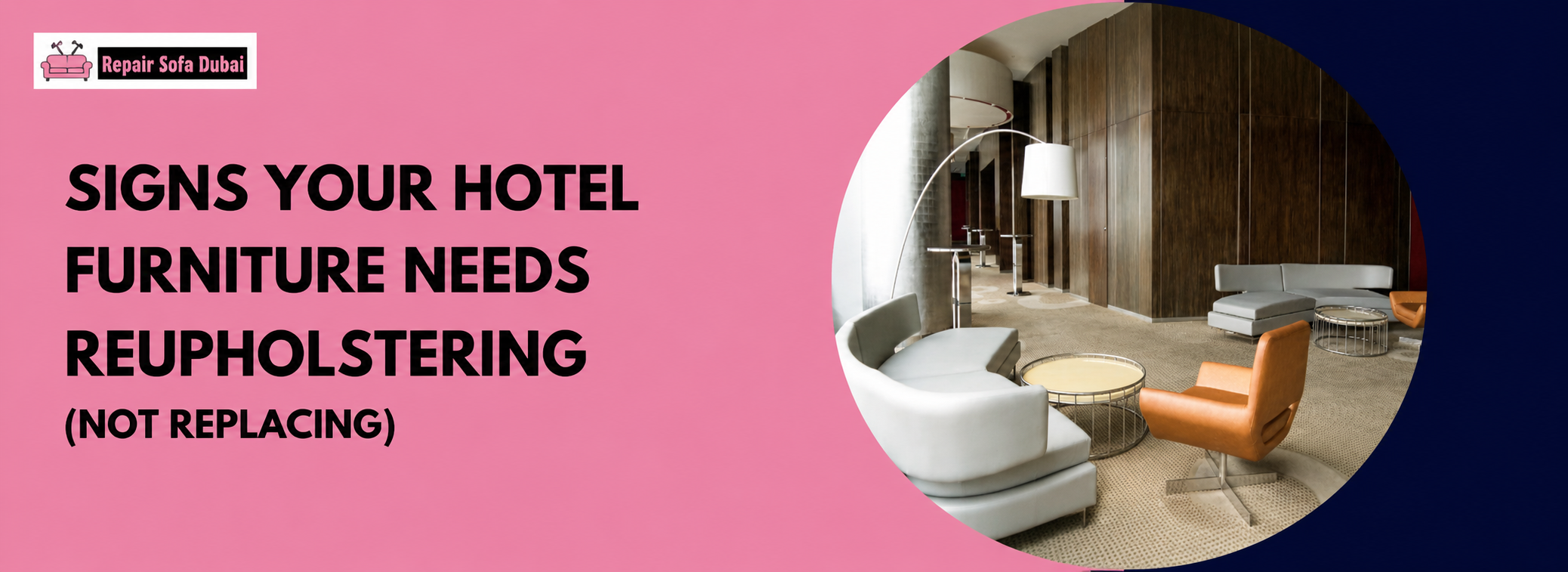
Signs Your Hotel Furniture Needs Reupholstering (Not Replacing)

Running a hotel in Dubai is a big responsibility. Every corner of your property tells a story to your guests. The lobby sofa, the restaurant chairs, and the guest room armchair all shape how people feel about your hotel.

But furniture does not last forever. At some point, you will notice things starting to look tired. The question most hotel managers ask is, “Do I replace it or repair it?”

Here is the honest answer. Most of the time, you do not need to replace it. You just need the right hotel furniture upholstery service in Dubai to bring it back to life.

Let us walk through the clear signs that your furniture is ready for re-upholstery, not the trash.

1. The Fabric Looks Faded or Discolored

Dubai gets intense sunlight. Hotel lobbies and rooms with large windows are especially at risk. Over time, fabric colors fade, look patchy, or lose their original richness.

If you look at your sofa and the color looks completely different from when you first bought it, that is a clear sign. The furniture itself is still perfectly fine. Only the fabric covering has taken the damage.

This is exactly what reupholstery fixes. New fabric is applied over the same strong frame and foam. Your furniture looks brand new, guests notice the freshness, and you save a significant amount of money.

2. The Cushions Feel Flat and Uncomfortable

Guests sit on hotel furniture every single day. Lobby sofas, restaurant chairs, and room seating take constant damage. Over time, the foam inside the cushions loses its shape and feels flat.

When a guest sits down and sinks too low or feels the hard frame beneath the cushion, that is a comfort problem. And comfort is one of the most important things in any hotel.

The good news is that replacing the foam during upholstery is a straightforward process. Your furniture gets new foam that feels fresh, supportive, and comfortable again. No need to buy brand new seating at all.

3. You See Tears, Cracks, or Peeling Fabric

This one is very visible. Whether it is a leather sofa that has started to crack and peel, or a fabric chair with a small tear that keeps getting bigger, these signs cannot be ignored.

Torn or peeling furniture gives guests a bad impression. It makes a hotel look poorly maintained, even if everything else is spotless.

Re-upholstery covers all of this completely. The damaged material is removed and replaced with a fresh, high-quality fabric or leather of your choice. What looked worn out and embarrassing now looks polished and professional again.

4. The Furniture Smells Musty or Stale

Hotels are busy places. Spills happen. Humidity builds up. Over years of use, fabric can absorb odors that do not go away no matter how many times you clean the surface.

If your furniture has a smell that guests might notice, that is a serious problem. A fresh fabric covering during re-upholstery removes the old material completely, which removes the source of the smell as well.

Trending hotel furniture sofa upholstery services in Dubai often include deep cleaning and sanitizing of the frame before the new fabric goes on. This gives you a completely fresh result inside and out.

5. The Style Looks Outdated

Hotel design trends move fast. What looked modern five years ago might look outdated today. If your furniture style no longer matches the image you want your hotel to project, re-upholstery gives you a chance to change that without buying everything new.

This is where hotel furniture upholstery ideas come into play. You can choose a completely different fabric color, texture, and pattern. You can go from a dark heavy look to something light and modern. You can match your new interior design direction without touching the frames.

Many hotels in Dubai use re-upholstery as part of a bigger refresh. New fabric on old frames, combined with some paint and lighting changes, can make a hotel feel completely transformed.

6. Only the Covering Is Damaged, Not the Frame

This is the most practical sign of all. Before deciding to replace any piece of hotel furniture, check the frame. If you press on the arms, the base, and the legs and everything feels solid and sturdy, the furniture has years of life left in it.

When the frame is strong but the fabric is damaged, replacing the whole piece is simply wasteful. Re-upholstery is the smart choice. You keep the strong structure and only renew what is actually damaged.

Professional hotel furniture upholstery in Dubai focuses on exactly this. The goal is to restore, not waste.

Re-upholstery Saves Money Without Cutting Corners

One of the biggest reasons hotels in Dubai choose re-upholstery over replacement is the cost difference. Buying new commercial-grade hotel furniture is expensive. Reupholstering the same pieces can cost a fraction of that price and deliver results that look just as stunning.

There is also the sustainability angle. Less waste. Less spending. Better results.

If your hotel furniture is showing any of the signs above, contact Repair Sofa Dubai for hotel furniture upholstery and re-upholstery services in Dubai.

Your furniture might just need a second chance, not a replacement.


Leather vs. Fabric Recliner Upholstery: Pros and Cons

When people decide to reupholster their recliner sofa, they usually spend a lot of time thinking about color. But the more important decision is actually the material.

Leather and fabric are the two most popular choices for recliner sofa upholstery and repair in Dubai. Both have real advantages. Both have real drawbacks.

The right choice depends on your lifestyle, your home, and how you actually use your recliner.

This guide breaks it all down simply so you can make the right choice for your home.

Leather Recliner Upholstery

The Pros

It Looks Premium Instantly

There is a reason leather has always been associated with luxury. A leather recliner looks expensive and sophisticated. It adds weight and richness to any living room. If you want your space to feel more polished, leather delivers that instantly.

It Is Easy to Clean

Spills, crumbs, and everyday dust are very easy to deal with on leather. A quick wipe is usually all it takes. For homes with children or people who eat near the sofa, this is a genuinely useful advantage.

It Lasts a Long Time

Good quality leather, when properly maintained, can last for many years without losing its appearance. It does not attract pet hair and is resistant to many common stains.

It Gets Better With Age

Real leather develops a natural character over time. Small marks and softening actually add to its look rather than taking away from it. Many people appreciate this quality in their furniture.

The Cons

It Can Feel Hot in Dubai Weather

This is a real concern. Leather absorbs and holds heat. During summer in Dubai, sitting on a leather recliner without air conditioning running can feel uncomfortable. It is worth considering if your room gets warm.

It Can Crack If Not Maintained

Leather needs regular conditioning to stay supple. Without proper care, it can dry out and start cracking, especially in dry or air-conditioned environments. This requires a small but consistent maintenance effort.

It Costs More

Leather upholstery is generally more expensive than fabric. If budget is a concern, this is an important factor to consider.

Fabric Recliner Upholstery

The Pros

It Is More Comfortable in Warm Weather

Fabric breathes. It does not hold heat the same way leather does. For a city like Dubai where you spend a lot of time in air-conditioned rooms but also deal with heat, fabric tends to feel more comfortable against the skin.

It Comes in More Options

When people ask what fabric is best for recliner sofa upholstery, the honest answer is that it depends on your preference. But the range of options in fabric is enormous. Cotton, velvet, microfiber, and polyester blends.

It Is Budget-Friendly

Quality fabric upholstery costs less than leather in most cases. If you want a great result without a high price tag, fabric is the practical choice.

It Feels Softer

Many people simply prefer the soft feel of fabric against their skin, especially for a recliner where you are often sitting for long stretches watching television or resting.

The Cons

Stains Are Harder to Remove

Fabric absorbs liquids more easily than leather. A spilled drink can leave a permanent stain if not treated quickly. Homes with young children or pets need to think about this carefully.

It Can Wear Out Faster in High-Use Areas

In areas where the recliner gets heavy daily use, fabric can start to show wear, pilling, or thinning faster than leather. The quality of the fabric makes a big difference here.

It Can Trap Dust and Pet Hair

Unlike leather, fabric can hold onto dust, allergens, and pet hair. If allergies are a concern in your home, this is worth thinking about.

Leather vs. Velvet Fabric Upholstery

Velvet deserves a special mention because it has become increasingly popular for recliner sofas. Velvet sits between leather and regular fabric in terms of feel and look. It is incredibly soft, looks luxurious, and comes in beautiful colors.

However, velvet requires careful maintenance. It can flatten over time if not brushed regularly, and it shows marks more easily than other fabrics.

It is a beautiful choice for a bedroom recliner or a low-traffic living room, but for a heavily used family sofa, a more durable fabric or leather might be more practical.

So What Fabric Is Best for Your Recliner Sofa?

Here is a simple way to decide. If you have young children or pets or want something easy to maintain, leather or a high-quality microfiber fabric are your best options.

If you want maximum comfort, a wide range of colors, and a softer feel, a good quality fabric like velvet or a thick woven blend works beautifully.

The most important thing is choosing a material that fits your actual life, not just what looks good in a showroom.

A professional recliner sofa upholstery and repair service in Dubai can show you fabric samples in person, explain the durability of each option, and help you pick what will work best for your home and budget.

Final Thing Worth Knowing

The material matters, but so does the quality of the upholstery work itself. Even the best fabric will look poor if it is not applied correctly.

Always choose an experienced upholstery team that works with recliners specifically, because recliner mechanisms and structure require careful handling during the re-upholstery process.

Get the material right. Get the workmanship right. Your recliner will reward you with years of comfort and good looks.


How to Protect Outdoor Wooden Furniture from Termites

Protecting outdoor wooden furniture from termites comes down to four things: keeping wood off the ground, applying a termite-resistant finish regularly, controlling moisture, and inspecting furniture often enough to catch activity early. Termites need moisture and direct wood contact to establish a colony, so removing those two conditions is the single most effective prevention step available.

This guide covers exactly how to protect wooden furniture in Dubai’s specific climate, what early termite damage looks like, and when a piece needs professional treatment rather than a DIY fix.

Why does outdoor wooden furniture attract termites?

Outdoor wooden furniture attracts termites because it offers both a direct food source, the cellulose in wood, and easy access when the furniture sits in contact with soil or damp ground. Termites are drawn to moisture first, then follow that moisture into any wood they encounter.

Subterranean termites, the type most common around villas and landscaped gardens, live underground and build mud tubes to travel between soil and a food source without exposing themselves to dry air or sunlight. Furniture placed directly on soil or grass gives them a direct path to the wood without needing to build extensive tubes, which is why elevation matters so much as a first line of defense.

How do you protect outdoor wooden furniture from termites?

The most effective protection combines four habits: elevating furniture off the ground, applying a termite-resistant sealant on a regular schedule, keeping the surrounding area dry, and choosing termite-resistant wood species when buying new pieces. No single step fully eliminates the risk on its own, which is why combining them matters.

Keep wood elevated and away from soil contact

Raising furniture at least a few inches off the ground using stands, feet, or a paved surface removes the direct wood-to-soil contact that termites rely on to access furniture without detection. This single change significantly reduces the easiest entry point available to subterranean termites.

Furniture placed directly on grass or soil is especially vulnerable, since the ground stays damp longer than a paved patio or deck, giving termites a more consistent moisture source right at the base of the wood. Simple concrete blocks, metal furniture feet, or a tiled base all break this contact effectively.

Apply and maintain a termite-resistant finish

A sealant, varnish, or oil-based finish with termite-resistant properties creates a protective barrier that termites generally avoid, but this protection weakens over time and needs reapplication every two to five years, depending on sun and weather exposure. Outdoor furniture in Dubai’s intense sun typically needs recoating on the shorter end of that range.

The finish works by sealing the wood’s surface pores, which both blocks termite access and reduces moisture absorption into the grain. Once a finish starts cracking, peeling, or wearing thin from UV exposure, the protection underneath is compromised, even if the wood still looks intact from a distance, which is why visual inspection of the finish itself matters as much as inspecting the wood.

Control moisture around the furniture

Since termites need consistent moisture to survive, keeping the area around outdoor furniture well-drained and avoiding standing water near the base removes one of the two conditions termites require. This matters particularly for furniture near irrigated gardens, pool decks, or areas with poor drainage.

Villa gardens with automatic irrigation systems create a reliable, ongoing moisture source that can sustain termite activity even during Dubai’s dry months, so furniture positioned near sprinkler zones or heavily watered planting beds carries a higher risk than furniture on a dry, paved terrace.

Choose termite-resistant wood species

Hardwoods like teak, along with certain treated lumbers, contain natural oils or chemical treatments that make them significantly less appealing to termites than untreated softwoods. Choosing these materials when buying new outdoor furniture reduces risk from the start rather than relying entirely on finishes applied afterward.

Teak in particular has a natural oil content that both repels moisture and makes the wood less digestible to termites, which is part of why it remains a popular choice for long-term outdoor furniture despite a higher upfront cost than softer, untreated woods.

What are the early signs of termite damage in outdoor furniture?

Early signs of termite damage include fine, sawdust-like frass near the base of the furniture, small pinholes in the wood surface, a hollow sound when the wood is tapped, and mud tubes on nearby surfaces like walls or furniture legs. Catching these signs early is what keeps treatment simple rather than extensive.

Frass, the sawdust-like waste termites leave behind, is often the first visible clue, appearing as small piles near joints or at the base of furniture legs. A hollow sound when tapping the wood usually means termites have already hollowed out the interior while leaving the outer surface intact, which is why furniture can look fine on the outside while carrying significant internal damage. Discarded wings scattered near furniture, typically after a swarming event in warmer months, are another sign worth checking for, since swarming indicates an established colony nearby rather than just scattered activity.

If you’re seeing these signs on furniture that also has other visible wear, our guide on identifying when outdoor furniture needs repair covers the broader signs worth checking across wood, metal, and fabric components.

How does Dubai’s climate affect termite risk?

Despite Dubai’s desert climate, termite risk remains significant because irrigated landscaping, humid summer months, and villa compounds with mature trees all create the moisture pockets termites need to establish and sustain a colony. Dry surrounding air doesn’t eliminate risk if a localized moisture source, like a garden irrigation zone, is present nearby.

Villas with landscaped gardens, in particular, face higher termite risk than apartments or paved courtyards, since regular irrigation keeps soil consistently damp in a way that mimics the conditions termites need even in an otherwise arid environment. Summer humidity adds a secondary risk window when ambient moisture rises enough to support termite activity even away from irrigated areas.

Furniture positioned near tree roots or garden beds should be inspected more frequently than furniture on a dry, elevated patio.

DIY termite prevention vs professional treatment

DIY prevention methods, elevation, finishing, and moisture control, work well for ongoing prevention on furniture that isn’t yet infested. Once termite activity is confirmed, however, professional treatment is strongly recommended, since surface-level DIY treatments typically only affect visible termites while leaving the underlying colony intact.

A licensed pest control provider can identify whether the infestation is subterranean or drywood, treat the affected wood directly, and in more serious cases apply soil treatment around the property to address the colony at its source rather than just the furniture. This distinction matters because a colony that survives a surface treatment will continue producing new termites that find their way back to the same furniture, undoing any DIY effort within months.

Can termite-damaged furniture be repaired?

Yes, in most cases, as long as the damage is caught before it becomes extensive. A professional can treat the affected wood to eliminate remaining termites, reinforce or replace the specific damaged component, and refinish the piece to restore both appearance and structural strength.

The deciding factor is how much of the wood’s internal structure has been hollowed out. A leg or rail with localized surface damage can usually be treated, patched, and reinforced, while a component that’s been hollowed through its full cross-section needs to be replaced rather than repaired, since the wood no longer has the strength to bear weight safely. Our team can assess which category a piece falls into during an on-site inspection, alongside a broader check for the other climate-related wear covered in our outdoor furniture protection services.

Is it safe to treat outdoor furniture yourself with anti-termite products?

The short answer

For prevention, yes, most consumer-grade sealants and treatments are safe to apply yourself. For an active infestation, DIY treatment is not recommended as a complete solution.

When DIY treatment is appropriate

Applying a termite-resistant sealant or varnish as routine maintenance on furniture that shows no signs of infestation is a safe and effective DIY task that doesn’t require professional involvement.

When professional treatment is necessary

Once frass, hollow sounds, mud tubes, or discarded wings confirm active termite presence, professional treatment is necessary to reach the full colony rather than just the termites visible on the furniture’s surface.

Conclusion

DIY prevention is both safe and effective as ongoing maintenance, but it isn’t a substitute for professional treatment once an infestation is confirmed. Catching the problem early through regular inspection is what keeps most cases in the DIY prevention category rather than requiring a full professional intervention.

Frequently Asked Questions

How do I protect outdoor wooden furniture from termites?

Keep wood elevated off the ground, apply a termite-resistant sealant or varnish every two to five years, control moisture around the furniture, and choose naturally termite-resistant wood like teak when buying new pieces. Regular inspection catches early activity before it spreads.

What are the early signs of termites in outdoor furniture?

Early signs include fine sawdust-like frass near the base of furniture, small pinholes in the wood surface, a hollow sound when tapped, mud tubes on nearby surfaces, and discarded wings after swarming season.

Why is Dubai’s climate a risk for termites?

Termites need moisture to survive, and irrigation around landscaped gardens, humidity during summer months, and villa compounds with mature trees all create the damp conditions termites need, even in an otherwise dry desert climate.

Can termite-damaged outdoor furniture be repaired?

Yes, in many cases. If the damage is limited to the surface or a single component, a professional can treat the affected wood, reinforce or replace the damaged section, and refinish the piece. Furniture with extensive structural hollowing usually needs replacement of that component.

Protect Your Outdoor Wooden Furniture

If you’re seeing early signs of termite damage or just want your outdoor wood furniture inspected and protected before the season changes, our team can help. We check for termite activity, structural wear, and finish condition, then apply the right treatment or repair for what we find. Visit our outdoor furniture repair services page to see our full range of care and repair options, or reach out for a free assessment and quote.

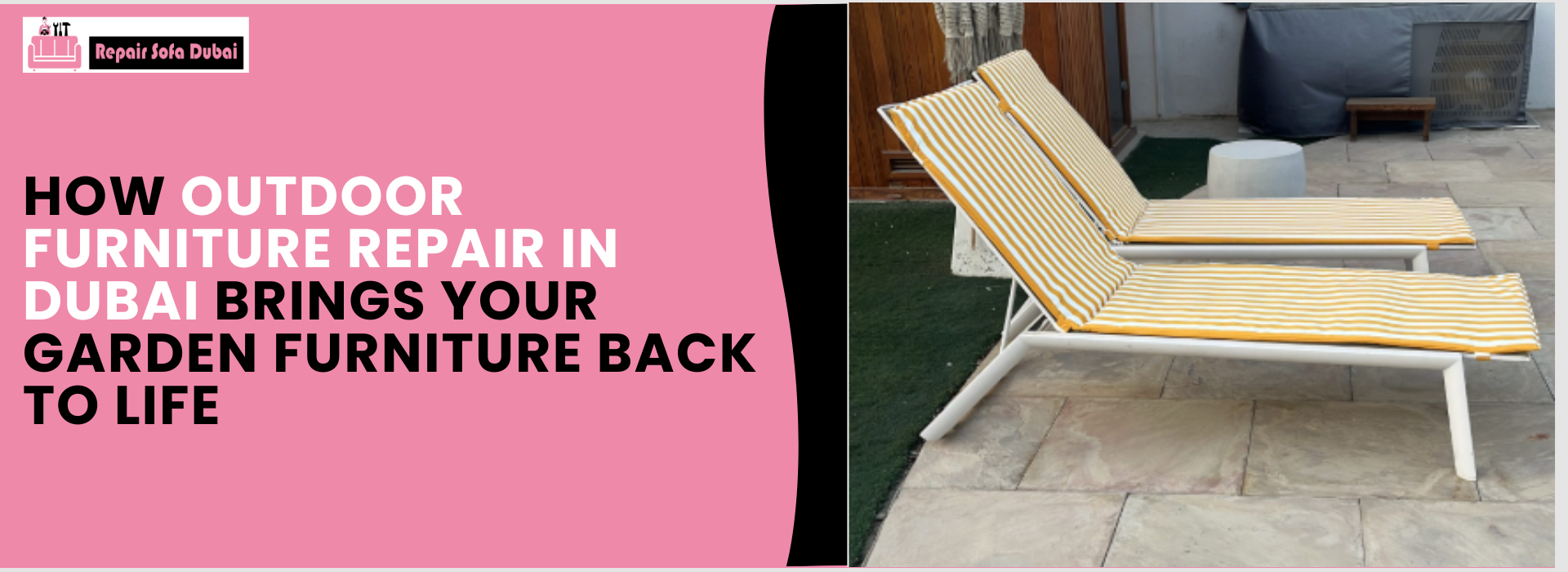
How Outdoor Furniture Repair in Dubai Brings Your Garden Furniture Back to Life

Dubai’s outdoor environment is unforgiving on furniture. UV radiation that bleaches and cracks materials, ambient temperatures that can exceed 45°C, salt air in coastal areas, sand particles that abrade surfaces, and humidity that accelerates rust and rot — outdoor furniture in Dubai faces all of these simultaneously. The result: most outdoor furniture looks significantly older than its age.

The good news is that most outdoor furniture damage is repairable. Professional repair can restore patio sets, pool furniture, garden loungers, and outdoor dining sets to like-new condition at a fraction of replacement cost.

The 5 Main Types of Outdoor Furniture Damage in Dubai

1. UV and Sun Damage

Dubai receives some of the highest UV radiation levels in the world. Untreated or poorly treated outdoor furniture fabrics fade, weaken, and disintegrate. Wood dries out and cracks. Synthetic rattan becomes brittle and breaks. Powder-coated metal loses its finish and develops a chalky surface.

Repair approach: Replacement of UV-damaged fabrics with marine-grade or Sunbrella-rated outdoor fabric (designed specifically for high UV exposure). Wood refinishing with UV-resistant oil or sealant. Metal re-coating with outdoor powder coat paint.

2. Rust and Corrosion on Metal Frames

Metal outdoor furniture — steel, iron, and even some aluminium alloys — develops rust and corrosion in Dubai’s coastal and humid areas. Surface rust looks cosmetic but indicates deeper corrosion if left untreated. Structural rust weakens joints and can cause frames to fail.

Repair approach: Wire brushing and chemical rust treatment, followed by primer and outdoor-grade powder coat repainting. For structural rust, reinforcement or section replacement before coating. Galvanised or marine-grade steel components are used for replacements.

3. Cushion and Upholstery Degradation

Outdoor cushion foam absorbs water, harbour mould, and loses its shape in Dubai’s heat. The fabric covering typically fades, stains, and develops mildew. Most outdoor cushions are replaceable — and replacement with proper outdoor-rated materials transforms the entire furniture set’s appearance.

Repair approach: Replacement of cushion foam with closed-cell or quick-dry foam (which doesn’t absorb water). New outdoor fabric covers in Olefin, Sunbrella, or solution-dyed acrylic — all rated for UV, moisture, and mildew resistance.

4. Synthetic Rattan Cracking and Breakage

Synthetic rattan (resin wicker) is popular in Dubai for its low maintenance reputation — but in extreme heat, the resin becomes brittle and cracks, particularly in direct sunlight. Individual strands break and the weave begins to unravel.

Repair approach: Replacement of damaged rattan strands using matching colour and gauge material. For extensively damaged pieces, full rattan re-weaving by skilled craftsmen. The frame underneath is typically still sound and worth preserving.

5. Wooden Furniture — Cracking, Warping, and Rot

Teak, acacia, and other outdoor woods used in Dubai gardens and pools are durable — but even the best wood suffers from Dubai’s extreme thermal cycling and occasional moisture exposure. Cracking, greyling (silvering of wood surface), joint loosening, and occasional rot are common after 3–5 years without treatment.

Repair approach: Teak oil or specialist outdoor oil treatment to restore wood moisture balance and colour. Crack filling with wood filler and refinishing. Joint reinforcement and re-gluing. Removal of grey weathered surface to reveal fresh wood beneath.

Cost of Outdoor Furniture Repair in Dubai (AED)

Repair Type Cost Range (AED) Turnaround
Outdoor cushion replacement (per set) 400–1,200 3–5 days
Metal frame rust treatment + repainting 300–800 per piece 2–4 days
Rattan re-weaving (per chair) 200–500 2–3 days
Teak/wood refinishing (per piece) 250–600 1–3 days
Full outdoor dining set restoration 1,500–4,000 5–10 days
Pool lounger foam + fabric replacement 300–700 per lounger 2–4 days

Why Repair Instead of Replace Outdoor Furniture in Dubai?

  • Cost savings of 50–70% compared to quality outdoor furniture replacement
  • Custom material selection — replace cushion fabric in any colour to match your garden design
  • Environmental responsibility — keeping furniture out of landfill in a city that already faces waste management challenges
  • Better quality materials — replacement components can be uprated (e.g., using outdoor-grade Sunbrella fabric instead of the original cheaper material)
  • Preserve custom or specialist pieces — distinctive or custom outdoor furniture worth preserving rather than replacing with generic alternatives
Restore Your Outdoor Furniture Before Dubai’s Outdoor Season

The best time to repair outdoor furniture is before the cooler months when outdoor living returns to Dubai. Our team provides free assessment and competitive AED quotes for all outdoor furniture repair. Get a free outdoor furniture assessment →