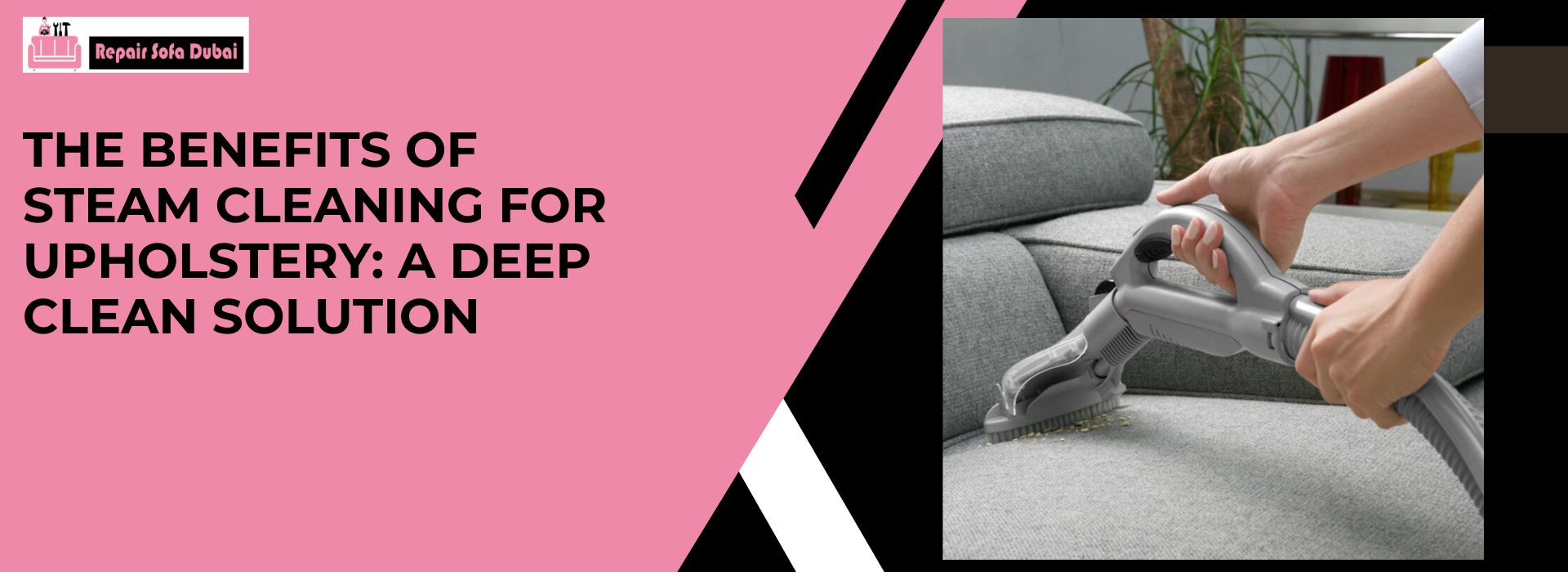
Steam cleaning removes dirt, stains, and odors from upholstery without harsh chemicals, while also killing dust mites, bacteria, and allergens through high heat alone. It works by forcing hot vapor deep into fabric fibers, lifting embedded grime that vacuuming and surface wiping can’t reach. This guide covers exactly how steam cleaning works, which fabrics it’s safe for, and how often upholstery in a Dubai home actually needs it.
What is steam cleaning for upholstery?
Steam cleaning uses a machine that heats water to a high temperature and applies it as vapor directly onto fabric, loosening dirt and oils trapped inside the fibers without soaking the material the way liquid cleaning solutions do. The heat does most of the work, breaking down grime that cold water and standard detergents struggle to shift.
Because steam is largely water vapor rather than liquid, it penetrates fabric more evenly than a shampoo or spray cleaner, reaching into the weave rather than sitting on the surface. This is why steam cleaning is often described as a deeper clean than standard upholstery cleaning methods, even though both processes are removing the same type of dirt.
How does steam cleaning remove dirt and stains from fabric?
Steam cleaning breaks down dirt and stains by loosening the bonds between grime and fabric fibers using heat, then lifting the loosened residue out with the machine’s extraction or wiping process. This works especially well on oil-based stains and ground-in dirt that resist plain water.
Older or set-in stains typically need a pre-treatment before steaming, since heat alone can sometimes set certain stains rather than lift them if applied without loosening the stain first. A trained technician checks the stain type before steaming rather than applying heat directly, which is one of the main reasons professional results tend to outperform DIY steam cleaning on tougher stains.
Does steam cleaning kill germs and allergens?
Yes. The high temperature produced by steam cleaning, often above 100°C at the nozzle, is hot enough to kill the vast majority of bacteria, dust mites, and other microorganisms living in upholstery fibers, without relying on chemical disinfectants.
This matters most for households with allergy sufferers, young children, or pets, since fabric furniture accumulates dust mites and dander over time regardless of how often it’s vacuumed. Vacuuming removes visible debris from the surface, but dust mites live deeper in the fibers where only heat or chemical treatment reaches them effectively. Steam cleaning handles this without introducing the chemical residue that some households want to avoid, particularly in homes with babies or people with sensitive skin.
Is steam cleaning safe for all upholstery fabrics?
No. Steam cleaning works well on most fabric and leather upholstery, but delicate materials like silk, some antique textiles, and certain unsealed wood or wicker trim can be damaged by heat and moisture, and need a different cleaning approach.
Fabric type is the deciding factor here, which is why we always recommend checking the manufacturer’s cleaning code before scheduling a steam clean. Leather can generally be steam cleaned safely as long as it’s conditioned afterward to prevent drying out, while velvet responds particularly well to steam since the heat lifts crushed pile without the scrubbing that can wear down the texture. If you’re unsure which category your fabric falls into, our guide on choosing the right upholstery fabric breaks down how different materials respond to cleaning and daily wear.
How does steam cleaning compare to shampoo or chemical cleaning?
Steam cleaning generally dries faster and uses fewer chemicals than shampoo cleaning, though shampoo methods can sometimes lift certain oil-based stains more effectively on fabrics that tolerate heavier moisture. The right choice depends on the fabric and the type of stain being treated.
Shampoo cleaning applies a cleaning solution that needs to be worked into the fabric and then extracted, which leaves more residual moisture behind and takes longer to dry. Steam cleaning uses far less liquid overall, since the cleaning action comes from heat rather than saturation, which is part of why furniture is usually safe to use again sooner after a steam clean than after a heavier chemical or shampoo treatment.
How often should upholstery be steam cleaned in Dubai?
Most households benefit from professional steam cleaning every six months, though homes with pets, young children, or nearby construction and desert dust exposure often need it every three to four months to stay ahead of buildup.
Dubai’s dust levels and near-constant air conditioning both contribute to faster buildup in upholstery fibers than in less dusty, more humid climates. Air conditioning systems circulate indoor dust continuously, and much of it settles into fabric furniture over time, which is why homes here often need more frequent cleaning than the twice-a-year rule of thumb suggests for other regions.
Does steam cleaning extend the life of your sofa?
Yes. Regular steam cleaning prevents the slow fiber breakdown caused by embedded dirt and oils, which otherwise wears down fabric strength and foam over time. Furniture that’s cleaned regularly typically shows less visible fading, matting, and structural wear than furniture cleaned only occasionally.
Dirt trapped inside fabric fibers acts almost like sandpaper against the weave every time someone sits down, gradually thinning the material from the inside. Removing that embedded grime through regular steam cleaning slows this process considerably. This connects directly to foam longevity as well, since a sofa that’s cleaned and maintained tends to need cushion foam replacement less frequently than one that isn’t, as covered in our piece on how foam replacement extends furniture life.
DIY steam cleaning vs professional steam cleaning
A basic handheld steam cleaner can handle light surface refreshing between professional visits, but professional-grade equipment reaches higher, more consistent temperatures and includes extraction, which produces a deeper clean and faster drying time than most consumer machines can match.
The bigger difference is technique rather than equipment alone. Professional technicians test fabric reaction in an inconspicuous spot first, pre-treat visible stains before steaming, and adjust heat and pressure by fabric type, none of which a standard consumer steam cleaner is set up to do automatically. This is why DIY steam cleaning works reasonably well for light maintenance but isn’t a full substitute for a professional deep clean every few months.
Is steam cleaning bad for your furniture?
The short answer
No, not when it’s done correctly and matched to the right fabric type, but it can cause damage on delicate materials or when applied without proper technique.
When steam cleaning can cause harm
Steam cleaning can damage silk, some antique or unsealed textiles, and wood trim if moisture isn’t controlled carefully, and it can set certain stains permanently if heat is applied before the stain is pre-treated.
When steam cleaning is safe and beneficial
For most modern fabric, leather, and performance upholstery, steam cleaning is both safe and beneficial when performed by someone who checks fabric type first and uses appropriate heat and technique for that material.
The verdict
Steam cleaning is one of the safest and most effective upholstery cleaning methods available, as long as the fabric type is checked first and the right technique is used. The risk isn’t in the method itself, it’s in applying it without matching heat and approach to the specific material.
Book a Professional Upholstery Steam Clean
Our team checks fabric type, pre-treats visible stains, and steam cleans your sofa, chairs, or headboard with equipment and technique matched to the material, so you get a deeper clean without any risk to the fabric. Visit our upholstery services page to see our full range of care and repair options, or reach out for a free quote.
