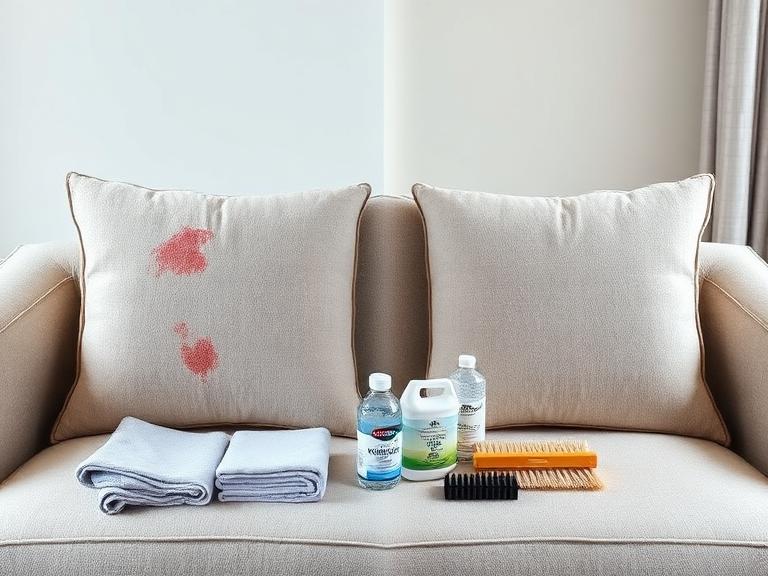
Blot fresh blood immediately with cold water, never hot, and never scrub. For dried stains, gently scrape away the loose material first, then treat the area with a mild soap solution or an enzyme-based cleaner. Hydrogen peroxide can help on light-colored fabric, but only after testing it in a hidden spot first.
Blood stains happen more often than people expect, a scraped knee, a nosebleed, a pet injury. They’re nothing to worry about if you act with the right method. This guide walks through exactly how to treat fresh and dried stains, the mistakes that make them worse, and when it’s better to call a professional instead of risking the fabric.
Why are blood stains harder to remove than other stains?
Blood is a protein-based stain, and proteins bond quickly and firmly to fabric fibers, especially once heat is introduced. This is why blood behaves differently from a food or drink spill and needs a specific approach rather than general stain-removal methods.
The longer blood sits, the deeper it works into the fibers and the harder it becomes to lift without damaging the fabric underneath. Speed matters more with blood than with most other stain types, which is why treating it immediately gives you the best chance of full removal.
How to remove fresh blood stains from upholstery
For a fresh stain, blot, don’t rub, using a clean, light-colored cloth to lift as much blood as possible before it has a chance to set into the fabric.
- Blot the wet stain gently with a dry cloth to absorb as much blood as possible.
- Mix a small amount of mild dish soap with cold water.
- Dip a clean cloth in the solution and blot the stain from the outside in, to avoid spreading it.
- Rinse by blotting with a cloth dampened in plain cold water.
- Pat the area dry with a clean towel and let it air dry fully before sitting on it again.
Most fresh blood stains lift almost completely with this method alone, as long as it’s done before the stain has time to set.
How to remove dried blood stains from upholstery
Dried blood needs a bit more work, since the stain has already bonded to the fabric. Start by loosening the dried material before applying any liquid.
- Use a soft-bristled brush or the dull edge of a knife to gently scrape away crusted material.
- Vacuum up any loose flakes so they don’t spread during cleaning.
- Apply an upholstery-safe enzyme cleaner directly to the stain and let it sit for 10 to 15 minutes.
- Blot with a clean, damp cloth to lift the loosened stain.
- Repeat as needed for stubborn areas, then let the area air dry completely.
Enzyme cleaners work well on dried blood because they break down the proteins directly rather than just lifting the surface residue. Older, deeply set stains sometimes need two or three rounds of treatment before they’re fully gone.
What not to do when cleaning blood from upholstery
A few common instincts actually make blood stains worse rather than better, so avoiding these mistakes matters as much as the cleaning method itself.
- Never use hot water. Heat sets protein stains permanently into the fabric.
- Don’t scrub. Scrubbing pushes the stain deeper into the fibers instead of lifting it out.
- Avoid colored cloths. Dye from a colored cloth can transfer onto the fabric and create a second stain.
- Don’t oversaturate the area. Too much liquid can soak into the padding underneath and cause mold or water staining.
These mistakes are the main reason a treatable stain sometimes turns into a permanent one, so it’s worth being deliberate even when you’re in a hurry to clean it up.
Is hydrogen peroxide safe for all fabrics?
No. Hydrogen peroxide should only be used on light-colored or white fabric, and even then, only after testing it on a hidden area first, since it can bleach or discolor fabric.
Before using any cleaning solution, check your furniture’s care tag for its cleaning code. A code of W means water-based cleaners are safe, S means only solvent-based cleaners should be used, and X means the fabric should be vacuumed only, with no liquid cleaning at all. Using the wrong method for the fabric’s code risks permanent damage well beyond the original stain.
Does fabric type change how you should clean blood stains?
Yes. Delicate fabrics like velvet, silk, and suede need a gentler approach than sturdier fabrics like leather or performance-treated materials, and some should not be treated with water-based methods at all.
Velvet in particular can crush or develop water marks if over-wetted during cleaning, so a lighter touch and quicker drying time matter more than on a standard woven fabric. If you’re not sure how your specific fabric should be treated, our guide to upholstery fabric types covers how different materials respond to cleaning and daily care.
How do you get rid of blood odor after the stain is gone?
Even after a blood stain is fully removed, a faint odor can sometimes linger in the padding underneath. Sprinkling baking soda over the area, letting it sit overnight, and vacuuming it up the next day usually resolves this without needing any additional chemicals.
Avoid masking the smell with strong fragrance sprays, since these can react unpleasantly with any residual odor rather than actually eliminating it. If the smell persists after a baking soda treatment, it’s often a sign the stain reached the foam or padding layer, which usually needs professional attention.
When should you call a professional instead of doing it yourself?
Call a professional when the stain is old and deeply set, the fabric is delicate or has an X cleaning code, or the blood has soaked through to the padding underneath. DIY methods work well for most fresh stains, but they have real limits.
Professional upholstery cleaners have access to extraction equipment and fabric-specific solutions that reach deeper into the material than home methods can, without the same risk of spreading or setting the stain further. Our professional upholstery cleaning services page covers exactly when it makes sense to bring in a professional rather than continuing to treat a stain yourself.
Can dried blood stains always be removed?
The short answer
Not always, but most dried blood stains can be significantly reduced or fully removed with the right method and enough patience, especially if the fabric itself is in good condition.
When removal is likely
Fresh stains treated promptly, and dried stains on sturdy, water-safe fabrics, respond well to home treatment in almost every case.
When removal is difficult
Very old stains that have fully set, stains on delicate or non-water-safe fabrics, and stains that have soaked into the padding are harder to fully remove without professional equipment.
The verdict
Most blood stains are fully treatable if you act with the right method rather than panic-cleaning. For the harder cases, a professional cleaner has tools and techniques that go beyond what’s possible at home.
Frequently Asked Questions
How do you remove blood from upholstery?
Blot fresh blood immediately with a clean cloth using cold water, never hot. For dried stains, gently scrape away loose material first, then treat with a mild soap solution or enzyme cleaner, and hydrogen peroxide only on light-colored fabric after a spot test.
Why does hot water make blood stains worse?
Blood contains proteins that set and bond permanently to fabric fibers when exposed to heat. Cold water keeps the proteins from setting, which is why cold water should always be used when treating blood stains.
Is hydrogen peroxide safe for removing blood from upholstery?
Hydrogen peroxide is only safe for light or white fabrics, and even then it should be spot-tested first, since it can bleach or discolor darker or more delicate materials.
Need Help With a Stubborn Stain?
If a blood stain won’t fully lift or you’re not sure your fabric can handle DIY treatment, our team can help without the risk of damaging your furniture. Visit our upholstery services page to see our full range of cleaning and care options, or reach out for a free assessment and quote.
