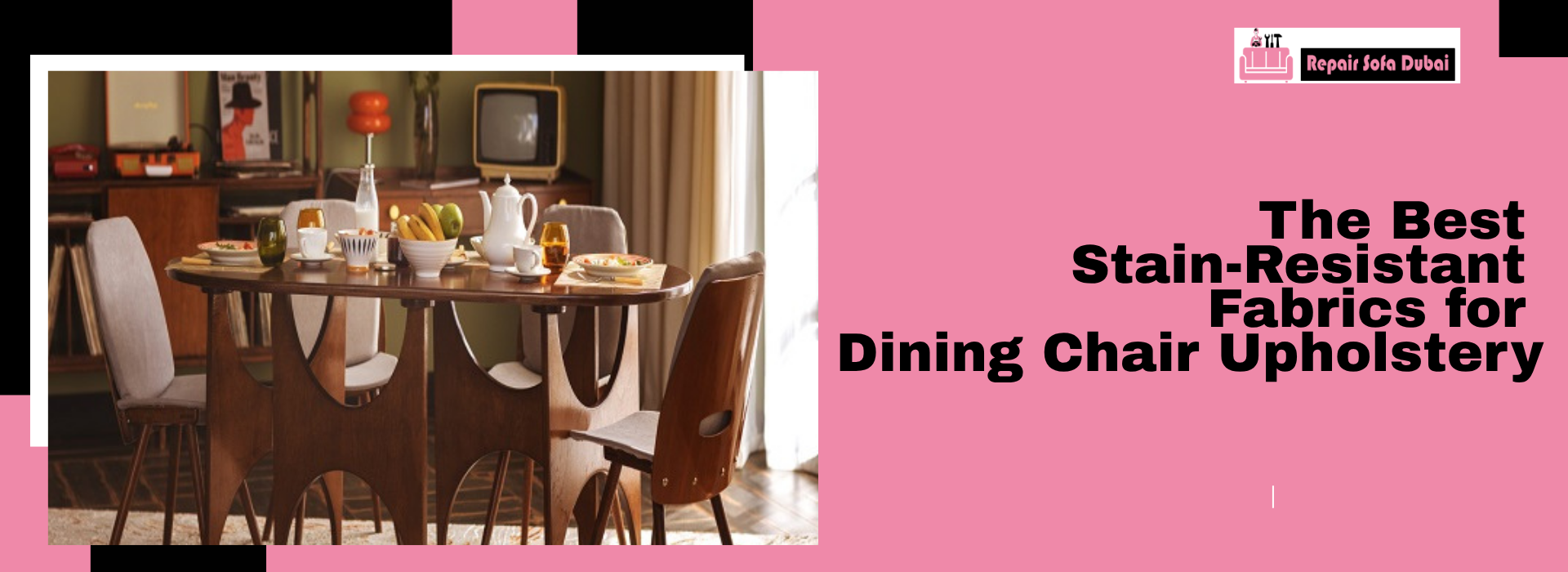
Performance fabrics like Crypton and treated olefin, along with vinyl and faux leather, are the most stain-resistant options for dining chairs, since dining seating faces more concentrated food and liquid exposure than almost any other furniture in the home.
These materials resist absorption at the surface level, giving spills time to be wiped away before they set into the fibers. This guide covers exactly what makes a fabric stain-resistant, which materials perform best on dining chairs, and which ones to avoid regardless of how good they look in the showroom.
What makes a fabric stain-resistant?
A fabric is stain-resistant when its fiber structure or surface treatment prevents liquid from soaking in immediately, giving spills time to be wiped away before they penetrate and set. This comes from either the fiber type itself, such as synthetic fibers that don’t absorb liquid the way natural fibers do, or from a topical treatment applied to a woven fabric.
Synthetic fibers like polyester and olefin are naturally less absorbent than cotton or linen, since their molecular structure doesn’t draw in liquid the way natural plant fibers do. Treated fabrics, including Crypton and most FibreGuard-branded fabrics, achieve similar performance on a woven base fabric by applying a protective coating during manufacturing, which is why a treated cotton blend can perform close to a synthetic fabric while still keeping a natural look and feel.
What is the best stain-resistant fabric for dining chairs?
Crypton and other performance fabrics rank as the best overall choice for dining chairs, combining high stain resistance, odor resistance, and durability in a fabric that still feels and looks like traditional upholstery. Vinyl and faux leather offer even higher stain resistance for a lower price, at the cost of a less natural feel.
Performance fabric (Crypton and similar)
Performance fabrics are engineered specifically to resist liquid, odor, and bacteria at the fiber level, making them one of the strongest choices for households that host frequently or have young children. Crypton in particular resists staining from oil-based spills, which many other fabrics, even other synthetics, struggle with.
The performance comes from a sealed fiber structure that prevents liquid from reaching the fabric’s core, so spills sit on the surface rather than soaking through to the padding underneath. This also makes performance fabric easier to sanitize than standard fabric, since spills and bacteria stay near the surface rather than working into the material.
Polyester
Polyester is a widely used, affordable option that resists staining reasonably well, since spills tend to bead on the surface rather than absorb immediately. It dries quickly after cleaning, which helps prevent mold or mildew from developing in humid conditions.
Polyester’s performance depends heavily on weave tightness, with tightly woven polyester outperforming looser weaves noticeably on both stain resistance and durability. It’s a strong middle-ground choice for households that want good stain resistance without the higher cost of a dedicated performance fabric.
Vinyl and faux leather
Vinyl offers some of the highest stain resistance of any dining chair material, since its non-porous surface lets most spills wipe off immediately without soaking in at all. Modern vinyl has also improved significantly in appearance, with textures that closely mimic leather or woven fabric.
The trade-off is feel and breathability rather than stain performance, since vinyl doesn’t breathe the way woven fabric does and can feel warmer against skin during long meals. For households prioritizing easy cleanup above all else, particularly with young children, vinyl remains one of the most practical choices available.
Olefin
Olefin is a synthetic fiber that resists moisture particularly well, making it a strong choice in humid climates where mold resistance matters alongside stain resistance. Tea, coffee, and most food spills sit on the surface rather than soaking in, similar to polyester.
Because olefin resists moisture at the fiber level rather than through a surface treatment, its stain resistance doesn’t wear off over time the way some treated fabrics can after repeated cleaning. This makes it a durable long-term option for households in coastal or humid areas.
Leather
Leather wipes clean easily and resists most spills when properly conditioned, though it isn’t as universally stain-resistant as vinyl or performance fabric, since certain liquids like red wine or oil can stain unsealed or aniline leather if left too long. Full-grain leather with a protective finish performs noticeably better than unfinished or aniline leather.
Which fabrics should you avoid for dining chairs?
Untreated linen, silk, suede, and loosely woven natural fibers generally perform poorly on dining chairs, since they absorb liquid quickly and show stains permanently once a spill has set. These fabrics can still work in low-traffic dining spaces, but they’re a poor match for daily family use.
Linen in particular looks appealing for dining rooms but absorbs spills almost immediately unless it’s been treated with a stain-resistant finish, at which point it behaves closer to a treated cotton blend than pure linen. If the aesthetic of a natural fiber matters more than raw performance, choosing a treated version of that fabric is usually a better compromise than an untreated one.
Does stain-resistant mean stain-proof?
No. Stain-resistant fabric slows down absorption and gives more time to clean a spill before it sets, but it doesn’t make a fabric immune to staining if a spill is left untreated for an extended period. Even the most resistant fabrics benefit from prompt cleanup.
The practical difference shows up in response time rather than outcome. A stain-resistant fabric might tolerate a spill sitting for twenty or thirty minutes with no visible mark, while an absorbent fabric would already show staining within a minute or two. Beyond that window, however, even performance fabrics can develop stains if the spill is oil-based or highly pigmented and left long enough.
How does Dubai’s climate affect stain-resistant fabric choice?
Dubai’s combination of frequent entertaining, rich, oil-based cuisine, and humidity swings makes stain resistance and moisture resistance equally important when choosing dining chair fabric. Fabrics that resist oil-based stains specifically, such as Crypton, tend to outperform standard stain-resistant fabrics in households that cook and host often.
Humidity also plays a role beyond staining alone, since damp conditions can encourage mold growth in fabric that stays wet after cleaning. Materials like olefin and vinyl that dry quickly after wiping hold an advantage here over natural fibers, which retain moisture longer even after a spill has been cleaned up. For a broader look at how Dubai’s climate affects fabric choice across different furniture types, our complete guide to choosing upholstery fabric covers durability ratings and climate suitability in more depth.
Stain-resistant fabric comparison for dining chairs
| Fabric Type | Stain Resistance | Feel | Best For |
|---|---|---|---|
| Performance Fabric (Crypton) | Excellent, including oil-based stains | Soft, fabric-like | Families, frequent hosting |
| Vinyl / Faux Leather | Excellent, wipes clean instantly | Smooth, less breathable | Households with young children |
| Polyester | Good | Soft, versatile | Everyday family dining |
| Olefin | Good, strong moisture resistance | Slightly textured | Humid or coastal homes |
| Leather (finished) | Moderate to good | Classic, durable | Formal dining rooms |
| Untreated Linen or Cotton | Poor | Natural, breathable | Low-traffic formal spaces only |
Is leather a good stain-resistant choice for dining chairs?
The short answer
Yes, but with conditions. Finished leather with a protective topcoat resists most spills well, while unfinished or aniline leather is considerably more vulnerable to staining.
When leather works well for dining chairs
Leather performs well when it has a protective finish, is conditioned regularly, and spills are wiped up promptly rather than left to sit. It suits formal dining rooms more than heavy daily family use.
When leather is a riskier choice
Unfinished, aniline, or nubuck leather absorbs oil and pigmented liquids more readily than finished leather, making it a poor match for households with young children or frequent messy meals.
Conclusion
Leather can be a strong stain-resistant choice for dining chairs as long as it’s finished leather rather than an unsealed variety, and as long as spills get attention promptly. For households wanting a lower-maintenance option with less risk, performance fabric or vinyl still edges out leather on raw stain resistance.
Get the Right Fabric for Your Dining Chairs
Choosing between these fabrics is easier with samples in hand and a technician who understands how your dining room actually gets used. Our team helps you weigh stain resistance, feel, and budget for your specific household, then handles the reupholstery from start to finish. Visit our dining chair upholstery service page to see our full fabric range, or explore our guide on choosing fabric for chair upholstery for more on durability ratings and pattern selection. Reach out for a free consultation and quote.
