Blog

Interior Upholstery vs Residential Upholstery: What Is the Difference?

The terms “interior upholstery” and “residential upholstery” are sometimes used interchangeably — and sometimes used to mean distinctly different things depending on who is speaking. In the furniture and interior design trade, however, there is a meaningful distinction between the two, and understanding it helps when specifying a project, choosing a service provider, or understanding a quote. This guide explains both terms clearly.

Residential Upholstery: The Definition

Residential upholstery refers to upholstery work done for private homes — apartments, villas, townhouses and any domestic living environment. It is the most common context in which people encounter upholstery services: a homeowner wants their sofa reupholstered, a family wants new dining chair pads, a villa owner wants a headboard recovered.

Residential upholstery is characterised by:

  • Individual pieces — typically one sofa, one chair set or one bed at a time, rather than large volumes
  • Personal aesthetic preferences — the client chooses fabric and finish based on their own taste and the style of their home
  • Domestic-grade materials — fabrics rated for household use rather than commercial durability requirements
  • Flexibility in scheduling — work is arranged around the homeowner’s availability
  • Emotional attachment to the piece — residential clients often have a strong connection to the furniture and want it preserved rather than replaced

Our residential services cover everything from sofa reupholstery and chair upholstery to bed and headboard upholstery across all areas of Dubai and the UAE.

Interior Upholstery: The Definition

Interior upholstery is a broader term. It covers upholstery work done across all interior environments — residential, commercial, hospitality, retail and institutional. When used specifically, “interior upholstery” often refers to the upholstery component of a larger interior design or fit-out project, where the upholstery is one element within a complete interior specification.

In this context, interior upholstery is characterised by:

  • Volume and coordination — a hotel fit-out might require 200 restaurant chairs, 80 guestroom headboards and 40 lobby sofas, all specified to a consistent standard
  • Design-led specification — fabric and finish are specified by an interior designer rather than chosen by an end user; the upholstery must align with a wider design scheme
  • Contract-grade materials — fabrics must meet commercial durability and fire safety standards that go beyond domestic requirements
  • Tighter deadlines — interior fit-out projects have fixed opening dates; the upholstery work must be completed within the project schedule
  • Coordination with other trades — interior upholstery on a fit-out project runs alongside flooring, lighting, joinery and mechanical work; the upholsterer must coordinate with a project manager

Where the Two Overlap

The overlap happens when residential clients work with an interior designer to furnish or refurnish a home. In this case, the upholstery is still for a private residence (residential) but it is being specified by a design professional as part of a wider interior scheme (interior). The materials chosen may be designer-grade fabrics rather than off-the-shelf options, the specification will be more precise, and the work may need to coordinate with other tradespeople on site.

Many professional upholstery workshops in Dubai work across both contexts — doing single-sofa residential jobs for homeowners and multi-piece hospitality fit-outs for hotels and restaurants. The skills are the same; the scale, specifications and workflow differ.

The Key Material Difference: Domestic vs Contract Grade

The most practical difference between residential and interior (commercial) upholstery is the material specification. This affects both cost and performance:

Specification Residential / Domestic Interior / Commercial / Contract
Martindale rub count 15,000–30,000 30,000–100,000+
Fire retardancy Standard domestic (varies by country) Must meet commercial fire safety regulations (BS 7176 in UK; NFPA in USA; local codes in UAE)
Foam density 30–45 kg/m³ typical 45–60 kg/m³ for high-use commercial
Cleanability Home cleaning methods Must withstand commercial cleaning agents and frequent cleaning cycles
Lead time Flexible Must align with project schedule

Interior Upholstery in the UAE Context

Dubai and the wider UAE have an unusually large commercial interior upholstery market relative to their size. The constant development of new hotels, restaurants, retail spaces and office fit-outs creates consistent demand for contract upholstery at scale. Fire safety requirements for commercial spaces in the UAE follow civil defence regulations that typically align with international standards.

For hotel and hospitality projects specifically, the upholstery specification must often include both durability and a specific aesthetic — the two requirements that most closely define interior upholstery as a discipline. Our hotel furniture upholstery and restaurant chair upholstery services are designed to meet exactly these dual requirements.

Summary: Which Term Applies to Your Project?

  • You have a sofa at home you want reupholstered → residential upholstery
  • An interior designer is specifying fabrics for your villa refurbishment → interior upholstery within a residential project
  • You are fitting out a new restaurant and need 60 chairs done → interior / commercial / contract upholstery
  • A hotel is replacing guestroom headboards as part of a refurbishment → interior / hospitality upholstery

In all cases, the fundamental craft is the same. What changes is the scale, the material specification, the coordination requirements and the regulatory context. A good upholstery workshop — one that works across both residential and commercial projects — will be able to advise on the right specification for your specific situation.
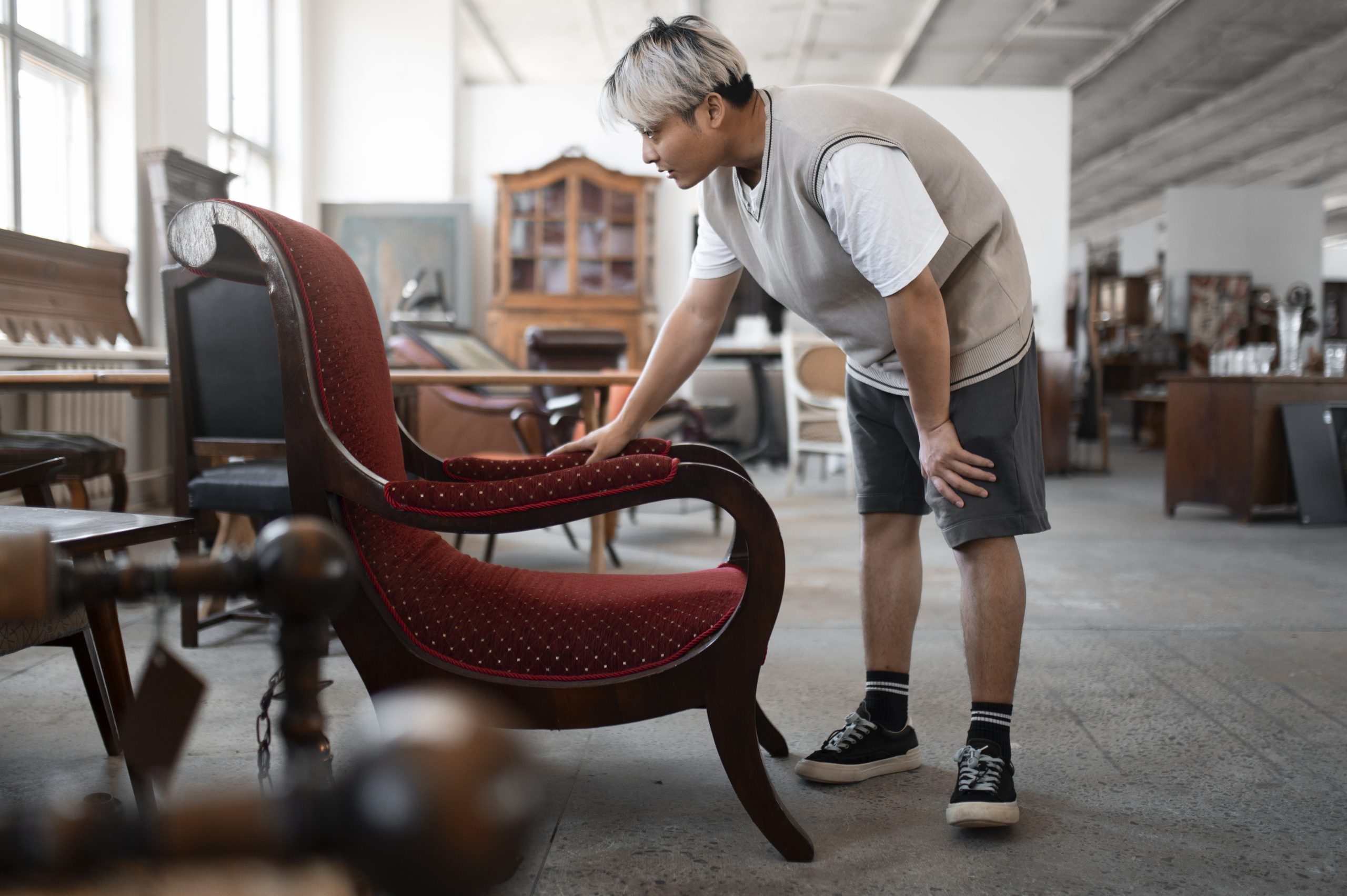
Three Types of Furniture: Upholstered, Case Goods & Outdoor — What Each Means

In the furniture trade, all furniture falls into one of three primary categories: upholstered furniture, case goods, and outdoor furniture. Understanding these categories helps when shopping for furniture, specifying a design project, or working with a furniture retailer or repair specialist. This guide explains what each category means, what falls within it, and how the categories interact.

Category 1: Upholstered Furniture

Upholstered furniture is any furniture that has a padded and fabric-covered component as a defining feature. The defining characteristic is the combination of a rigid frame, padding (foam, springs or batting), and an outer covering (fabric, leather or vinyl).

What it includes:

  • Sofas, couches and loveseats
  • Armchairs, accent chairs and club chairs
  • Dining chairs with padded seats
  • Ottomans and upholstered footstools
  • Upholstered beds and headboards
  • Recliners, massage chairs and lounge chairs
  • Upholstered benches and settees

Key characteristics:

Upholstered furniture is defined by its softness and comfort. It is what makes a room liveable rather than merely functional. The frame provides the structure; the upholstery provides the comfort and the visual character.

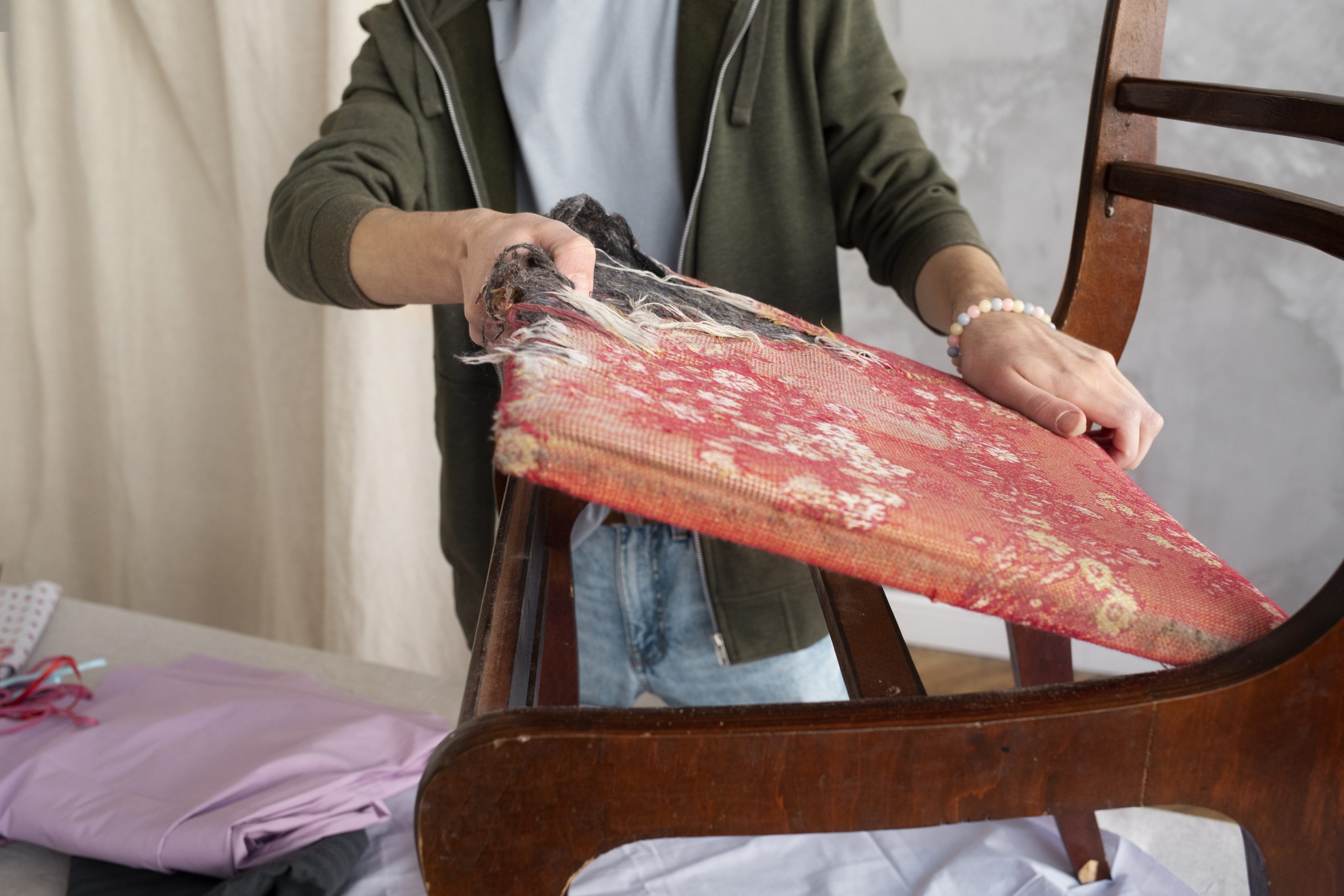
Upholstered furniture is also the most maintenance-intensive category. Fabric and foam degrade over time, stains penetrate textile surfaces, and the mechanical components (springs, webbing) can fail. When this happens, the furniture can be repaired and reupholstered rather than replaced — preserving the frame while renewing the soft elements. Our full range of upholstery services covers every type of upholstered furniture.

Subcategories of upholstered furniture:

  • Fully upholstered — the entire piece is fabric or leather-covered, with no exposed frame (a Chesterfield sofa is a classic example)
  • Partially upholstered — some elements of the frame are exposed and the padding and covering are limited to specific sections (a dining chair with a wooden frame and a padded seat, or a wooden-armed sofa with upholstered seat and back)
  • Loose-cushion furniture — the frame has no fixed upholstery; all the soft comfort comes from removable loose cushions placed on a rigid base

Category 2: Case Goods

Case goods is the trade term for furniture made primarily from hard materials — wood, metal, glass, stone — with no significant soft element. The name comes from the fact that these pieces typically form the “case” or enclosure that contains or supports other things.

What it includes:

  • Dining tables and kitchen tables
  • Coffee tables, side tables and console tables
  • Wardrobes, chests of drawers and dressers
  • Bookcases, shelving units and display cabinets
  • Bed frames (without fabric covering)
  • Desk and office furniture without cushioning
  • Wooden chairs without padding

Key characteristics:

Case goods are defined by their material hardness and structural function. They store, support and organise. A wardrobe stores clothes; a dining table supports plates; a bookcase holds books. Unlike upholstered furniture, case goods do not degrade through fabric wear or foam compression — they fail through structural damage, joint loosening, surface scratching and veneer lifting.

Case goods can be repaired through woodworking, joint reinforcement, refinishing and veneer repair. They can also be partially upgraded with upholstery: a plain wooden dining chair can have a padded seat added, converting it from a case good to a partially upholstered piece.

Where case goods and upholstery overlap:

Many furniture pieces combine elements of both categories. A wooden-framed sofa with exposed legs and arms is primarily a case good in its structure, with upholstery applied to the seat, back and cushions. A bed frame is a case good; the headboard (if padded) is upholstery. The combination is where most real furniture lives.

Category 3: Outdoor Furniture

Outdoor furniture is any furniture designed for exterior use — on balconies, terraces, gardens, pool areas and patios. It is defined not by its construction type but by its intended environment. Outdoor furniture can be upholstered, can incorporate case-good-style hard elements, or can be entirely hard-surfaced.

What it includes:

  • Rattan and wicker sofas and chairs
  • Aluminium and teak garden tables and chairs
  • Outdoor lounge sets with weather-resistant cushions
  • Poolside sun loungers
  • Outdoor dining sets
  • Garden swings and pergola furniture

Key characteristics:

The defining feature of outdoor furniture is its resistance to exterior conditions: UV radiation, rain, humidity, salt air and temperature extremes. In the UAE, outdoor furniture faces some of the most challenging conditions in the world — intense sunlight that bleaches and degrades materials, heat that warps and cracks surfaces, and occasional sandstorms that abrade finishes.

Outdoor furniture that includes cushions or padded elements — an outdoor sofa set, for example — contains outdoor upholstery. This outdoor upholstery uses entirely different fabric specifications from indoor upholstery: UV-stabilised, moisture-resistant, quick-drying and mould-inhibiting. Standard indoor fabrics will fail outdoors within months in the UAE climate.

When outdoor furniture is damaged — by UV fading, frame corrosion, cushion deterioration or mechanical failure — it can be repaired and restored rather than replaced. Our outdoor furniture repair service handles structural repairs to frames, while our outdoor cushion upholstery service covers the fabric and foam replacement using climate-appropriate materials.

How the Three Categories Work Together

In any furnished room, all three categories typically coexist:

  • The sofa and armchair are upholstered furniture
  • The coffee table, bookcase and storage units are case goods
  • The balcony lounge set is outdoor furniture

When furniture needs maintenance or repair, knowing which category it falls into tells you what type of specialist to contact. Case goods need a woodworker or furniture restorer. Upholstered pieces need an upholstery workshop. Outdoor furniture may need both — frame repair for the structure and cushion reupholstery for the soft elements.

A Note on Mixed-Category Pieces

Some of the most popular furniture styles deliberately combine elements of all three categories. A rattan outdoor sofa with cushioned seating has a case-good-style frame (rattan or aluminium) with outdoor upholstery (the cushions). A wooden dining chair with a padded seat is a case good with a small upholstered element. A bed with an upholstered headboard is a case good (the frame) with an upholstered feature (the headboard).

The category of the piece determines the primary type of care it needs. A mixed piece may need attention to both its hard and soft elements — which is why a good furniture repair and upholstery workshop, like ours, handles both.

What Furniture Qualifies as Upholstery? Beds, Mattresses, Sofas & More

One of the most common questions in furniture care is deceptively simple: what actually counts as upholstery? The line is blurrier than most people expect. A sofa — obviously. A wooden dining chair — obviously not. But what about a fabric headboard? A mattress? An ottoman? A car seat? This post draws a clear line and explains the logic behind it.

The Core Qualification Test

A piece of furniture qualifies as upholstery — or more precisely, contains upholstery — when it has all three of the following elements:

  1. A structural base or frame — wood, metal or other rigid material
  2. A padding layer — foam, springs, webbing, batting, horsehair or similar soft filling
  3. An outer covering — fabric, leather, vinyl or another textile applied over the padding

If all three are present, the piece contains upholstery. If any one of the three is absent, it typically does not qualify. A wooden chair seat with a loose cushion placed on it has an upholstered cushion — but the chair itself is not upholstered unless the cushion is fixed and covered as part of the chair’s construction.

Sofas and Couches

Verdict: Definitively upholstery.

Sofas are the primary reference point for upholstery. A sofa has a timber or steel frame, a support system (webbing or coil springs), foam and batting padding, and a fabric or leather outer covering. Every element of the upholstery definition is present. The seat cushions, back cushions, arms and (in fully upholstered models) even the legs or base may all be covered — all of this constitutes the upholstery of the sofa. Our sofa upholstery service covers all of these components.

Armchairs and Accent Chairs

Verdict: Definitively upholstery.

Identical in principle to sofas — a frame, padding and covering. Wingback chairs, barrel chairs, club chairs and accent chairs all qualify. The seat, back, arms and any cushions all constitute the upholstery. An exposed-frame chair — such as a wooden dining chair with no pad — has no upholstery.

Dining Chairs

Verdict: Partially upholstered (seat pad and back pad only).

Most dining chairs have a fabric-covered padded seat. That seat pad — and if present, a padded back panel — qualifies as upholstery. The wooden or metal legs, the frame and any exposed structural elements are not upholstery. When a dining chair is described as “needing new upholstery,” it almost always means the seat pad fabric and foam need replacing. Our dining chair upholstery service handles this specifically.

Headboards

Verdict: Yes — a padded, fabric-covered headboard is upholstery.

This surprises many people, but a padded headboard meets every element of the definition: a base (usually MDF or ply), a foam padding layer, and a fabric or leather outer covering. Headboards are upholstered in exactly the same way as a sofa back — the same techniques, materials and skills apply. A solid wood headboard with no padding is not upholstery.

Beds and Bed Frames

Verdict: Depends on construction.

A plain wooden bed frame is furniture, not upholstery. A divan bed — where the base is a fabric-covered box — is partially upholstered (the fabric covering the base qualifies). A fully upholstered bed frame, where the side rails and footboard are also padded and fabric-covered, is extensively upholstered. The question is always: does it have padding beneath the fabric? If yes, that element is upholstery.

Mattresses

Verdict: Not typically classified as upholstery in everyday use — but technically debatable.

A mattress has an internal padding structure and a fabric outer covering (called the ticking). By the strict definition, it contains elements of upholstery construction. However, in everyday and trade usage, mattresses are classified separately from upholstery. Mattress repair, cleaning and replacement are separate industries and service categories. When a professional upholstery cleaner says they clean “upholstery,” they generally do not mean mattresses — even though they might offer mattress cleaning as a separate service.

The practical reason: mattresses are not furniture frames that can be reupholstered the way a sofa frame can. When a mattress is worn out, it is replaced — not recovered.

Ottomans and Footstools

Verdict: Yes — fully upholstery.

An ottoman or footstool has a frame (usually wood), a foam padding layer and a fabric or leather covering. It is one of the most straightforward examples of upholstered furniture. Storage ottomans that open also have an upholstered lid — the structural box beneath is furniture; the padded, covered top is upholstery.

Office Chairs

Verdict: Yes — the seat and back pads are upholstery.

The seat pad and back pad of an office chair — the fabric or mesh-covered foam sections — are upholstery. The gas lift mechanism, wheels, and metal frame components are not. Reupholstering an office chair means replacing the seat and back pad fabric and foam.

Recliners and Massage Chairs

Verdict: Yes — and a specialist sub-type of upholstery.

Recliners and massage chairs are fully upholstered — seat, back, arms and footrest are all padded and covered. They are a specialist upholstery type because the mechanical components (reclining mechanism or massage motors) must be worked around during reupholstery. Our recliner sofa upholstery service handles this specifically.

Outdoor Cushions and Garden Furniture

Verdict: Outdoor cushions are upholstery; garden furniture frames are not (unless padded and covered).

A seat cushion for a garden chair is upholstery — it has a filling and a fabric covering. The aluminium or rattan frame of the garden chair itself is furniture but not upholstery unless it has fixed padding. Replacing or recovering outdoor cushions falls within upholstery work, using UV and moisture-resistant fabrics.

Car and Vehicle Seats

Verdict: Yes — automotive upholstery is a distinct branch of the same craft.

Car seat cushions, door panel fabric and headliners are all upholstery. Automotive upholstery uses the same fundamental principles — frame, padding, covering — but requires vehicle-specific patterns and automotive-grade materials. The seat foam, seat fabric and any leather covering all qualify as upholstery.

Summary Table

Furniture Item Qualifies as Upholstery? Which Part?
Sofa / couch Yes All padded and covered elements
Armchair Yes All padded and covered elements
Dining chair (padded seat) Partially Seat pad and back pad only
Dining chair (solid wood, no pad) No
Headboard (padded) Yes The padded fabric-covered panel
Bed frame (fabric-covered divan) Partially The fabric-covered base
Mattress Not in everyday usage
Ottoman / footstool Yes All of it
Office chair (seat and back) Yes Seat and back pads
Recliner / massage chair Yes All padded elements
Outdoor cushion Yes The filled and covered cushion
Car seat Yes Seat foam and covering
Carpet / rug No
Curtain No

Does Upholstery Mean Sofa, Carpet or Furniture? Clearing Up the Confusion

The word “upholstery” gets used in a surprisingly wide range of contexts — sometimes accurately, sometimes not. People use it to mean the sofa itself, the fabric on the sofa, the service of recovering a chair, or simply any soft furnishing in a room. And the question of whether carpets count as upholstery comes up regularly. This post cuts through the confusion with clear, definitive answers.

Does Upholstery Mean Sofa?

No — but the confusion is understandable. A sofa is a piece of furniture. The fabric, foam and padding that cover and fill it are the upholstery. In everyday speech, people often say things like “I need to get my upholstery done” when they mean “I want my sofa reupholstered.” In this usage, “upholstery” has become shorthand for the upholstered furniture itself.

Technically, upholstery is the material and craft, not the object. A sofa is an upholstered piece of furniture. The upholstery is the soft layer — fabric, leather, foam, webbing — that makes the frame a comfortable seat.

When a business advertises “sofa upholstery services,” they mean the service of reupholstering sofas — replacing the fabric and foam — not that they sell sofas. The distinction matters when requesting quotes: you are asking them to work on your sofa’s upholstery, not to provide a sofa.

Does Upholstery Mean Carpet?

No. Carpets and upholstery are distinct categories, though they are often cleaned by the same service providers, which is one reason the two get conflated. Here is why they are different:

  • Carpets are floor coverings. They are fixed (or semi-fixed) to a floor surface. They are not part of a furniture frame, they do not cushion a seated person, and they are not considered soft furnishings in the same sense as upholstery.
  • Upholstery is the padded and covered soft element of furniture — seats, backs, arms, cushions and headboards. It is attached to furniture frames, not floors.

The reason the two appear together so often is that upholstery cleaners frequently offer carpet cleaning as a complementary service — the equipment overlaps, and customers often want both done at the same time. When you see “carpet and upholstery cleaning,” it means two separate but related services being offered together, not one single category.

Rugs are similarly not upholstery — they are textile floor coverings. A rug on a sofa is a throw, not upholstery. A throw or cushion cover placed on furniture is also not upholstery — it is a loose accessory, as distinct from the fixed, structural covering that defines upholstery.

Does Upholstery Mean Furniture?

Upholstery is part of furniture — specifically the soft, padded element — but it is not the same as furniture itself. Furniture is the broader category that includes both hard and soft elements. A wooden table is furniture but has no upholstery. A leather armchair is furniture, and its leather covering is its upholstery.

Some furniture has no upholstery at all: a solid oak dining table, a metal shelving unit, a glass coffee table. These are furniture but not upholstered pieces. Other furniture is almost entirely upholstery: a fully upholstered sofa where even the arms and back are fabric-covered with no exposed frame is almost all upholstery, with just a hidden internal structure beneath.

What Exactly Does Count as Upholstery?

The items that are definitively upholstery — where the term correctly applies — are:

  • Sofas and couches — the most commonly upholstered items. The seat, back, arms and cushions all constitute upholstery. Our sofa upholstery service covers all of these elements.
  • Armchairs and accent chairs — seat pads, backs and arms
  • Dining chairs — the seat pad and, if present, the back panel. See our dining chair upholstery service for this specifically.
  • Headboards — the padded panel at the head of a bed is upholstery, even though it is attached to a bed frame
  • Ottoman and footstool tops — the padded surface is upholstery
  • Bed bases — if the base (divan) is fabric-covered, that covering is upholstery
  • Car seats and vehicle interiors — automotive interiors are upholstery
  • Boat seats and marine cushions — marine upholstery is a specialist branch of the same craft

What Does Not Count as Upholstery?

  • Carpets and rugs
  • Curtains and blinds
  • Mattresses (a mattress sits on a bed frame; the ticking covering a mattress is sometimes called upholstery in technical contexts, but in everyday use mattresses are not considered upholstery)
  • Loose cushion covers and throws (these are textile accessories, not fixed upholstery)
  • Table surfaces and cabinet fronts
  • The wooden or metal structural frame of any piece of furniture

The Cleaning Code Context

One place where “upholstery” has a very specific meaning is in professional cleaning. When a cleaning company offers upholstery cleaning, they mean the fabric-covered surfaces of sofas, chairs, headboards and similar padded items — not carpets, not curtains, not general furniture surfaces. If you are booking a cleaning service and want both carpets and sofas cleaned, specify both separately — they are different services even when offered by the same company.

Summary: Quick Reference

Item Is it upholstery?
Sofa fabric and foam Yes
The sofa itself (as an object) No — it is furniture that contains upholstery
Dining chair seat pad Yes
Dining chair wooden legs and frame No — that is the furniture structure
Carpet No
Curtains No
Headboard Yes (if padded and fabric-covered)
Mattress No (in everyday usage)
Car seat covering Yes
Loose cushion cover No — it is a textile accessory

Upholstery vs Furniture: What Is the Difference?

The words “upholstery” and “furniture” are often used near each other — and sometimes interchangeably — in conversation, product listings and service descriptions. But they mean different things, and understanding the distinction helps when you are shopping for fabric, requesting a service quote, or simply trying to understand what a tradesperson is describing. This post explains exactly where the two terms overlap and where they diverge.

What Is Furniture?

Furniture is the broad category. It refers to all moveable objects in a space that serve a functional purpose — providing surfaces to sit on, sleep on, store things in or work at. Furniture includes:

  • Sofas, armchairs, dining chairs and stools
  • Beds, bed frames and headboards
  • Tables — dining, coffee, side and console
  • Wardrobes, chests of drawers, cabinets and shelving
  • Desks and bookcases

Furniture is the complete object — the frame, the legs, the storage mechanism, the surface material and any padding or covering it has. The word comes from the French fournir, meaning to furnish or provide, and entered English in the 16th century to describe the moveable goods used to equip a room.

What Is Upholstery?

Upholstery is a subset of furniture — specifically the padded, cushioned and fabric-covered component of furniture. It refers to:

  • The craft of padding and covering furniture frames with foam, webbing and fabric
  • The materials used in that process — fabric, leather, foam, springs, batting, webbing
  • The finished padded and covered elements themselves

Upholstery only applies to furniture that has a soft, padded covering. A solid wood dining table has no upholstery. A solid wood dining chair with a padded seat has upholstery — specifically, the seat cushion and its fabric covering constitute the upholstery. The wooden frame and legs of that same chair are furniture, not upholstery.

The Key Distinction: Hard vs Soft

The clearest way to understand the difference is through the hard/soft distinction common in the furniture trade:

  • Hard furnishings (also called case goods) — wood, metal, glass and stone elements of furniture. Tables, cabinet bodies, bed frames and chair frames fall here. These are the structural components.
  • Soft furnishings — fabric, foam, padding, cushions, curtains and covers. Upholstery falls within soft furnishings. These are the elements that make hard structures comfortable and visually complete.

A sofa is furniture. The fabric covering its frame, the foam in its cushions, and the webbing supporting its seat are all upholstery. The timber or steel frame of that sofa is the furniture structure — the hard element — and the upholstery is layered on top of it.

Why the Confusion Exists

Several reasons cause people to conflate the two terms:

1. We refer to upholstered furniture by its upholstery type. When someone says “I have a leather sofa,” they are describing the upholstery material, not the frame. The sofa (the furniture) has leather upholstery — but in everyday conversation, people say the sofa “is leather.” The upholstery becomes the shorthand for the whole object.

2. Upholstery services are often called “furniture services.” Workshops that do upholstery work frequently describe themselves as furniture repair services, furniture restoration specialists or furniture workshops. This is accurate — they work on furniture — but it blurs the line between the broader category (furniture) and the specific craft (upholstery).

3. Some furniture is entirely upholstery. A fully upholstered sofa — where even the arms and back are fabric-covered with no visible frame — is essentially a frame that exists only to support the upholstery. In such pieces, the furniture and the upholstery are visually inseparable, even if they are technically distinct.

Practical Implications of the Distinction

Understanding the difference matters in several practical situations:

When requesting a quote: If your sofa has a broken frame, you need furniture repair — specifically structural repair of the wooden or metal frame. If the frame is fine but the fabric is worn, you need upholstery — specifically reupholstery or recovering. If both are needed, a good workshop will handle both. Knowing which problem you have helps you ask the right question and understand what you are being quoted for. Our sofa repair service covers structural frame issues, while our sofa upholstery service covers the fabric and foam.

When buying fabric: Upholstery fabric and general furnishing fabric are different products. Upholstery fabric is specifically tested and graded for use on padded furniture — it needs to meet durability standards (measured by the Martindale rub count) that curtain fabric or decorative fabric does not. Buying the wrong category of fabric for a sofa — using curtain lining on a seat cushion, for example — will result in premature wear.

When describing damage: “My furniture is damaged” and “my upholstery is damaged” describe different problems. Furniture damage typically means structural issues — broken joints, cracked frames, wobbly legs, damaged veneer. Upholstery damage means issues with the soft covering — torn fabric, flattened foam, broken springs, worn seams.

Summary

Furniture is the complete object. Upholstery is the padded, fabric-covered component within furniture that has a soft element. All upholstery is part of furniture. Not all furniture has upholstery. The distinction is between the structural frame (furniture) and the soft, comfortable layer built on top of it (upholstery).

When you need help with either — whether it is a structural frame issue or a worn fabric — our team covers both sofa repair and full upholstery services across Dubai and the UAE.

Upholstery Synonyms: Another Word for Upholstery & Key Furniture Terms Explained

Whether you are searching for an upholstery service, writing about furniture, or simply trying to understand what a quote or product listing is describing, knowing the alternative words and related terminology for upholstery saves a lot of confusion. This guide covers the most common synonyms, near-synonyms and related furniture trade terms — and explains the subtle differences between them.

Direct Synonyms for “Upholstery”

There is no single perfect synonym for upholstery because the word carries three distinct meanings — the craft, the materials, and the finished product. Different synonyms apply depending on which meaning is intended.

When referring to the craft or service:

  • Reupholstery — specifically the process of replacing existing covering on a piece of furniture. Often used interchangeably with upholstery in a service context, though technically reupholstery implies working on a previously covered piece.
  • Upholstering — the gerund form; used when describing the active process (“upholstering a chair”).
  • Trimming / Trimwork — a trade term used particularly in the automotive and marine industries. A car upholsterer is often called a “trimmer.” Interior trim shops handle what domestic upholstery workshops handle for vehicles and boats.
  • Soft furnishing — broader than upholstery; includes curtains, cushion covers and loose covers as well as fixed upholstery on frames.
  • Poshish — widely used in South Asian and Gulf contexts to describe upholstery and trim work on furniture and vehicles. Common in everyday usage across the UAE.

When referring to the material or fabric:

  • Upholstery fabric / covering fabric — the most direct description of the material itself.
  • Furnishing fabric — the trade term used by fabric suppliers and mills for fabrics intended for furniture use, as distinct from apparel or curtain fabrics.
  • Decorator fabric — used in interior design contexts; typically refers to higher-end furnishing fabrics sold through design trade channels.
  • Contract fabric — upholstery fabric specified for commercial use (hotels, restaurants, offices); must meet fire safety and durability standards stricter than domestic grades.

When referring to the finished furniture:

  • Upholstered furniture — furniture that has padding and fabric covering as a defining feature (sofas, armchairs, ottomans).
  • Padded furniture — an informal equivalent; used colloquially but less precisely than upholstered.
  • Stuffed furniture — a historical term; widely used in the 18th and 19th centuries when furniture was filled with horsehair, cotton or kapok rather than foam.
  • Cushioned seating — used in commercial contexts (restaurants, offices, transport); implies padded seating without necessarily implying a fabric cover.

Key Upholstery Trade Terms Worth Knowing

Beyond synonyms, the upholstery trade uses specific vocabulary that appears frequently in quotes, product descriptions and service listings.

Reupholster

To remove the existing covering from a piece of furniture and replace it with new fabric and, where necessary, new padding. Reupholstering keeps the original frame and replaces everything above it. It is the most common service offered by professional upholstery workshops.

Recover

Often used interchangeably with reupholster, though technically “recovering” implies replacing only the outer fabric without disturbing the foam or batting underneath. The distinction matters when quoting — a recover is typically less labour-intensive and less expensive than a full reupholster.

Tufting

A technique in which buttons are pulled through layers of padding and fabric to create a dimpled, patterned surface. Chesterfield sofas are the most famous example of tufted upholstery. Deep buttoning and diamond tufting are the two most common tufting patterns.

Piping / Welting / Cording

A fabric-covered cord inserted into seams to define edges and transitions between panels. Piping gives a neat, professional finish and adds durability to high-wear seam areas. Welting is the American trade term for the same detail.

Webbing

The interlaced straps (traditionally jute, now also synthetic rubber or polypropylene) that form the base support structure beneath the foam and fabric of a sofa seat. When webbing fails, seats sag — webbing replacement is one of the most common structural sofa repairs.

Dacron / Batting

A layer of polyester wadding wrapped around foam cushions before the outer fabric is applied. Batting softens the profile of the cushion and gives upholstered pieces their rounded, full appearance. Without batting, foam edges show through fabric and the piece looks flat and commercial.

Gimp

A decorative trim — typically a woven braid — used to cover tack lines and raw edges on traditionally upholstered pieces. Gimp is applied with adhesive and gives a finished appearance to areas where the fabric is attached to the frame.

FR Fabric (Fire Retardant)

Upholstery fabric that has been treated or manufactured to meet fire safety standards. In the UK, furniture sold for domestic use must meet BS 7176 fire resistance standards. In the UAE and GCC, commercial upholstery for hotels and restaurants typically requires FR-rated fabric. Always confirm whether a fabric meets relevant fire standards for its intended use.

Upholstery vs Related Service Terms

Term What It Means in Practice
Reupholstery Full replacement of fabric, foam and padding on an existing frame
Recover Fabric replacement only; existing foam retained
Repair Structural fixing — springs, webbing, frame, legs — without fabric change
Restoration Returning a piece to original condition, often used for antique furniture
Refurbishment General improvement; may combine repair, recovering and refinishing

Understanding these distinctions helps when requesting quotes. If you ask for “upholstery” without specifying, a workshop may quote for a full reupholster. If you only need fabric replaced, saying “recover” will typically result in a more accurate and lower quote. If the frame is the problem, what you need is sofa repair — a separate service from reupholstery, though both are often done together when a sofa is in for work.

For a broader look at everything our upholstery workshop covers — from sofa upholstery and chair upholstery to specialist services — our services page covers the full range.

Why Is It Called Upholstery? The Origin & Etymology Explained

The word “upholstery” is one of those everyday terms most people use without ever wondering where it came from. But its etymology reveals something genuinely interesting about the craft — and about the history of furniture making itself. This post traces the word from its medieval English roots to its modern meaning, and explains how the definition has shifted over the centuries.

The Root Word: “Upholder”

The word upholstery derives from the Middle English word upholder. In the 14th and 15th centuries, an “upholder” was a tradesperson who dealt in second-hand goods — particularly second-hand furniture, bedding and soft furnishings. The word itself came from the verb uphold, meaning to support or maintain, combined with the Old English suffix -er denoting a person who performs an action.

An upholder was essentially a trader who kept furniture in serviceable condition — repairing, restoring and reselling it. The connection to repair and maintenance is therefore built into the very word from its earliest use.

From “Upholder” to “Upholsterer”

By the 16th and 17th centuries, the term had evolved. As furniture-making became more specialised, a distinct trade emerged that focused specifically on the padded, stuffed and covered elements of furniture — seats, cushions, bed hangings and similar soft goods. These craftspeople became known as upholsterers, derived from the older term upholder with the suffix -ster (indicating a person who practises a craft, as in “spinster” or “webster”).

The Guild of Upholders was formally established in London in 1360, one of the early trade guilds to regulate the quality of furnishing work in England. This guild controlled who could practise the trade and set standards for materials and workmanship — a direct ancestor of the professional upholstery industry that exists today.

The Word “Upholstery” as a Trade and a Material

The noun “upholstery” — referring both to the craft and to the materials used — appears in written English from around the late 17th century. By this point the word had narrowed considerably from its broader “upholder” origins. Rather than meaning all second-hand trade, it now specifically referred to:

  • The craft of padding, stuffing and covering furniture frames
  • The materials used in that process (fabric, foam, webbing, springs)
  • The finished soft furnishings themselves

This three-part meaning — craft, material and product — is still how the word is used today.

The Latin and Old French Connections

Tracing further back, the prefix “up-” in upholstery connects to Old English and Old Norse roots meaning above, raised or elevated — suggesting something that supports or holds up from beneath. The idea of upholstery as the element that elevates a piece of furniture — making it comfortable, liveable and aesthetically complete — is embedded in the etymology.

There is also a French influence. The French word tapissier (a maker of tapestries and soft furnishings) describes a very similar craft, and French craftsmen had significant influence on English furniture-making traditions during the 17th century. Many of the techniques, fabrics and terminology that shaped English upholstery during the Stuart and Georgian periods came directly from French craft traditions.

How the Definition Has Shifted

In medieval English, an upholder dealt in all kinds of second-hand goods. By the 18th century, an upholsterer was a highly skilled craftsperson who padded and covered fine furniture. In contemporary usage, upholstery covers a broad range of applications — from domestic sofas and chairs to commercial seating, vehicle interiors, marine and aviation applications, and medical equipment.

What has remained constant across all these shifts is the core idea: upholstery is the craft of making hard frames comfortable and visually complete through padding and covering. Whether the frame is a Georgian settee or a modern modular sofa, the fundamental skill set — working with foam, fabric, webbing and springs to create a durable, comfortable surface — has changed less than you might expect over three centuries.

Upholstery in Arabic and the UAE Context

In Arabic, upholstery is most commonly referred to as تنجيد (tanjeed), which shares a root with words meaning to card, to stuff or to pad — reflecting the same core craft identity. In the UAE, the trade is sometimes also referred to as poshish work in everyday conversation, a term derived from South Asian craft traditions that came to the Gulf through the large Indian and Pakistani craftsman communities who have shaped the regional upholstery industry.

The Modern Upholsterer

Today’s upholsterers work across a wide range of furniture types — sofas, chairs, beds and headboards, outdoor furniture and commercial seating. The tools have changed — pneumatic staple guns have replaced hand-tacking, and computer-cut foam has replaced hand-carved padding — but the relationship between the craftsperson, the frame, the foam and the fabric remains essentially what it was in the workshops of 17th-century London and Paris.

The word upholstery, built from roots meaning to support, maintain and hold up, remains an accurate description of exactly what the craft does.

Best Upholstery Fabric for Pets & Cats: Scratch-Proof Options That Actually Last

If you share your home with a cat or dog, you already know the struggle: claw marks on the armrest, fur woven into every cushion, and that one corner of the sofa that has seen better days. The good news is that choosing the right upholstery fabric from the start — or reupholstering with the right material — can make all the difference. This guide covers the best pet-friendly upholstery fabrics available in 2026, what to look for, and what to avoid entirely.

What Makes a Fabric Pet-Friendly?

Not all fabrics are equal when it comes to standing up to pets. A truly pet-friendly upholstery fabric should score well on four criteria:

  • Scratch resistance: Tight weave construction resists claw snags rather than looping or fraying.
  • Hair resistance: Smooth or short-pile surfaces allow fur to be wiped off rather than embedding deep into fibres.
  • Stain resistance: Whether it is mud paws, drool or an accident, the fabric should repel liquids or clean up easily without leaving permanent marks.
  • Durability (rub count): The Martindale rub count measures how many times a fabric can be rubbed before showing wear. For pets, aim for a minimum of 30,000 rubs — ideally 50,000+.

The Best Upholstery Fabrics for Pet Owners

1. Microfibre (Microsuede)

Microfibre is consistently the top recommendation for pet owners and for good reason. Its ultra-tight weave means cat claws struggle to find purchase, fur sits on the surface rather than embedding itself, and most stains wipe clean with a damp cloth. It also feels soft — so your pets will be just as comfortable on it as you are. Look for double-sided microfibre or performance microfibre for the most durable version.

Best for: Cats, large dogs, households with multiple pets.

2. Canvas and Denim

Heavy canvas and denim-weave fabrics are among the toughest options available. The dense, flat construction makes them nearly impossible to snag with claws, and they hold up to vigorous scratching far better than most premium fabrics. They are not the most luxurious look, but they are virtually indestructible in everyday use. Used widely in UAE commercial settings for this reason.

Best for: Outdoor sofas, utility areas, households where durability matters more than aesthetics.

3. Leather (Genuine and Top-Grain)

Genuine leather is scratch-resistant to a degree, very easy to wipe clean, and does not trap pet hair at all. The downside is that over time, persistent clawing will leave visible marks — particularly on softer nappa or aniline leathers. If you choose leather, opt for top-grain or full-grain with a protected finish rather than suede-finish or aniline leather, which are far more vulnerable. Scratches on protected leather can often be professionally repaired through leather sofa reupholstery in Dubai.

Best for: Dogs with short nails, households that prioritise easy cleaning over scratch immunity.

4. Performance Fabrics (Crypton, Aquaclean, Sunbrella)

Performance fabrics are engineered specifically for high-traffic, stain-prone environments. Brands like Crypton and Aquaclean have moisture barriers built into the fibre itself — liquid sits on the surface and can be blotted away without penetrating the fabric. Sunbrella, originally designed for outdoor marine use, is also completely UV-stable and resistant to mould and mildew, making it excellent in the UAE climate. These fabrics are available through specialist upholstery suppliers in Dubai and can be used to reupholster your existing sofa.

Best for: Households with puppies, incontinent older pets, or anyone who wants maximum peace of mind.

5. Tightly Woven Synthetic Blends (Polyester, Olefin)

Polyester and olefin (polypropylene) blends with a tight, flat weave are affordable, widely available and reasonably scratch-resistant. They do not trap hair as badly as chenille or velvet, and they clean up well. They lack the premium feel of performance fabrics but are a practical choice if budget is a consideration.

Best for: Budget-conscious reupholstery, rental properties, secondary seating.

Fabrics to Avoid If You Have Pets

  • Velvet and velour: The looped pile catches every claw and traps fur like a magnet. Beautiful, but impractical with cats.
  • Linen: Natural linen is loosely woven and snags easily. It also stains and does not clean up well.
  • Tweed and bouclé: The textured, looped construction of these fabrics is irresistible to cat claws and will show snags quickly.
  • Silk and delicate blends: These require dry cleaning and will not survive a single determined scratch.

Does Fabric Colour Matter?

Practically speaking, yes. A fabric that closely matches your pet’s fur colour will show shedding far less between cleans. If you have a golden retriever, mid-tone warm fabrics make cleaning less urgent. If you have a dark-coated cat, a very light or very dark fabric will hide the fur better than mid-grey. This sounds minor, but in daily living it makes a real difference.

What About Existing Sofa Damage?

If your current sofa has already taken a beating from pets — claw marks through the fabric, torn corners, flattened cushions — sofa reupholstery is a far more cost-effective solution than buying a new sofa. You keep the frame (which is the expensive part) and replace the covering with a pet-appropriate fabric of your choice. If the cushions are also flattened, it is worth looking at pet-friendly foam replacement options at the same time — replacing fabric and foam together in one visit gives you a sofa that looks and feels completely new.

Quick Reference: Pet-Friendly Fabric Comparison

Fabric Scratch Resistance Hair Resistance Stain Resistance Durability
Microfibre Excellent Very Good Very Good Very High
Canvas / Denim Excellent Good Good Very High
Genuine Leather Good Excellent Excellent High (with care)
Performance Fabric Very Good Very Good Excellent Very High
Polyester Blend Good Good Good High
Velvet Poor Poor Average Low
Linen Poor Average Poor Low

Final Word

The best fabric for a pet-friendly sofa is one that fits your specific situation — the number of pets, their size, how often they use the sofa, and how much effort you want to put into maintenance. Microfibre and performance fabrics cover most households well. For a broader look at everything available, see our full fabric selection guide — it covers grades, textures and how to match fabrics to your interior. If you want a personalised recommendation, our team can show you physical samples and advise based on your specific pets and lifestyle.

Memory Foam vs High-Density Foam vs Latex for Sofa Cushions: Which Is Best?

When a sofa cushion loses its shape — sinking in the middle, no longer springing back after you stand up, or developing that lumpy, uneven feel — the issue is almost always the foam inside. Replacing sofa cushion foam is one of the most cost-effective ways to restore a sofa that is structurally sound but no longer comfortable. The question is: which foam is right for your sofa? Memory foam, high-density polyurethane foam, and latex each behave very differently. This guide explains the practical differences so you can make the right choice.

Why Sofa Foam Degrades

All foam compresses over time under body weight. The rate at which it degrades depends on its density and quality, the weight and frequency of use, and the ambient temperature. In Dubai’s climate, heat is a significant factor — foam degradation accelerates in high temperatures, which is why sofas in homes without consistent air conditioning can lose firmness faster than expected. When the foam is gone, no amount of cleaning or fabric care makes the sofa comfortable again. If you are unsure whether your cushions have reached this point, see the clear indicators covered in our post on signs your sofa cushion foam needs replacing. Replacement is the only solution.

The Key Measurement: Foam Density

Before comparing types of foam, it is worth understanding foam density — the weight of one cubic foot of foam, measured in kilograms per cubic metre (kg/m³). Density is a reliable indicator of how long foam will last:

  • Low density (under 25 kg/m³): Cheap, used in budget furniture. Degrades within a few years under normal use.
  • Medium density (25–35 kg/m³): Standard domestic use. Typically lasts five to eight years.
  • High density (35–50 kg/m³): Long-lasting, recommended for main sofas used daily.
  • Ultra-high density (50 kg/m³+): Commercial grade, extremely durable. Used in hotels, restaurants and heavy-use seating.

Density is separate from firmness. A foam can be high-density (long-lasting) but still be soft in feel. The firmness is measured separately and should be chosen based on personal preference and the way the sofa is used. Our dedicated post on our guide on foam density and firmness covers how to read these numbers and pick the right combination for your specific sofa type.

High-Density Polyurethane Foam

High-density polyurethane foam (often just called “HD foam” or “upholstery foam”) is by far the most widely used cushion fill in furniture. It is made from petroleum-based compounds that create an open-cell structure — meaning air can move through it as you sit and rise. This gives it a responsive, supportive feel: when you sit, it compresses under your weight, and when you stand, it bounces back quickly.

Advantages

  • Supportive and resilient: Good quality HD foam provides firm, even support and returns to shape quickly. It does not have the “sinking” feel of memory foam.
  • Widely available: The most common foam type used by upholstery workshops in Dubai. Easy to source, cut to custom sizes, and work with.
  • Relatively affordable: Significantly less expensive than latex, making it the standard recommendation for most domestic reupholstery projects.
  • Versatile firmness options: Available in a wide range of densities and firmness levels, so it can be matched precisely to the sofa type and user preference.

Disadvantages

  • Lower grades degrade relatively quickly — buying quality (35 kg/m³ minimum for a main sofa) is essential.
  • In extreme heat without climate control, it can become slightly less responsive over time.
  • Not as conforming to body shape as memory foam.

Best for: Most domestic reupholstery projects. A 40 kg/m³ foam in medium or firm is the single best all-round choice for a main living room sofa used daily.

Memory Foam

Memory foam (viscoelastic foam) was originally developed by NASA and has become widely known through the mattress industry. It differs from standard polyurethane foam in one key way: it is temperature-sensitive and responds to body heat, slowly conforming to your exact shape when you sit on it, then slowly returning to its original shape once you move.

Advantages

  • Conforms to body shape: The pressure-relieving properties of memory foam reduce pressure points, which is genuinely beneficial if you sit on the sofa for extended periods — working from home or watching TV for hours at a stretch.
  • Motion isolation: Because it absorbs movement rather than transmitting it, you will not feel the person next to you shifting on the sofa.
  • Long-lasting: High-quality memory foam maintains its properties well over time.

Disadvantages

  • Heat retention: Memory foam traps body heat, which is a real disadvantage in Dubai even in air-conditioned homes. Sitting on a memory foam cushion for an extended period can become uncomfortably warm.
  • Slow recovery: The slow return to shape that defines memory foam means you visibly leave a body imprint when you stand. This does not appeal to everyone, and the sofa can look “dented” between uses.
  • Not ideal as the sole fill: Pure memory foam cushions tend to feel too soft and lacking in support for sitting upright. Memory foam works best as a top layer over a base of high-density foam — a combination that gives support plus pressure relief.
  • More expensive than HD foam.

Best for: People with back or joint issues who sit on the sofa for long periods; used as a topper layer over a HD foam base rather than as the sole fill.

Latex Foam

Latex foam is made from the sap of rubber trees (natural latex) or from a synthetic process (synthetic latex), or a blend of both. It has a distinctive feel — more elastic and springy than polyurethane foam, with a very quick response to pressure. It is the premium option in sofa cushion fill.

Advantages

  • Extremely durable: Natural latex is the longest-lasting of all foam types — it can maintain its properties for 20+ years in high-quality applications. It does not break down or compress permanently the way polyurethane foam does.
  • Naturally hypoallergenic and resistant to mould: Latex is inherently resistant to mould, mildew and dust mites — a genuine advantage in the UAE where humidity in non-air-conditioned spaces is a concern.
  • Consistent and responsive feel: Latex bounces back quickly from compression, giving a very consistent sitting experience. It does not develop the dead spots that lower-grade foam develops over time.
  • No off-gassing: Natural latex does not emit the chemical smell that new polyurethane foam sometimes has.

Disadvantages

  • Cost: Natural latex is significantly more expensive than HD polyurethane foam — typically three to five times the price. Synthetic latex is more affordable but does not match the durability of natural latex.
  • Weight: Latex is heavier than polyurethane foam, which makes cushions heavier and the sofa more difficult to move.
  • Latex allergies: A small proportion of people have latex allergies. If this applies to anyone in the household, latex foam is not appropriate.

Best for: Long-term investment pieces, high-end reupholstery projects, anyone prioritising longevity and premium comfort over cost.

Side-by-Side Comparison

Criteria High-Density Foam Memory Foam Latex Foam
Feel Firm, responsive Slow-conforming, soft Springy, elastic
Durability Good (quality dependent) Good Excellent
Heat retention Low High (concern in UAE) Low–Medium
Recovery speed Fast Slow (minutes) Very fast
Hypoallergenic Average Average Excellent
Cost Low–Medium Medium–High High
Best use Most domestic sofas Top layer over HD base Premium, long-term

Which Foam Is Actually Best for Most Sofas in Dubai?

For the majority of sofa cushion replacement projects, a high-density polyurethane foam of 38–45 kg/m³ in a medium-firm grade is the right starting point. It balances comfort, support, durability and cost better than any other option for everyday use. If you want to add pressure-relief comfort, a thin layer of memory foam on top of the HD base — rather than pure memory foam throughout — is a practical upgrade. If budget allows and you are reupholstering a high-quality frame you intend to keep for many years, natural latex is worth the premium. For a practical comparison of the most popular replacement foams used in Dubai specifically, see which foam works best as a replacement.

We stock all three foam types and can cut custom profiles to fit your exact sofa cushions. We also wrap foam in Dacron fibre batting for a softer, more rounded appearance on the finished cushion. If your sofa cushions have lost their shape, our cushion foam replacement service covers all areas across Dubai and the UAE with free pickup and delivery — get in touch for a free assessment.

Types of Upholstery Fabric Explained: How to Choose the Right One for Your Sofa

Choosing an upholstery fabric is one of the most important decisions in a reupholstery project — and one of the most confusing. The options are vast, and the terminology used in fabric stores and upholstery workshops can be difficult to navigate without a reference point. This guide explains the most common upholstery fabric types, their real-world strengths and weaknesses, and how to match them to the right sofa and the right household.

How Upholstery Fabrics Are Measured: The Martindale Rub Count

Before getting into specific fabric types, it helps to understand the Martindale rub count — the industry-standard measure of fabric durability. The test measures how many times a fabric can be abraded before it shows wear or breaks down. As a practical guide:

  • Under 10,000 rubs — decorative use only, not suitable for furniture
  • 10,000–15,000 — light domestic use (a bedroom chair occasionally sat on)
  • 15,000–25,000 — general domestic use
  • 25,000–40,000 — heavy domestic use or light commercial
  • 40,000+ — heavy commercial use or households with children and pets

When choosing fabric for a main living room sofa used daily, aim for a minimum of 25,000 rubs. For households with pets or children, 40,000+ is worth the investment.

The Most Common Upholstery Fabric Types

1. Linen

Linen is a natural fibre made from the flax plant. It has a distinctive look — slightly textured, with an organic, casual elegance that works well in Scandinavian, coastal and relaxed contemporary interiors. Linen is breathable and cool to the touch, which is a genuine advantage in the UAE.

The drawback is durability. Linen wrinkles easily, is susceptible to staining, and typically has a lower rub count than synthetic alternatives. It is also not recommended for households with pets as the loose weave snags easily with claws. Linen works best in low-traffic rooms — a guest bedroom chair or a formal sitting room used occasionally.

Best for: Low-traffic rooms, adult-only households, those who prioritise natural aesthetics.

2. Cotton

Cotton upholstery fabric is versatile, breathable and available in a huge range of weaves, colours and patterns. Plain cotton is soft and natural but not particularly durable on its own. Most cotton upholstery fabrics are blended with polyester or treated to improve stain resistance and durability. Cotton canvas and denim weaves are notably tougher and suitable for heavier use. Look for cotton blends with a rub count of 20,000+ for everyday furniture.

Best for: General domestic use when blended; decorative use when 100% cotton with low rub count.

3. Polyester and Polyester Blends

Polyester is one of the workhorses of modern upholstery. On its own or blended with cotton, it offers good durability, colour fastness, and resistance to pilling and abrasion. It does not breathe as well as natural fibres, but in air-conditioned environments this is less of an issue. Polyester blends are widely available, affordable, and cover a broad middle ground of the market. Microfibre is a type of polyester — just woven at a finer scale.

Best for: Everyday sofas, families, good value reupholstery projects.

4. Microfibre (Microsuede)

Microfibre is tightly woven polyester, processed to have an incredibly fine weave — finer than a human hair at the individual fibre level. This tight construction gives it excellent scratch resistance, makes it difficult for pet hair to embed, and allows most spills to be wiped away before they penetrate. It has a soft, suede-like feel and is one of the most practical everyday upholstery fabrics available. It is widely used in UAE upholstery workshops for family sofas precisely because it performs so reliably.

Best for: Families, pet owners, high-traffic living room sofas.

5. Velvet

Velvet has a cut pile construction that gives it its distinctive soft, light-catching appearance. It is available in cotton, polyester, mohair and silk versions, with polyester velvet being the most practical for furniture. Velvet adds a significant premium to the appearance of any piece — the depth of colour it provides is unmatched by flat-weave fabrics.

The trade-off is maintenance: velvet shows every handprint, marks when the pile is disturbed, attracts pet hair, and requires careful cleaning. Performance velvet exists specifically to address these concerns — it has all the aesthetic appeal of traditional velvet with moisture and stain resistance engineered in. If you want velvet for a main sofa, performance velvet is the more practical choice.

Best for: Statement pieces, adult households, low-traffic areas. Performance velvet for everyday use.

6. Leather (Genuine)

Genuine leather is not a fabric in the traditional sense — it is an animal hide that has been tanned and treated. It comes in several grades: full-grain leather (the most durable, with natural grain intact), top-grain leather (the surface has been sanded for a more uniform appearance, slightly less durable), and corrected-grain (heavily processed, least durable). For upholstery, full-grain and top-grain are the recommended options.

Leather is extremely easy to clean, does not hold odours, and develops a patina over time that many people find attractive. It is an excellent choice for hot climates provided it is kept out of direct sun and conditioned regularly. Our leather sofa upholstery service covers reupholstering, repair and colour restoration — genuine leather can be professionally repaired when it tears or develops colour loss, which extends its lifespan considerably.

Best for: Living rooms used heavily, households without cats, those who want a long-lasting investment piece.

7. Faux Leather (PU Leather, Leatherette)

Faux leather — also called PU leather, synthetic leather or leatherette — is a fabric with a leather-look coating applied to a fabric backing. It costs significantly less than genuine leather, is easy to wipe clean, and looks convincing at first glance. The weakness is longevity: most faux leather starts to peel and crack within five to ten years as the PU coating separates from the backing. It cannot be repaired in the same way as genuine leather. For a detailed side-by-side look at the two options, our post on real vs faux leather upholstery in Dubai covers the decision in full.

Best for: Budget projects, commercial seating, areas where the fabric is replaced regularly anyway.

8. Chenille

Chenille is made by weaving short fibres around a core yarn, creating a tufted, caterpillar-like texture. The result is an extremely soft, warm fabric with a slightly textured pile. It looks rich and inviting, and it is warmer to the touch than most other fabrics — genuinely comfortable in air-conditioned rooms. The downside is that chenille pills over time and can snag relatively easily, so it is not recommended for households with pets. It requires gentle vacuuming and careful cleaning.

Best for: Bedrooms, formal sitting rooms, pet-free households that prioritise comfort and texture.

9. Performance Fabrics (Crypton, Aquaclean, Sunbrella)

Performance fabrics are engineered specifically for furniture that has to handle real life. Crypton and Aquaclean have moisture barriers built into the fibre construction — liquid sits on the surface rather than soaking in, giving you time to clean it up before it stains. Sunbrella was originally developed for marine and outdoor use and is resistant to UV fading, mould and mildew — particularly valuable in the UAE. For outdoor sofas and garden furniture, Sunbrella is the gold standard; our outdoor cushion upholstery service uses UV and weather-resistant fabrics of this grade as standard.

Best for: Any household where practicality is the priority — families, pets, outdoor sofas, restaurants.

10. Tweed and Bouclé

Tweed and bouclé are both textured woven fabrics — tweed with a characteristic flecked pattern, bouclé with a looped, nubby surface. Both are enjoying a strong moment in contemporary interior design, particularly for accent chairs and headboards. They are visually distinctive and add texture to a room. The looped construction of bouclé in particular is vulnerable to snagging, so these are better suited to decorative pieces than everyday sofas subject to heavy use.

Best for: Accent chairs, headboards, decorative pieces, adult-only households.

Choosing the Right Fabric for Your Project

The right fabric is the one that matches both the aesthetic you want and the reality of how the sofa will be used. A useful checklist when making the decision:

  • Who uses this sofa? (Adults only, children, pets?)
  • How often is it used? (Daily main sofa or occasional guest seat?)
  • Where is it positioned? (Direct sun exposure through windows?)
  • What is the priority — appearance, practicality, or both?
  • What is the budget?

We stock over 200 upholstery fabric options and can show you physical samples matched to your requirements before any work begins. Our sofa upholstery service covers all areas across Dubai and the UAE with free pickup and delivery on all reupholstery projects.