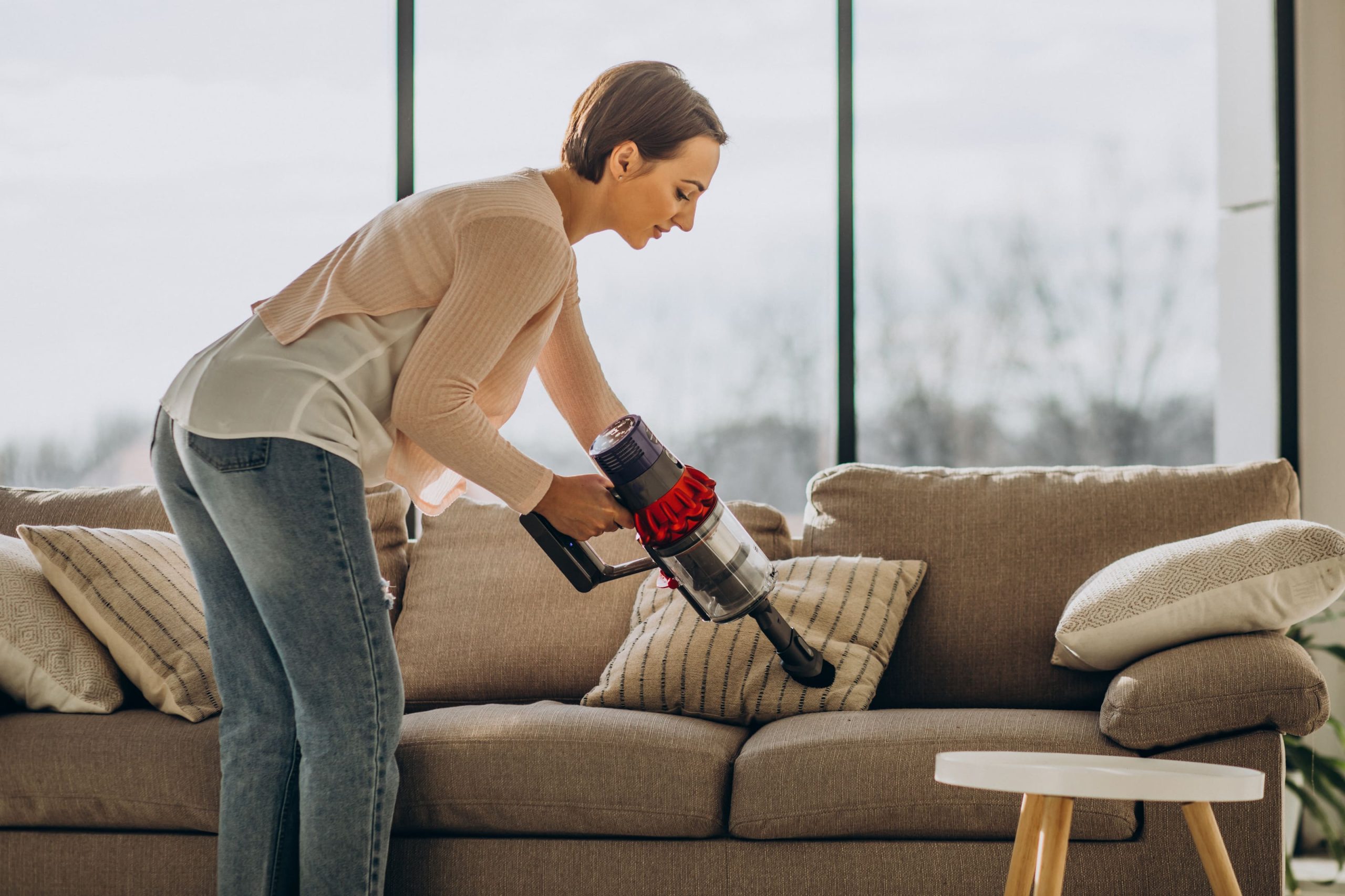
Regular upholstery cleaning is one of the most effective things you can do to extend the life of your sofa and keep it looking its best. Dust, oils from skin and hair, food particles and allergens build up in upholstery fabric over time – even when the sofa looks clean on the surface. This guide walks through the right approach for the most common upholstery types, what to use, and crucially, what not to do.
Step One: Check the Cleaning Code
Before you put anything on your sofa, look for the care label. Most upholstered furniture has a cleaning code tag, usually on the underside of the seat cushion or the sofa frame. Understanding this code prevents accidental damage:
- W – Water-based cleaners are safe to use.
- S – Solvent-based (dry) cleaners only. Water will mark or shrink this fabric.
- WS or SW – Either water-based or solvent-based cleaners can be used.
- X – Vacuum only. No liquids of any kind – professional cleaning required.
If there is no label, treat the fabric as code S until you can identify it. When in doubt, test any cleaner on a hidden area first – the underside of a back cushion or the inside of an arm.
How to Clean Fabric Upholstery
What You Will Need
- Vacuum cleaner with upholstery attachment
- Soft-bristled brush
- Clean white cloths (avoid coloured cloths that might transfer dye)
- Mild upholstery cleaner (spray foam type is easy to control) or a solution of warm water and a small amount of washing-up liquid for W-coded fabrics
- A bowl of clean cold water for rinsing
The Process
1. Vacuum thoroughly first: Use the upholstery attachment and work methodically across all surfaces, including the sides, back and underneath the cushions. Get into the crevices along the arms and seat joints where debris accumulates. This step is not optional – applying any liquid to a dusty sofa pushes the dirt deeper into the fibres.
2. Brush the fabric lightly: A soft-bristled brush lifts the pile and loosens any dry debris that the vacuum missed. Work in the direction of the fabric weave.
3. Apply cleaner to the cloth, not the sofa: Spray or apply your cleaner to a clean white cloth until it is damp but not soaking. Never spray directly onto the sofa, as this risks over-saturating the fabric and padding underneath – which leads to damp smells and potential mould, particularly in Dubai’s climate.
4. Work in sections: Clean one section at a time using circular motions, starting from the outside of any stained area and working inwards. This prevents the stain spreading further. Do not scrub – use moderate pressure in short strokes.
5. Rinse with a clean damp cloth: Follow up with a cloth dampened in plain water to remove any cleaner residue. Residue left in the fabric attracts more dirt faster.
6. Dry thoroughly: Use dry cloths to absorb as much moisture as possible, then allow the sofa to air dry completely before using it. In Dubai, the air conditioning can actually help speed up drying. Do not use a hair dryer on high heat as this can shrink or distort the fabric fibres.
Dealing with Specific Stains
Food and drink stains: Act immediately. Scoop up any solid material first with a spoon, then blot the liquid with a clean cloth – never rub. Work from the outside in. Warm water with a drop of washing-up liquid works well for most food stains on W-coded fabrics.
Grease and oil: Sprinkle a small amount of baking soda or cornflour onto the stain and leave for 15-20 minutes to absorb the oil before vacuuming away. Follow with a dry-cleaning solvent on a cloth for remaining residue.
Ink: Rubbing alcohol on a cloth, blotting carefully, works for many ink stains – but test on a hidden area first as some fabrics will discolour.
Urine (pets or children): Blot immediately, then apply a solution of water and white vinegar to neutralise the odour. An enzyme-based upholstery cleaner is most effective for full removal. Avoid steam cleaning urine stains as heat can set the smell permanently into the fibres.
How to Clean Leather Upholstery
Leather requires a different approach from fabric. Water alone can dry out natural leather and cause cracking over time. For a sofa that has seen years of use, professional leather sofa upholstery cleaning and conditioning by a specialist will restore it far more effectively than any home method.
What You Will Need
- Vacuum with soft brush attachment
- Clean soft cloths
- Dedicated leather cleaner (pH-neutral)
- Leather conditioner
The Process
1. Vacuum first: Remove all loose debris from the surface and seams using the soft brush attachment. Grit left on leather can cause micro-scratches during cleaning.
2. Wipe with a slightly damp cloth: For light cleaning, a lightly damp cloth is often sufficient to remove surface dust and oils. Wring the cloth out well – leather should be wiped, not soaked.
3. Apply leather cleaner: Put a small amount of pH-neutral leather cleaner onto a soft cloth and work in circular sections. Do not use general household cleaners, baby wipes, or cleaning sprays – these often contain alcohol or silicone which strips the leather’s natural oils and causes premature cracking.
4. Dry immediately: Follow each section with a dry cloth to remove moisture. Never let water sit on leather.
5. Condition the leather: This is the step most people skip, and it is the most important for long-term leather care. Apply a leather conditioner every three to six months to keep the leather supple and prevent cracking. In Dubai, the combination of dry air conditioning and occasional humidity makes conditioning particularly important.
What to Avoid on Leather
- Never use baby wipes – they contain alcohol which dries out leather
- Avoid furniture polish, silicone sprays or general purpose cleaners
- Never saturate leather with water
- Keep leather out of direct sunlight to prevent fading and drying
When to Call a Professional
DIY cleaning handles regular maintenance well, but there are situations where professional upholstery cleaning is the right choice. If you are unsure whether your sofa has reached that point, this checklist of signs it is time for a professional clean is a useful reference. As a general guide, call a professional when:
- Deep-set stains have been there for weeks or months
- Odours persist after home cleaning (particularly pet odours)
- Velvet, silk or other delicate fabrics are marked X in the care code
- Water has previously caused damage or watermarks
- A full deep-clean is due — ideally once or twice a year for high-use sofas
Professional steam cleaning for upholstery reaches deep into the padding and batting in a way that home cleaning cannot, removing allergens, dust mites and deeply embedded oils that surface wiping never touches.
How Often Should You Clean Your Sofa?
- Vacuum: Weekly for high-use sofas, bi-weekly for lighter use.
- Surface clean: Monthly, or immediately after spills.
- Deep clean: Every six to twelve months depending on use, pets and number of people in the household.
- Leather conditioning: Every three to six months.
Regular cleaning not only keeps your sofa hygienic and looking good – it genuinely extends the life of the fabric. Embedded oils and grit break down fibres over time, so consistent maintenance is a direct investment in how long your sofa lasts. When cleaning is no longer enough and the fabric itself needs replacing, our team offers full upholstery services across Dubai with free pickup and delivery.
