Blog

Upholstery vs Reupholstery: What’s the Difference?

Upholstery is the general term for the fabric, padding, and craftsmanship used to cover and finish furniture, including brand new pieces. Reupholstery is more specific. It means removing the old materials from an existing piece and rebuilding it with new padding and fabric. Every reupholstered sofa involves upholstery work, but not every piece of upholstery involves reupholstering.

The confusion usually comes from how loosely both words get used in everyday conversation. This guide clears up exactly where the line sits, when you need one versus the other, and how cost and process compare.

What is Upholstery?

Upholstery refers to the materials and craft involved in covering furniture with fabric, foam, springs, and padding. It applies to new furniture being built for the first time, as much as it applies to furniture being restored.

When a furniture maker builds a new sofa, the upholstery stage is where the frame gets its padding, springs, and outer fabric applied for the first time. This is the same skill set used in reupholstery, but starting from a bare frame rather than one that already has old materials to remove.

What is Reupholstery?

Reupholstery means stripping an existing piece of furniture down to its frame and rebuilding it with new padding, springs or webbing where needed, and new fabric. It’s a restoration process, not a first-time build.

Because reupholstery starts with an existing piece, it includes steps that new upholstery doesn’t need: removing old materials, inspecting the frame for damage, and repairing any structural issues before new materials go on. We cover this full process in detail in our guide on what furniture reupholstery involves.

Key differences between upholstery and reupholstery

Aspect Upholstery Reupholstery
Starting point Bare or new frame Existing furniture with old materials
Extra steps needed None, materials applied directly Stripping down and frame inspection first
Typical use case New furniture, custom builds Restoring worn or outdated existing furniture
Cost driver Frame construction plus materials Materials and labor only, frame is reused

The core skill set is identical in both cases. What changes is the starting point and the extra diagnostic and repair work reupholstery requires before the new materials go on.

When do you need upholstery instead of reupholstery?

You need upholstery, not reupholstery, when you’re building or buying a new piece of furniture from scratch, or when a piece has never been covered before. Custom furniture makers use upholstery techniques to finish a bare frame for the first time.

This also applies to fully custom builds, where a client wants a piece made to a specific size or shape rather than restoring something they already own. In these cases, there’s no old material to remove, so the process skips straight to padding and fabric application.

When do you need reupholstery instead of new upholstery?

You need reupholstery when you already own a piece of furniture with a solid frame, but the fabric, padding, or comfort has worn out. Reupholstery lets you keep the frame you already have rather than paying for an entirely new one.

This is the more common scenario for most households, since replacing fabric and padding on a well-built existing frame is almost always more practical than starting over. If you’re trying to decide whether your specific piece is a good candidate, our breakdown on whether reupholstery is worth it covers the cost comparison and decision factors in depth.

Does cost differ between upholstery and reupholstery?

Yes. Reupholstery is generally cheaper than paying for new upholstered furniture, since the cost of building a frame from scratch is removed from the equation entirely. You’re only paying for materials, labor, and any necessary frame repairs.

New upholstery on a custom-built piece includes the cost of lumber or metal framing, springs, webbing, and construction labor, on top of the padding and fabric. Reupholstery skips the framing cost entirely, which is the main reason it typically comes in well below the price of an equivalent new piece.

Recovering vs upholstery vs reupholstery

A third term often gets mixed into this conversation: recovering. Recovering means replacing only the outer fabric, without touching the padding, springs, or frame underneath. It’s a lighter, cheaper version of reupholstery that doesn’t address comfort or structural issues.

Putting all three together: upholstery is the general craft, applied to new or existing furniture. Reupholstery is upholstery work applied specifically to an existing piece, including frame repair and padding replacement. Recovering is an even lighter touch than reupholstery, fabric only, no structural work.

Is reupholstery a type of upholstery?

Yes. Reupholstery is a specific application of upholstery techniques, applied to an existing piece of furniture rather than a new one.

Where the overlap is

Both use the same materials, fabric, foam, springs, webbing, and the same core skills, cutting, fitting, stitching, and finishing. A skilled upholsterer can typically do both without needing separate training.

Where they differ

Reupholstery adds extra steps that new upholstery doesn’t need: removing old materials, inspecting the frame, and repairing structural issues before the new materials go on.

The verdict

Reupholstery sits inside the broader category of upholstery work. It’s simply the version applied to furniture that already exists, rather than a piece being built or covered for the first time.

Frequently Asked Questions

What is the difference between upholstery and reupholstery?

Upholstery refers to the fabric, padding, and craft used to cover furniture, including new pieces. Reupholstery specifically means redoing that covering on an existing piece, stripping it down to the frame and rebuilding it with new materials.

Is reupholstery a type of upholstery?

Yes. Reupholstery uses the same materials and techniques as upholstery, but applies them to an existing frame rather than a new one, and includes extra steps like stripping down old materials and repairing the frame first.

Does reupholstery cost more than new upholstery?

Reupholstery is usually cheaper than buying newly upholstered furniture, since you’re only paying for materials and labor on an existing frame rather than the cost of building a brand new piece from scratch.

Not Sure Which One You Need?

Whether you’re refreshing an existing piece or need fabric and padding done right for the first time, our team can walk you through the right option for your furniture.

5 Common Sofa Repair Issues in Dubai (And Exactly How to Fix Them)

Sofa problems in Dubai tend to fall into five categories: sagging cushions, broken springs, torn fabric, frame damage, and worn legs. Dubai’s heat, air conditioning cycles, and dust take a heavier toll on furniture than most climates, so these issues show up faster here than they would in a milder city. This page covers what causes each problem, how we fix it, and what it costs, so you can identify what is wrong with your sofa before calling anyone out.

At Repairs of Dubai, we see the same five problems on nearly every home visit. Most of them are fixable in one to three days, often for a fraction of the price of a new sofa. Here is what to look for and what each repair involves.

Issue 1: Sagging or Flat Sofa Cushions

Sagging cushions are the most common complaint we hear from Dubai residents. If your seat cushions no longer hold their shape, or you feel yourself sinking toward the frame when you sit, the foam inside has broken down.

What Causes It

Low-density foam, anything under 28 kg/m³, compresses permanently under regular use. Most foam reaches the end of its useful life within three to five years of daily use in Dubai. Heat cycling from the climate and constant air conditioning accelerates this breakdown, and cushions near windows or balconies degrade faster still from direct sun exposure.

How We Fix It

We remove the existing foam, measure each cushion precisely, and replace it with high-density foam rated between 30 and 36 kg/m³, wrapped in a Dacron fibre layer to restore that full, supportive shape. The process takes one to two days. We collect and deliver anywhere in Dubai at no extra cost.

Cost: AED 300 to 800, depending on sofa size and the foam grade you choose.

When to DIY vs. When to Call a Professional

If only one cushion has sagged, ordering replacement foam cut to size and swapping it yourself can work. But if several cushions are affected, or the frame underneath is also sagging, a professional assessment matters. Replacing foam on a sofa with a failing frame just delays the real fix and wastes the money you spent on foam.

Issue 2: Broken or Squeaky Sofa Springs

A creaking or popping sound when you sit down means your springs are wearing out. If the centre of the sofa sags in a way that feels structural rather than cushion-soft, the spring deck itself is likely damaged. This is one of the most satisfying repairs we do, because a fixed spring deck transforms how a sofa feels almost instantly.

What Causes It

Spring clips and coils wear down naturally over years of use. Sitting in the same spot every day accelerates this, and so does uneven weight distribution across the seat. Children jumping on the sofa is a common culprit in Dubai family homes. Cheaper imported sofas sometimes arrive with spring assemblies that were never built to last.

Types of Sofa Springs We Repair

Coil springs are the traditional type, tied together with twine or clips. We re-tie loose ties and replace individual coils where needed. Sinuous springs, the flat wave-shaped kind used in most modern sofas, get re-clipped or have snapped sections replaced. Webbing bases made of elastic or jute strips that have stretched or torn get re-webbed entirely, which restores a firm, even seating platform.

How We Fix It

Our craftsmen remove the bottom fabric panel, access the spring assembly directly, and replace or re-tie whatever has failed before resecuring the base. Most spring repairs are finished same day or overnight.

Cost: AED 200 to 500 for spring repair or re-webbing, depending on how much of the deck needs work.

Issue 3: Torn or Damaged Upholstery Fabric

Torn or worn fabric is the most visible sofa problem, and it is also the most transformative to fix. A cat treating your armrest as a scratching post, a red wine stain that set in permanently, or fabric that has simply thinned after years of use all end up in the same category.

What Causes It

Pet claws pull and tear at fabric fibres over time. UV exposure from Dubai’s sun fades and weakens fabric near windows, sometimes within a year or two. Liquid spills that are not treated immediately set into the weave and become permanent. General abrasion on armrests, seat edges, and headrests wears fabric thin long before the frame or foam underneath fails. Low-quality original fabric that was never rated for daily use also breaks down faster than expected.

How We Fix It

Small tears under 5cm can often be repaired with fabric glue or invisible patching. Larger damage or general wear calls for full reupholstery, where we strip the old fabric completely and apply new material from a range of over 200 options spanning linen, velvet, leather, and microfibre, all selected to hold up in Dubai’s climate.

Leather sofas have their own failure pattern worth knowing about separately: cracking, peeling, and colour loss from UV and heat exposure rather than tearing. If that describes your sofa, our leather sofa upholstery service covers recolouring and leather-specific repair in more detail than we can here.

Cost: AED 150 to 300 for patch repairs. AED 500 to 2,000 or more for full reupholstery, depending on sofa size and fabric chosen.

Issue 4: Damaged or Broken Sofa Frame

Frame damage is the most serious of the five issues, but it rarely means the sofa is finished. In most cases we repair it for a fraction of what a replacement would cost, which surprises people who assume a cracked frame is a death sentence for the whole piece.

Signs of Frame Damage

Watch for one side of the sofa sitting visibly lower than the other, a loud crack or snap when someone sits down, rocking or instability on a flat floor, a visible bulge or deformation in the shape, or legs that wobble or detach from the frame. Any one of these on its own is worth a look. Two or more together usually means the damage has spread.

How We Fix It

Our carpenters assess whether the frame is hardwood, MDF, or metal, then identify the break point and reinforce or replace the affected section. Broken legs get replaced to match the originals. Cracked rails are splinted and re-glued with professional furniture adhesives and clamps. For severe structural failure, we can rebuild entire sections of the frame rather than the whole piece.

Cost: AED 200 to 700 for frame repairs, depending on the extent of the damage and the frame material.

If your sofa frame has cracked or broken, stop using it until it is repaired. A broken frame can collapse without warning, which is a real injury risk, particularly for children or elderly family members. Contact us for a same-day assessment if you notice any of the warning signs above.

Issue 5: Sofa Legs, Scratched, Broken, or Uneven

Sofa legs absorb more physical stress than people expect. Dragging across tile floors, general scratching, and snapping off at the joint are all common, and while leg damage looks cosmetic, uneven legs destabilise the whole sofa and can scratch or damage flooring over time.

How We Fix It

We replace individual legs or full sets to match the original style and finish, in wood, metal, or chrome. Many Dubai residents also request leg height changes during this repair, either to make cleaning underneath easier or to adjust the sofa’s proportions to fit new interior design.

Cost: AED 50 to 200 for leg replacement, depending on material and set size.

Sofa Repair Cost Summary, Dubai 2026

Repair Type Cost Range (AED) Turnaround Time
Cushion foam replacement (2 to 3 seater) 300 to 800 1 to 2 days
Spring repair or re-webbing 200 to 500 Same day to 1 day
Fabric patch repair 150 to 300 Same day
Full reupholstery (3-seater) 700 to 1,500 3 to 5 days
Frame repair 200 to 700 1 to 3 days
Leg replacement (full set) 100 to 250 Same day

Book a Free Sofa Assessment in Dubai

Not sure which of these five issues applies to your sofa? Our technicians visit your home anywhere in Dubai, diagnose the problem in person, and give you a transparent quote before any work begins. There is no charge for the assessment itself.

FAQs Related to Common Sofa Repair Issues in Dubai

Is it worth repairing a sofa in Dubai?

In most cases, yes. If the frame is still structurally sound, repairing or reupholstering costs 30 to 60 percent less than buying an equivalent quality replacement. A well-built sofa frame can last 15 to 20 years with proper care and periodic repairs.

How quickly can you repair a sofa in Dubai?

Spring fixes, leg replacements, and patch repairs are often done same day. Full reupholstery typically takes 3 to 5 working days. We collect the sofa from your home and deliver it back at no extra charge.

Do you repair all sofa brands in Dubai?

Yes. We repair sofas from IKEA, The One, Pan Emirates, Homes R Us, and high-end European and custom-made pieces. Our team works across fabric, leather, velvet, and every common upholstery material.

Can a sofa be repaired at home, or does it need to go to a workshop?

Most repairs, including spring fixes, foam replacement, patching, and leg swaps, are done at your home in a single visit. Full reupholstery or major frame rebuilds usually need workshop tools, so we collect the sofa, complete the work at our Al Quoz workshop, and deliver it back to you.

How long does a sofa repair last before it needs redoing?

A quality foam or fabric repair typically lasts 5 to 8 years under normal Dubai household use. Spring and frame repairs, when done correctly, often outlast the original manufacturing and hold for the remaining life of the sofa.

How to Remove Blood from Upholstery

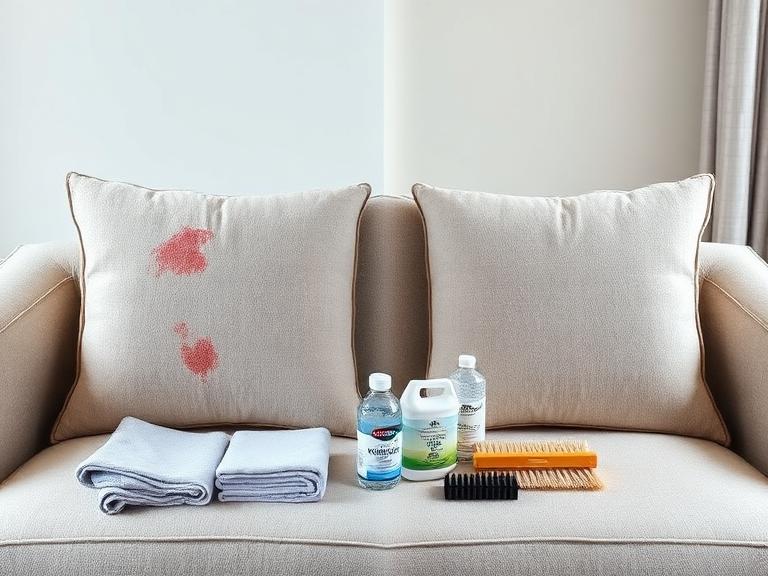
Blot fresh blood immediately with cold water, never hot, and never scrub. For dried stains, gently scrape away the loose material first, then treat the area with a mild soap solution or an enzyme-based cleaner. Hydrogen peroxide can help on light-colored fabric, but only after testing it in a hidden spot first.

Blood stains happen more often than people expect, a scraped knee, a nosebleed, a pet injury. They’re nothing to worry about if you act with the right method. This guide walks through exactly how to treat fresh and dried stains, the mistakes that make them worse, and when it’s better to call a professional instead of risking the fabric.

Why are blood stains harder to remove than other stains?

Blood is a protein-based stain, and proteins bond quickly and firmly to fabric fibers, especially once heat is introduced. This is why blood behaves differently from a food or drink spill and needs a specific approach rather than general stain-removal methods.

The longer blood sits, the deeper it works into the fibers and the harder it becomes to lift without damaging the fabric underneath. Speed matters more with blood than with most other stain types, which is why treating it immediately gives you the best chance of full removal.

How to remove fresh blood stains from upholstery

For a fresh stain, blot, don’t rub, using a clean, light-colored cloth to lift as much blood as possible before it has a chance to set into the fabric.

  1. Blot the wet stain gently with a dry cloth to absorb as much blood as possible.
  2. Mix a small amount of mild dish soap with cold water.
  3. Dip a clean cloth in the solution and blot the stain from the outside in, to avoid spreading it.
  4. Rinse by blotting with a cloth dampened in plain cold water.
  5. Pat the area dry with a clean towel and let it air dry fully before sitting on it again.

Most fresh blood stains lift almost completely with this method alone, as long as it’s done before the stain has time to set.

How to remove dried blood stains from upholstery

Dried blood needs a bit more work, since the stain has already bonded to the fabric. Start by loosening the dried material before applying any liquid.

  1. Use a soft-bristled brush or the dull edge of a knife to gently scrape away crusted material.
  2. Vacuum up any loose flakes so they don’t spread during cleaning.
  3. Apply an upholstery-safe enzyme cleaner directly to the stain and let it sit for 10 to 15 minutes.
  4. Blot with a clean, damp cloth to lift the loosened stain.
  5. Repeat as needed for stubborn areas, then let the area air dry completely.

Enzyme cleaners work well on dried blood because they break down the proteins directly rather than just lifting the surface residue. Older, deeply set stains sometimes need two or three rounds of treatment before they’re fully gone.

What not to do when cleaning blood from upholstery

A few common instincts actually make blood stains worse rather than better, so avoiding these mistakes matters as much as the cleaning method itself.

  • Never use hot water. Heat sets protein stains permanently into the fabric.
  • Don’t scrub. Scrubbing pushes the stain deeper into the fibers instead of lifting it out.
  • Avoid colored cloths. Dye from a colored cloth can transfer onto the fabric and create a second stain.
  • Don’t oversaturate the area. Too much liquid can soak into the padding underneath and cause mold or water staining.

These mistakes are the main reason a treatable stain sometimes turns into a permanent one, so it’s worth being deliberate even when you’re in a hurry to clean it up.

Is hydrogen peroxide safe for all fabrics?

No. Hydrogen peroxide should only be used on light-colored or white fabric, and even then, only after testing it on a hidden area first, since it can bleach or discolor fabric.

Before using any cleaning solution, check your furniture’s care tag for its cleaning code. A code of W means water-based cleaners are safe, S means only solvent-based cleaners should be used, and X means the fabric should be vacuumed only, with no liquid cleaning at all. Using the wrong method for the fabric’s code risks permanent damage well beyond the original stain.

Does fabric type change how you should clean blood stains?

Yes. Delicate fabrics like velvet, silk, and suede need a gentler approach than sturdier fabrics like leather or performance-treated materials, and some should not be treated with water-based methods at all.

Velvet in particular can crush or develop water marks if over-wetted during cleaning, so a lighter touch and quicker drying time matter more than on a standard woven fabric. If you’re not sure how your specific fabric should be treated, our guide to upholstery fabric types covers how different materials respond to cleaning and daily care.

How do you get rid of blood odor after the stain is gone?

Even after a blood stain is fully removed, a faint odor can sometimes linger in the padding underneath. Sprinkling baking soda over the area, letting it sit overnight, and vacuuming it up the next day usually resolves this without needing any additional chemicals.

Avoid masking the smell with strong fragrance sprays, since these can react unpleasantly with any residual odor rather than actually eliminating it. If the smell persists after a baking soda treatment, it’s often a sign the stain reached the foam or padding layer, which usually needs professional attention.

When should you call a professional instead of doing it yourself?

Call a professional when the stain is old and deeply set, the fabric is delicate or has an X cleaning code, or the blood has soaked through to the padding underneath. DIY methods work well for most fresh stains, but they have real limits.

Professional upholstery cleaners have access to extraction equipment and fabric-specific solutions that reach deeper into the material than home methods can, without the same risk of spreading or setting the stain further. Our professional upholstery cleaning services page covers exactly when it makes sense to bring in a professional rather than continuing to treat a stain yourself.

Can dried blood stains always be removed?

The short answer

Not always, but most dried blood stains can be significantly reduced or fully removed with the right method and enough patience, especially if the fabric itself is in good condition.

When removal is likely

Fresh stains treated promptly, and dried stains on sturdy, water-safe fabrics, respond well to home treatment in almost every case.

When removal is difficult

Very old stains that have fully set, stains on delicate or non-water-safe fabrics, and stains that have soaked into the padding are harder to fully remove without professional equipment.

The verdict

Most blood stains are fully treatable if you act with the right method rather than panic-cleaning. For the harder cases, a professional cleaner has tools and techniques that go beyond what’s possible at home.

Frequently Asked Questions

How do you remove blood from upholstery?

Blot fresh blood immediately with a clean cloth using cold water, never hot. For dried stains, gently scrape away loose material first, then treat with a mild soap solution or enzyme cleaner, and hydrogen peroxide only on light-colored fabric after a spot test.

Why does hot water make blood stains worse?

Blood contains proteins that set and bond permanently to fabric fibers when exposed to heat. Cold water keeps the proteins from setting, which is why cold water should always be used when treating blood stains.

Is hydrogen peroxide safe for removing blood from upholstery?

Hydrogen peroxide is only safe for light or white fabrics, and even then it should be spot-tested first, since it can bleach or discolor darker or more delicate materials.

Need Help With a Stubborn Stain?

If a blood stain won’t fully lift or you’re not sure your fabric can handle DIY treatment, our team can help without the risk of damaging your furniture. Visit our upholstery services page to see our full range of cleaning and care options, or reach out for a free assessment and quote.

How Often Should You Replace Sofa Foam?

Standard polyurethane foam in a daily-use sofa typically needs replacing every 5 to 7 years. High-resiliency foam can last 7 to 10 years, and natural latex can stretch to 10 to 15 years. The exact timeline depends less on age alone and more on foam type, how often the sofa is used, and the climate it sits in.

This guide focuses specifically on what speeds up or slows down that timeline, so you can judge your own sofa’s foam rather than relying on a single generic number.

What’s the general rule of thumb?

For a sofa used daily by a household, 5 to 7 years is a reasonable starting estimate for standard foam. This number shifts significantly once you factor in foam quality, how the sofa actually gets used, and local climate conditions.

Think of this range as a starting point rather than a fixed deadline. A sofa in a rarely used guest room can hold up well past 7 years, while a heavily used family sofa with lower-density foam can start sagging noticeably before the 5-year mark.

Does foam type affect how often you should replace it?

Yes, significantly. Foam type is one of the biggest factors in how long a cushion holds its shape, sometimes doubling or tripling the expected lifespan compared to standard foam.

Foam Type Typical Lifespan (Daily Use)
Standard Polyurethane 3 to 5 years
High-Resiliency (HR) 7 to 10 years
Memory Foam (blended) 5 to 8 years
Natural Latex 10 to 15 years

If you’re not sure which foam type is currently in your cushions, or you’re deciding what to replace it with, our guide on choosing the right replacement foam covers density and type selection in more detail.

Does household usage affect replacement frequency?

Yes. A sofa used daily by a family, especially with children or pets, wears out foam considerably faster than a formal sitting room sofa used only occasionally for guests.

Weight and frequency both matter here. A seat used multiple times a day compresses the same section of foam repeatedly, while a lightly used piece spreads far less wear over the same period. Two identical sofas, one in daily use and one in a rarely visited room, can need replacement years apart even with the exact same foam.

Does Dubai’s climate shorten foam lifespan?

Yes. Heat and humidity both accelerate the breakdown of foam’s cell structure faster than in cooler, drier climates, which means foam in Dubai homes often needs replacing on the shorter end of its typical range rather than the longer end.

Constant air conditioning combined with hot, humid conditions outside creates repeated temperature and humidity shifts that gradually wear down foam’s structure over time. Sofas placed near windows or balcony doors, where this shift is most pronounced, often show foam breakdown earlier than furniture in more climate-stable rooms.

Does foam density change the replacement timeline?

Yes. Higher-density foam, generally 1.8 to 2.5 pounds per cubic foot for seat cushions, holds its shape considerably longer than lower-density foam, even within the same foam type.

Two cushions made from standard polyurethane foam, one at 1.5 PCF and one at 2.2 PCF, can show very different wear timelines despite being the same material. The higher-density option resists compression more effectively, which directly extends how long it performs well before needing replacement.

How do you know it’s time, beyond just counting years?

Age is a useful guideline, but visible signs like sagging, flattening, or feeling the sofa’s frame through the cushion are more reliable indicators than a calendar date alone, since usage varies so much between households.

We’ve covered the full list of wear signs and what each one means in detail in our piece on how foam replacement extends furniture life. If your foam is showing these signs well before the typical timeline for its type, usage or climate is likely the reason.

Should you replace foam on a schedule or wait for signs of wear?

The short answer

A rough schedule is useful for planning, but actual signs of wear should be the deciding factor, since two sofas of the same age can be in very different condition depending on use.

The case for a schedule

A general timeline, checking in around the 5-year mark for standard foam or the 7 to 10 year mark for HR foam, helps you plan ahead rather than being caught off guard by sudden discomfort.

The case for waiting on signs of wear

Households with light usage or higher-density, higher-quality foam often get meaningfully more life out of their cushions than the general schedule suggests, so replacing purely by calendar date can mean replacing foam that still has good life left.

The verdict

Use the schedule as a planning checkpoint, then judge the actual decision by comfort and visible wear rather than age alone. This gets you the most accurate answer for your specific sofa rather than relying on a single number that applies to average conditions.

Frequently Asked Questions

How often should you replace sofa foam?

Standard polyurethane foam in a daily-use sofa typically needs replacing every 5 to 7 years. High-resiliency foam can last 7 to 10 years, and natural latex can last 10 to 15 years, depending on usage and climate.

Does Dubai’s climate affect how often sofa foam needs replacing?

Yes. Dubai’s heat and humidity accelerate foam breakdown compared to cooler, drier climates, which means foam here often needs replacing on the shorter end of its typical lifespan range.

Should you replace foam on a schedule or wait for signs of wear?

A schedule is a useful guideline, but visible signs of wear, such as sagging, flattening, or feeling the frame through the cushion, are a more reliable indicator than age alone, since usage varies so much between households.

Ready for New Foam?

If your cushions are due, or you’re just not sure yet, our team can assess your current foam and recommend the right density and type for how your sofa actually gets used. Visit our cushion foam replacement service page to see our full range of options, or reach out for a free assessment and quote.

Signs Your Furniture Needs Reupholstery

Sagging or flattened cushions, worn or faded fabric, springs you can feel through the seat, loose or creaking joints, and an outdated look on a frame that’s otherwise still solid are the clearest signs your furniture needs reupholstery. If you’re noticing two or more of these, it’s worth getting the piece assessed before the wear gets worse.

These signs tend to show up gradually, which is why many people live with a tired sofa for years before realizing how much reupholstery could actually restore. This guide walks through each sign individually, so you can check your own furniture against it.

Sagging or flattened cushions

If your cushions no longer spring back into shape after sitting, or you can feel yourself sinking further than you used to, the foam inside has broken down and lost its support. This is one of the most common and most fixable signs on this list.

Foam compresses gradually with regular use, and the rate depends on foam quality and how often the piece gets sat on. Reupholstery replaces this padding entirely, which restores both comfort and the cushion’s original shape, something a simple recover or fabric change can’t fix on its own.

Worn, faded, or torn fabric

Visible wear, thinning fabric, sun-faded patches, or small tears and frays are the most obvious sign something needs attention. Once fabric has thinned in high-contact areas like armrests or seat edges, it’s usually past the point where cleaning or minor repair will help.

Sun exposure accelerates this in Dubai specifically, fading fabric color unevenly depending on which side of the piece faces a window. If the fading is already visible after a few years, it’s often a sign the original fabric wasn’t well suited to the room’s light exposure in the first place.

Springs or frame you can feel through the seat

If you can feel a spring, wooden slat, or the frame itself through the cushion when you sit down, the padding and possibly the springs underneath have worn through. This goes beyond a cosmetic issue and affects comfort directly.

This sign usually means both the foam and the support structure need attention, not just the foam alone. A proper reupholstery job checks and repairs springs and webbing as part of the process, which a simple cushion swap wouldn’t address.

Loose joints or creaking sounds

A frame that creaks, wobbles slightly, or feels less solid than it used to is a sign worth checking, even if the fabric still looks fine. Loose joints are common in Dubai due to humidity swings and are usually fixable as part of the reupholstery process.

Since reupholstery involves stripping the piece down to the frame anyway, it’s the ideal time to reinforce any loose joints while everything is already exposed. Catching this early, before the frame gets worse, keeps the repair simple rather than extensive.

Persistent odors that won’t clean out

If a smell lingers in the fabric even after cleaning, it’s often trapped in the padding underneath rather than just on the surface. Odors from pets, spills, or humidity can work their way past the fabric and into the foam over time.

Since reupholstery replaces the padding entirely, it resolves this kind of embedded odor far more reliably than surface cleaning alone, which can only reach so deep into the material.

Outdated style on a structurally sound frame

Sometimes the frame and comfort are both still fine, but the fabric color or pattern feels dated compared to the rest of the room. This is a purely aesthetic sign, but it’s still a valid reason to reupholster rather than replace a well-built piece.

This is often the easiest case to act on, since there’s no structural work needed, just a fabric and padding refresh. If you’re weighing this against buying something new entirely, our guide on whether reupholstery is worth it breaks down the cost and value comparison in detail.

Multiple small repairs adding up

If you’ve patched a tear, tightened a joint, and refreshed a cushion separately over the past couple of years, it’s usually more cost-effective to reupholster the whole piece at once rather than continuing to address issues one at a time.

Piecemeal repairs add up in both cost and inconvenience, and they rarely address the underlying padding and structure the way a full reupholstery job does. If you’re noticing this pattern, it’s worth getting a full assessment rather than fixing the next issue in isolation.

When these signs mean replacement instead of reupholstery

Most of the signs above point toward reupholstery, but a cracked, rotted, or unstable frame is the exception. If the wobbling or creaking doesn’t go away after tightening joints, or the wood feels soft or spongy, the frame itself may be too damaged to reupholster.

The distinction comes down to the frame specifically. Fabric, padding, and springs can all be replaced during reupholstery, but a compromised frame changes the equation entirely. For a full breakdown of what reupholstery actually involves once you’ve confirmed the frame is solid, see our guide on what furniture reupholstery includes.

How many of these signs do you need before it’s worth reupholstering?

The short answer

Even one clear sign, like sagging cushions or a persistent odor, is often reason enough to consider reupholstery, especially if the frame is otherwise solid.

When one sign is enough

A single significant issue, deeply sagging cushions, a spring poking through, or a smell that won’t clean out, is usually enough on its own to justify reupholstery, since these issues tend to get worse rather than resolve on their own.

When to wait and monitor

Minor cosmetic wear or a slightly dated fabric color, with no comfort or structural issues, can reasonably wait until it bothers you enough to act, since there’s no urgency from a durability standpoint.

The verdict

Don’t wait for every sign on this list to show up before acting. Catching issues early, while they’re still isolated, usually means a simpler and less expensive reupholstery job than waiting until several problems have piled up at once.

Frequently Asked Questions

What are the signs your furniture needs reupholstery?

The clearest signs are sagging or flattened cushions, worn or faded fabric, springs you can feel through the seat, loose or creaking joints, persistent odors, and an outdated look on a frame that’s otherwise still solid.

Can sagging cushions always be fixed with reupholstery?

Usually, yes, as long as the sagging comes from worn foam or springs rather than a broken frame. Reupholstery includes replacing the padding and repairing springs, which resolves most sagging issues.

How do I know if it’s reupholstery I need instead of replacement?

If the frame is solid wood or metal with no major cracks or rot, reupholstery is usually the right call. If the frame itself is damaged or unstable, replacement is typically the better option.

Get a Free Assessment

If you’re noticing any of these signs, our team can tell you within minutes whether reupholstery is the right move for your piece. Visit our sofa upholstery services page to see our full range of fabrics and finishes, or reach out for a free assessment and quote.

How to Extend the Life of Your Upholstery

Regular cleaning, protecting fabric from direct sun, treating spills immediately, rotating cushions, and scheduling professional cleaning once or twice a year are the habits that add the most years to upholstered furniture. None of these take much effort individually, but together they make a real difference in how long a piece looks and feels good.

Most upholstery wears out faster than it needs to simply because of small, avoidable habits rather than heavy use itself. This guide walks through exactly what to do, and how often, to get the most life out of your furniture.

Clean regularly, not just when it looks dirty

Vacuuming upholstery weekly, using a soft brush attachment, removes dust and debris before it works its way deep into the fabric fibers where it causes long-term wear. Waiting until furniture visibly looks dirty means dirt has already had time to settle in.

Dust and fine debris act almost like sandpaper against fabric fibers every time someone sits down, gradually thinning the material from the inside. A quick weekly vacuum session prevents this buildup far more effectively than an occasional deep clean alone.

Protect fabric from direct sun exposure

Positioning furniture away from direct sunlight, or using curtains or UV window film, slows down fading and fiber breakdown considerably. Dubai’s intense sun can visibly fade untreated fabric within a single year in south or west-facing rooms.

If repositioning furniture isn’t practical, choosing solution-dyed or UV-resistant fabric during any future reupholstery work makes a noticeable difference in how well color holds up over time. Our guide to choosing upholstery fabric covers which materials handle sun exposure best if you’re planning ahead.

Treat spills immediately, the right way

Blotting a spill right away, rather than letting it sit or rubbing it in, prevents most spills from ever becoming a permanent stain. The method matters as much as the speed, since rubbing pushes liquid deeper into the fibers instead of lifting it out.

Always blot from the outside of the spill toward the center to avoid spreading it further, and check your fabric’s cleaning code before applying any solution beyond plain water. A spill treated within the first few minutes almost always comes out completely, while the same spill left overnight often leaves a lasting mark.

Rotate and fluff cushions regularly

Rotating seat cushions every few weeks and fluffing back cushions distributes wear more evenly across the foam, rather than concentrating compression in the same spot every time someone sits down. This simple habit noticeably extends how long cushions hold their shape.

Without rotation, the most-used seat on a sofa often shows sagging years before the rest of the piece, even though all the cushions started out identical. Spreading that wear evenly keeps the whole sofa aging at the same rate.

Keep pets and food habits in check

Using a washable throw on high-traffic seating, keeping pets off fabric furniture where possible, and avoiding eating directly on upholstered seats all reduce the two biggest sources of everyday wear and staining. None of these require major lifestyle changes, just small adjustments in daily habits.

A washable throw in particular is one of the easiest ways to protect a high-use seat without changing how the furniture looks day to day, since it can simply be removed for guests or special occasions.

Schedule professional cleaning at the right frequency

Most households benefit from professional upholstery cleaning every six months to a year, while homes with pets, young children, or heavy dust exposure often need it closer to every three to four months. Professional cleaning reaches embedded dirt that regular vacuuming and spot cleaning can’t fully remove.

Beyond appearance, regular professional cleaning also removes oils and debris that gradually wear down fabric fibers from the inside, which is part of why professionally maintained furniture tends to last noticeably longer than furniture cleaned only occasionally. Our professional upholstery cleaning services page covers what to expect from a deep clean and how often it’s worth scheduling one.

Watch humidity and air conditioning exposure

Keeping furniture away from direct AC vents and areas with frequent humidity swings, like near balcony doors, helps both fabric and foam last longer. Constant temperature and humidity shifts gradually break down materials faster than stable indoor conditions.

This matters specifically in Dubai, where the contrast between air-conditioned interiors and hot, humid conditions outside is more extreme than in many other climates. Furniture positioned in more climate-stable parts of the home tends to show less wear over the same period than furniture near windows or entryways.

Address small repairs before they grow

Fixing a loose joint, small tear, or early sign of sagging as soon as you notice it prevents a minor issue from turning into something that affects the whole piece. Small repairs are almost always cheaper and simpler than the larger fix that follows if they’re ignored.

If you’re not sure whether what you’re seeing is still a minor issue or something more serious, our guide on signs your furniture needs reupholstery walks through exactly what to look for and when it’s time to act.

Does maintenance alone prevent ever needing reupholstery?

The short answer

No. Good maintenance significantly delays wear and can add years of extra life, but foam, springs, and fabric all have a natural lifespan and will eventually need attention no matter how well the piece is cared for.

What maintenance actually achieves

Consistent care slows down the rate of wear considerably, often stretching a piece’s comfortable lifespan by several extra years compared to furniture that’s cleaned and protected only occasionally.

What maintenance can’t prevent

Foam compression, spring fatigue, and general material aging happen gradually even with excellent care, since these are a natural result of time and use rather than neglect.

The verdict

Think of maintenance as extending the runway, not avoiding the destination entirely. It’s still one of the best investments you can make in your furniture, since it delays the point where reupholstery becomes necessary and keeps that eventual job simpler when it does happen.

Frequently Asked Questions

How can I extend the life of my upholstery?

Clean regularly rather than only when it looks dirty, protect fabric from direct sun, treat spills immediately, rotate and fluff cushions, and schedule professional cleaning once or twice a year. These habits together can add years to upholstered furniture.

How often should upholstery be professionally cleaned?

Most households benefit from professional upholstery cleaning every six months to a year, though homes with pets, young children, or heavy dust exposure often need it more frequently, closer to every three to four months.

Does maintenance alone prevent needing reupholstery eventually?

No, not entirely. Good maintenance significantly delays wear and can add years of life, but foam, springs, and fabric all have a natural lifespan and will eventually need replacing regardless of how well the piece is cared for.

Keep Your Furniture Looking Its Best

Whether you need a deep clean, a small repair, or a full reupholstery, our team can help keep your furniture in great shape for years to come. Visit our sofa repair and upholstery services page to see our full range of options, or reach out for a free assessment and quote.

Leather vs Fabric Sofa: Which Is Better?

Neither leather nor fabric is universally better. Leather wins on easy wipe-clean maintenance, durability, and a classic look, but needs consistent air conditioning and regular conditioning to avoid cracking in Dubai’s climate. Fabric wins on comfort, breathability, and design variety, but needs more frequent cleaning and sun protection to hold up over time.

The right choice comes down to your household, how consistently your AC runs, and how much maintenance you’re willing to keep up with. This guide compares both materials across the factors that actually matter for a Dubai home.

Durability: which lasts longer?

Full-grain leather typically outlasts most fabric, often lasting 15 to 25 years with proper conditioning, compared to 7 to 15 years for a good quality fabric sofa. Fabric’s durability varies more widely depending on the specific weave and fiber type chosen.

Leather’s durability comes from the density of the hide itself, which resists punctures and general wear better than a woven material. High-performance synthetic fabrics have narrowed this gap significantly in recent years, sometimes matching or exceeding lower-grade leather in raw durability, even though full-grain leather still holds the edge at the top end.

Comfort: which feels better to sit on?

Fabric is generally more comfortable in warm climates, since it breathes and doesn’t trap heat against skin the way leather can. Leather can feel cool initially but warms up and can become sticky in rooms where the temperature isn’t consistently controlled.

This difference matters more in Dubai than in cooler climates, since a leather sofa in a room where the AC gets switched off during the day can feel noticeably less comfortable than the same sofa in a consistently cooled space. Fabric doesn’t have this same sensitivity to temperature swings.

Maintenance and cleaning

Leather requires less frequent cleaning, usually just a wipe with a damp cloth, but needs periodic conditioning to prevent drying and cracking. Fabric needs more regular vacuuming and occasional deep cleaning, but doesn’t require the same conditioning routine leather does.

The maintenance difference is really about frequency versus type rather than one being simply easier than the other. Leather’s upkeep is lighter but more specific, while fabric’s upkeep is more frequent but more forgiving if occasionally skipped.

Stain resistance

Leather resists most spills well, since liquid tends to sit on the surface rather than absorb immediately, making quick cleanup straightforward. Fabric’s stain resistance depends heavily on the specific material, with performance fabrics rivaling leather and untreated natural fibers falling well behind.

Unsealed or aniline leather is the exception here, since it absorbs oil-based stains more readily than finished leather. If stain resistance is the top priority and you’re leaning toward fabric, our guide to stain-resistant fabric covers which materials perform closest to leather on this specific factor.

Cost comparison

Quality fabric sofas generally start lower in price than genuine leather, making fabric the more budget-friendly option upfront. Leather typically costs more initially but can offer better long-term value given its longer lifespan when properly maintained.

Low-quality versions of either material tend to fail faster than expected, so the real cost comparison should weigh quality within each category rather than material type alone. A well-made fabric sofa can outlast a poorly made leather one, and the reverse is just as true.

How Dubai’s climate affects the decision

Dubai’s combination of intense heat, high summer humidity, and constant air conditioning affects leather and fabric differently, which makes climate one of the most important factors in this decision for local homes.

Leather performs best in rooms with stable, consistently run air conditioning, since temperature cycling between hot and cold is one of the leading causes of leather cracking here. If your household regularly switches AC off when the room is empty, fabric is generally the safer choice. Fabric, meanwhile, needs protection from direct sun exposure to avoid fading, and benefits from being cleaned regularly to prevent dust and humidity buildup in the fibers. Our guide to choosing upholstery fabric in Dubai covers climate suitability across every fabric type in more depth.

Style and design flexibility

Fabric offers far more variety in color, pattern, and texture, making it easier to match specific interior styles or update the look during a future reupholstery. Leather offers a more limited but classic aesthetic that tends to suit modern, industrial, and formal interiors particularly well.

For households that like to refresh their interior style periodically, fabric’s flexibility is a real advantage, since changing fabric during reupholstery is far more visually transformative than the more limited color range leather typically offers.

Leather vs fabric comparison table

Factor Leather Fabric
Durability 15 to 25 years (full-grain) 7 to 15 years (varies by type)
Comfort in heat Can feel warm without consistent AC Breathable, stays cooler
Maintenance Low frequency, needs conditioning Higher frequency, more forgiving
Stain resistance Good (better if finished) Varies, excellent with performance fabric
Style variety Limited but classic Extensive colors and patterns
Upfront cost Higher Generally lower

Is leather always better than fabric for a Dubai sofa?

The short answer

No. Leather wins on maintenance simplicity and classic style, but fabric wins on comfort, design flexibility, and forgiveness in rooms without perfectly consistent air conditioning.

When leather is the better choice

Leather works best in rooms with stable, consistently run AC, for households that prioritize easy wipe-clean maintenance, and where a classic, modern, or formal aesthetic fits the room.

When fabric is the better choice

Fabric is the better choice for households with inconsistent AC use, anyone prioritizing comfort and breathability, and those who want more flexibility in color and pattern, especially with children or pets in the home.

The verdict

There’s no universal winner. Match the material to your room’s AC consistency, your household’s daily use, and how much maintenance routine you’re realistically willing to keep up with, rather than choosing based on looks or trends alone.

Frequently Asked Questions

Is leather or fabric better for a sofa?

Neither is universally better. Leather wins on easy wipe-clean maintenance and a classic look, while fabric wins on comfort, breathability, and design variety. The right choice depends on your household, room conditions, and budget.

Does leather crack in Dubai’s climate?

Leather can crack in Dubai if indoor humidity is inconsistent or air conditioning cycles between hot and cold frequently. Leather performs best with stable, consistent AC and regular conditioning.

Is fabric or leather cooler to sit on in hot weather?

Fabric is generally cooler and more breathable than leather, which can feel warm or sticky in rooms without consistent air conditioning, making fabric a more comfortable choice in inconsistently cooled spaces.

Not Sure Which to Choose?

Our team can bring both leather and fabric samples to your home, walk through how your specific room and AC setup affect the decision, and help you land on the right material with confidence. Visit our sofa upholstery services page to see our full range, or reach out for a free consultation and quote.

How to Remove Water Stains from Upholstery

Blot fresh water immediately with a dry cloth to stop it from spreading. For dried water rings, treat the area with a diluted white vinegar solution or a mild detergent, applied lightly and blotted rather than rubbed, then dry the area quickly to prevent a new ring from forming in its place.

Water stains are one of the most common upholstery marks, and they’re usually one of the easiest to fix once you understand why they happen. This guide covers the exact method for fresh and dried stains, a common Dubai-specific cause worth knowing about, and how to dry the area properly so you don’t end up trading one ring for another.

Why do water stains leave a ring on upholstery?

A water stain forms a ring because as the water evaporates, it leaves behind the minerals, salts, and fine dirt that were dissolved in it. These residues concentrate at the outer edge of the wet area as it dries, creating a visible ring rather than an even, invisible mark.

This is why plain water can still leave a lasting stain even though it has no color of its own. Natural fibers like cotton and linen tend to show this ring more clearly than tightly woven synthetic blends, since they absorb and hold onto these residues more readily.

A common Dubai-specific cause: AC condensation and leaks

Air conditioning condensation and minor leaks are a frequent, often overlooked cause of water stains in Dubai homes, particularly on furniture positioned under ceiling AC diffusers or near window units. A slow drip over time can leave a stain long before anyone notices standing water.

Because this type of water stain often develops gradually, it can also carry a faint musty smell if moisture has been sitting in the padding underneath for a while. If you notice a recurring stain in the same spot, it’s worth checking the AC unit above or nearby for a leak before treating the stain again, since a stain that keeps coming back usually has an ongoing water source rather than a one-time spill.

How to remove fresh water stains

For a stain that’s still wet, blotting immediately is the most effective step, since it prevents the water from spreading further and reduces how much residue is left behind to dry into a ring.

  1. Blot the wet area with a dry, clean cloth, working from the outside in.
  2. Continue blotting with fresh sections of the cloth until no more moisture transfers.
  3. Allow the area to air dry fully, using a fan to speed up drying and reduce ring formation.

Most fresh water spills, if caught quickly, dry without leaving any visible mark at all, since there’s less time for residue to concentrate at the edges.

How to remove dried water stains (mineral rings)

Once a water stain has already dried into a visible ring, it needs to be re-wetted evenly across the entire area, not just the ring itself, so it dries without a new hard edge forming.

  1. Mix a solution of one part white vinegar to one part cold water in a spray bottle.
  2. Test the solution on a hidden area of the fabric first to confirm it doesn’t affect color.
  3. Lightly mist the entire stained area, extending slightly beyond the ring’s edge, not just the ring itself.
  4. Blot gently with a clean cloth, working from the outer edge toward the center.
  5. Dry the area quickly and evenly, ideally with a fan, to prevent the same ring from re-forming.

Re-wetting the entire area rather than just the stain itself is the key step most people miss. Treating only the ring often just moves the mineral residue rather than actually removing it, since the boundary between wet and dry fabric is exactly where a new ring will form if you’re not careful.

Does fabric type change how you treat water stains?

Yes. Delicate fabrics like silk and velvet need a much lighter touch than sturdier woven fabrics, and some materials shouldn’t be treated with a vinegar solution at all without checking the cleaning code first.

Velvet in particular can crush or develop a new water mark if it’s over-wetted during treatment, so a light mist and quick drying time matter even more than on standard fabric. Leather responds differently again, needing a barely damp cloth rather than any spray treatment, followed by conditioning once dry. Our guide to upholstery fabric types covers how different materials should be cleaned and cared for.

How to dry upholstery properly after treating a stain

Drying quickly and evenly across the whole treated area is what actually prevents a new ring from forming, more than the cleaning solution itself. Uneven drying is the most common reason a treated stain still leaves a faint mark behind.

A fan pointed at the area, or a hair dryer on a low, cool setting held at a distance, both help speed up even drying without adding heat that could set any remaining residue. Avoid sitting on or covering the area until it’s fully dry, since trapped moisture can encourage a musty smell or even mold in the padding underneath.

Preventing water stains in the first place

Checking nearby AC units periodically for condensation buildup, using coasters or trays for drinks near seating, and addressing any spill immediately are the simplest ways to avoid water stains altogether. Most water stains are entirely preventable with small, consistent habits.

If your furniture sits under a ceiling AC diffuser, it’s worth checking the unit every few months for any sign of dripping, especially before the peak summer months when AC systems run continuously and condensation buildup is more common.

Can all water stains be fully removed?

The short answer

Most water stains can be fully removed, especially fresh ones or dried stains on sturdy, water-safe fabrics. Older or repeatedly wetted stains on delicate fabrics can be more stubborn.

When removal is straightforward

Fresh spills treated promptly, and dried rings on woven cotton, linen blends, or performance fabric, almost always respond well to the vinegar or mild detergent method.

When removal is more difficult

Stains that have been wetted and dried multiple times, such as a recurring AC leak, or stains on delicate silk or unfinished leather, are harder to fully treat without professional equipment.

The verdict

Most water stains are entirely fixable at home with the right method and a bit of patience. For repeat stains or delicate fabrics where a DIY attempt feels risky, a professional cleaner has the tools to treat it safely without the guesswork. If you’re dealing with a different type of stain, our guide on removing blood from upholstery covers a similar fresh-versus-dried approach for that specific situation.

Frequently Asked Questions

How do you remove water stains from upholstery?

Blot fresh water immediately with a dry cloth. For dried water rings, use a diluted white vinegar solution or a mild detergent, applied with a spray bottle and blotted gently, then dry the area quickly to prevent a new ring from forming.

Why do water stains leave a ring on fabric?

Water stains form a ring because as water evaporates, it leaves behind minerals, salts, and dirt that were dissolved in it. These residues concentrate at the outer edge of the wet area, creating a visible ring once the water has fully dried.

Can air conditioning cause water stains on upholstery?

Yes. AC condensation drips and minor leaks are a common cause of water stains in Dubai homes, especially on furniture positioned near vents, window units, or ceiling AC diffusers.

Still Seeing the Stain?

If a water stain won’t fully lift, keeps coming back, or you’re not confident treating a delicate fabric yourself, our team can help without the risk of damaging your furniture. Visit our professional upholstery services page to see our full range of cleaning and care options, or reach out for a free assessment and quote.

What to Look for in a Local Upholstery Service

Verifiable experience, a wide and quality fabric range, transparent upfront pricing, in-home consultation with real fabric samples, a clear turnaround time, and genuine customer reviews are what separate a reliable upholstery service from a risky one. A company that checks most of these boxes is usually a safe choice for your furniture.

Choosing the wrong provider can mean paying for reupholstery twice, once for a poor job and again to have it redone properly. This guide walks through exactly what to check before committing, so you can make the decision with confidence.

Check experience and years in business

A company with a solid track record and a visible history of completed projects is generally a safer bet than one with no verifiable background. Experience matters here specifically because upholstery involves judgment calls, frame repair, fabric behavior, foam density, that only come from years of hands-on work.

It’s worth asking directly how long the company has operated and how many technicians are on staff, rather than assuming from the website alone. A team with a track record spanning a decade or more has likely handled a much wider range of furniture problems than a newer operation, which matters when your specific piece has an unusual issue.

Ask about fabric range and quality

A provider with a genuinely wide fabric catalog, spanning multiple grades, materials, and finishes, gives you far more flexibility than one with a limited selection. It also signals they work with fabric suppliers regularly enough to have real buying relationships, rather than sourcing on an ad hoc basis.

Beyond variety, ask whether they can source specific fabric if you don’t find what you want in their existing catalog. A provider who can special-order fabric shows more flexibility than one limited strictly to in-stock options. If you’re not sure what to look for in the fabric itself, our guide to choosing upholstery fabric covers durability ratings and climate suitability by material type.

Look for transparent, upfront pricing

A provider that gives you a clear, itemized quote before starting work, rather than a vague estimate that changes later, is a strong sign of a trustworthy operation. Hidden costs added mid-project are one of the most common complaints people have about furniture repair services.

Ask specifically what’s included in the quote: fabric cost, labor, any frame repair, and pickup and delivery. A detailed breakdown protects you from surprises and makes it easier to compare quotes across different providers on an apples-to-apples basis.

In-home consultation and fabric samples

A company that offers to bring fabric samples to your home or office, rather than asking you to choose from photos alone, gives you a much more accurate sense of how a fabric will actually look in your space. Lighting and color perception shift significantly between a showroom and your actual living room.

This step also lets a technician assess your specific furniture in person, checking the frame and discussing repair needs directly rather than working from photos alone. A provider willing to do this before quoting is generally more invested in getting the job right the first time.

Ask about turnaround time

A provider who gives you a clear, realistic timeline upfront, and sticks to it, is easier to plan around than one who’s vague about delivery dates. Turnaround time also varies significantly by project size and fabric availability, so ask specifically about your piece rather than accepting a generic estimate.

In-stock fabric on a single chair typically moves faster than a large sectional with special-order fabric, so a provider who explains this difference clearly is being upfront rather than giving a one-size-fits-all answer that may not hold up in practice.

Read reviews, but read them critically

Genuine reviews, especially ones with photos of completed work, tell you far more than a star rating alone. Look for reviews that mention specific details, fabric matching, communication, timeline accuracy, rather than generic praise that could apply to any business.

A pattern of reviews mentioning the same strength, like responsiveness or fabric quality, is more meaningful than a single five-star review with no detail. It’s also worth checking for how a company responds to any negative reviews, since that response often says as much about their service as the review itself.

Does the company handle both repair and reupholstery?

A provider that offers both repair and full reupholstery can give you an honest recommendation based on your furniture’s actual condition, rather than steering you toward whichever service they specialize in. This matters because the right fix isn’t always the more expensive one.

If you’re not sure which service your furniture actually needs, understanding the difference helps you ask better questions during a consultation. Our guide on upholstery vs reupholstery clears up exactly where that distinction sits.

Warranty on workmanship

A reputable provider should stand behind their work with some form of workmanship warranty, typically covering stitching, frame repairs, and materials for a defined period after the job is finished. The absence of any warranty at all is worth asking about directly.

A warranty doesn’t need to be extensive to be meaningful, even a straightforward one to two year guarantee on workmanship shows the company is confident in the quality of their own work rather than treating the job as a one-time transaction.

Red flags to watch for

A few warning signs are worth taking seriously when evaluating a provider: no physical address or verifiable business history, reluctance to provide a written quote, pressure to decide immediately, and reviews that all read suspiciously similar or generic.

None of these alone is necessarily disqualifying, but two or more together are a reasonable reason to look elsewhere. Trust your instincts here as much as the checklist, since a provider that feels evasive about basic questions usually stays that way throughout the project.

Is the cheapest quote always a red flag?

The short answer

Not always, but an unusually low quote compared to other estimates for the same job is worth investigating before assuming it’s simply a good deal.

When a lower quote is reasonable

A slightly lower quote can reflect genuine efficiency, lower overhead, or a company building its reputation, without necessarily meaning lower quality work.

When a low quote is a red flag

A quote significantly below every other estimate often means lower-grade materials, no frame repair included, or shortcuts somewhere in the process that aren’t obvious until the work is already done.

The verdict

Don’t rule out a lower quote automatically, but always ask exactly what’s included before assuming it’s comparable to a higher one. The cheapest option and the best value aren’t always the same thing.

Frequently Asked Questions

What should I look for when choosing an upholstery service?

Look for verifiable experience, a wide and quality fabric range, transparent upfront pricing, in-home consultation with fabric samples, a clear turnaround time, and genuine customer reviews. A company that offers all of these is usually a safe choice.

Is the cheapest upholstery quote always a bad sign?

Not always, but an unusually low quote compared to other estimates for the same job often means lower-grade materials, no frame repair included, or corners being cut somewhere in the process. It’s worth asking exactly what’s included before assuming it’s a good deal.

Should an upholstery company offer a workmanship warranty?

Yes. A reputable upholstery service should stand behind their work with some form of workmanship warranty, typically covering stitching, frame repairs, and materials for a set period after the job is completed.

See What We Offer

With 18 skilled technicians and over 12 years of experience serving homes, hotels, offices, and restaurants across Dubai, we bring fabric samples to your home, give clear upfront pricing, and offer free pick-up and delivery on every project. Visit our sofa upholstery services page to see our full range, or reach out for a free consultation and quote.

Questions to Ask Before Repairing a Sofa in Dubai, UAE

Before committing to a sofa repair, ask whether the piece is actually repairable, exactly what’s included in the job, whether the frame will be checked beyond the visible problem, the full cost breakdown, what happens if more damage turns up mid-repair, how long it will take, and whether the work comes with a warranty.

These questions matter because a repair quote can look simple on the surface while leaving out details that only become clear once the work has already started. Asking them up front avoids surprises and helps you compare providers on equal footing. If you’re still deciding who to hire in the first place, our guide on what to look for in a local upholstery service covers that earlier step.

Is my sofa actually repairable, or does it need replacing?

Ask this directly and expect an honest answer, not an automatic yes. A good technician should be willing to tell you if the frame is too damaged to justify repair, even if it means losing the job.

This question also opens the door to a more useful conversation: if repair is on the edge of being worth it, ask what specifically would need to go right for it to hold up long-term versus what would push it toward replacement instead. Our guide on whether reupholstery is worth it covers the broader cost and value comparison if you’re weighing this decision.

What exactly is included in this repair?

Ask for a clear breakdown of what’s being fixed, foam, fabric, springs, frame, rather than accepting a general description like “full repair.” Vague scope is one of the most common sources of disagreement once a job is already underway.

A specific answer here also tells you whether the quote covers everything visibly wrong with the sofa, or just the main issue you mentioned when booking. It’s worth confirming this in writing before work begins, not just verbally during the initial visit.

Will the frame be inspected, not just the visible problem?

Ask whether the technician will check the full frame and joints while the sofa is already opened up, not just repair the specific issue you called about. This matters because reupholstery and major repairs are the ideal time to catch and fix smaller issues before they become bigger ones.

A sofa brought in for a torn cushion cover might also have a slightly loose joint that’s easy to reinforce while everything is already exposed, but expensive to address separately later. A thorough provider checks for this proactively rather than only fixing what you ask about.

What’s the full cost breakdown?

Ask for an itemized quote covering materials, labor, and any additional charges like pickup and delivery, rather than a single lump sum. This makes it much easier to spot what you’re actually paying for and to compare against other quotes fairly.

A detailed breakdown also protects you if the final invoice differs from the original estimate, since you’ll have a clear reference point for what changed and why, rather than just a final number with no explanation behind it.

What happens if you find more damage once you start?

Ask specifically how the company handles this situation. A trustworthy provider will pause, explain what they found, and give you a revised quote before continuing, rather than proceeding and presenting you with a surprise bill at pickup.

This is one of the most important questions on this list, since hidden damage, a weakened joint, rot, or worn webbing under the surface, is fairly common once a sofa is opened up for repair. Knowing the process for handling it in advance removes most of the risk of an unpleasant surprise.

How long will the repair take?

Ask for a specific timeframe rather than a vague range, and ask what could realistically extend it, such as special-order fabric or unexpected frame issues. A provider who gives a clear, honest timeline is easier to plan around.

If the sofa is your household’s main seating, it’s also worth asking whether they offer any interim solution or expedited service, since a week without a sofa affects daily life differently than a week without a rarely used accent chair.

Will the fabric match or complement my existing decor?

Ask whether they bring physical fabric samples to view in your actual space, rather than relying on photos or a small swatch alone. Color and texture can look noticeably different under your home’s lighting compared to a showroom.

If you’re repairing just one piece within a larger set, also ask specifically how closely they can match the existing fabric, or whether a close match versus an exact match is realistic given fabric availability.

Do you offer pickup and delivery?

Ask whether pickup and delivery are included in the quote or charged separately, and what the process looks like for larger pieces that are difficult to transport yourself. This is a simple logistical question, but it affects the real total cost and convenience of the job.

Is there a warranty on the repair?

Ask what’s covered, stitching, materials, frame work, and for how long. A provider confident in their work should have a straightforward answer here rather than hesitating or avoiding the question.

A warranty also gives you recourse if something goes wrong shortly after the repair, which is worth confirming before work begins rather than assuming it’s standard practice across every provider.

Should you get more than one quote before repairing a sofa?

The short answer

For a simple, low-cost repair, one quote from a trusted provider is usually enough. For larger jobs like full reupholstery or frame repair, getting two or three quotes helps you compare pricing and scope.

When one quote is enough

Minor repairs, a torn seam, a loose leg, a small cushion fix, rarely justify the time cost of collecting multiple quotes, especially from a provider you already trust.

When to get multiple quotes

Larger investments, full reupholstery, extensive frame repair, or antique restoration, are worth comparing across two or three providers, since the scope and pricing can vary more significantly on bigger jobs.

The verdict

Match the effort of comparison shopping to the size of the job. A quick repair doesn’t need the same scrutiny as a full reupholstery project, where the cost difference between providers can be substantial.

Frequently Asked Questions

What questions should I ask before repairing my sofa?

Ask whether the sofa is actually repairable, exactly what’s included in the repair, whether the frame will be inspected beyond the visible problem, the full cost breakdown, what happens if additional damage is found, how long the repair will take, and whether there’s a workmanship warranty.

Should I get more than one quote before repairing a sofa?

For a simple, low-cost repair, one quote from a trusted provider is usually enough. For larger jobs like full reupholstery or frame repair, getting two or three quotes helps you compare pricing and scope before committing.

What happens if a sofa repair reveals more damage than expected?

A reputable provider will pause and contact you before proceeding, explain what they found, and give you a revised quote if the added work changes the cost. This should always be confirmed before work continues, not assumed.

Get Clear Answers Before You Commit

Our team gives you a full, itemized quote upfront, checks the entire frame while assessing your sofa, and always contacts you before proceeding with any additional work we find. Visit our sofa repair services page to see our full range of options, or reach out for a free assessment and quote.