Blog

Top 5 Signs Your Bed Needs Repair: Sagging, Noise & Fix Guide

Most people don’t think about their bed’s condition until something goes visibly or audibly wrong. But beds — especially in Dubai’s climate — show warning signs long before they fail completely. Catching these signs early can save you from an expensive replacement and give your current bed many more years of comfortable service.

Here are the 5 clearest signs your bed needs professional attention, and exactly how to find a reliable repair service in Dubai.

Sign 1: Persistent Squeaking or Creaking When You Move

A squeaky bed is more than annoying — it’s telling you that something has loosened or worn. The sound typically comes from:

  • Loose bolt connections at the frame joints (most common)
  • Worn wooden dowels that have degraded over time
  • Metal-on-metal friction at rail connectors
  • Slats rubbing against the bed frame

Many Dubai residents first try tightening bolts themselves — which works temporarily. But professional repair replaces the worn components rather than just tightening what’s already degraded. The fix is usually straightforward, affordable, and permanent.

Sign 2: Visible Sagging or Uneven Sleeping Surface

If your mattress or bed base sags visibly — creating a hollow in the centre or a slope to one side — the issue is usually the bed’s support structure, not the mattress. Possible causes:

  • Broken or missing support slats
  • A cracked centre rail (the horizontal support running down the middle of the frame)
  • Compressed or failed foam in a divan base
  • Broken support legs causing the frame to list

A sagging sleeping surface directly impacts sleep quality and spinal alignment. If you’re waking up with back pain that improves during the day, your bed’s support structure may be the cause — not your mattress.

Sign 3: Torn, Stained, or Worn Bed Upholstery

Upholstered bed frames — especially the headboard — take daily contact from hair products, body oils, and general use. In Dubai, where high thread count bedding and luxurious bedroom aesthetics are prioritised, a worn headboard can undermine the entire room’s appearance.

Signs to look for: fraying at edges and seams, visible foam or padding poking through, permanent staining, button pop-outs (on tufted headboards), and fabric that has simply faded or lost its texture. All of these are repairable through professional reupholstery without replacing the entire bed frame.

Sign 4: Unstable or Wobbly Frame

If your bed moves or shifts noticeably when you get in or out — or if you can feel it wobbling in the night — the frame has a structural issue. This is more serious than squeaking and should be addressed promptly. An unstable frame poses a genuine safety risk, particularly with children who may jump on the bed.

Common causes: stripped screw holes in wooden frames, bent metal corner brackets, missing connecting bolts, or a single broken leg creating an imbalanced load distribution. All are repairable by a skilled furniture carpenter.

Sign 5: Your Bed Is Over 10 Years Old and Never Been Serviced

Like a car, furniture benefits from periodic maintenance. If your bed is a decade old and has never been assessed by a professional, chances are there are several small issues developing that a single service visit can address — preventing them from becoming larger, more expensive problems.

A professional bed assessment in Dubai typically takes 30–45 minutes and covers all connection points, the support structure, and the upholstery condition. Repairs of Dubai offers this as a free home visit service across all Dubai neighbourhoods.

How to Find the Best Bed Repair Service in Dubai

What to Look For

  • Free home visit — reputable services assess before quoting, not after collection
  • Transparent pricing in AED — quotes should be specific, not vague estimates
  • Both carpentry and upholstery capability — the best services handle structural and cosmetic repairs in one visit
  • Google reviews and verifiable reputation — look for companies with reviews mentioning specific repair types
  • Free collection and delivery — standard among quality Dubai furniture services
  • Warranty on work performed — any professional service should stand behind their repairs

Red Flags to Avoid

  • No physical address or workshop location
  • Pricing given without seeing the bed
  • No clear communication channel (WhatsApp is standard in Dubai for furniture services)
  • No reviews or only generic positive reviews without specific detail
Book a Free Bed Assessment Across Dubai

Our team visits your home, assesses your bed’s condition, and gives you a transparent repair quote — at no cost. We cover all Dubai areas including villas in Jumeirah, apartments in Dubai Marina, and communities across the city. Book your free bed assessment →

FAQs

How much does bed repair cost in Dubai?
Common bed repairs in Dubai range from AED 100–300 for slat or joint repairs, AED 400–900 for headboard reupholstery, and AED 800–2,000 for full bed frame reupholstery. A free assessment gives you an exact quote before any work begins.
 
Can you repair any bed brand in Dubai?
 
Yes — we repair beds from IKEA, JYSK, The One, Pan Emirates, Marina Home, custom-made beds, and all designer brands. Our team handles wood, metal, and all upholstery materials.

The Benefits of Steam Cleaning for Upholstery

Steam cleaning removes dirt, stains, and odors from upholstery without harsh chemicals, while also killing dust mites, bacteria, and allergens through high heat alone. It works by forcing hot vapor deep into fabric fibers, lifting embedded grime that vacuuming and surface wiping can’t reach. This guide covers exactly how steam cleaning works, which fabrics it’s safe for, and how often upholstery in a Dubai home actually needs it.

What is steam cleaning for upholstery?

Steam cleaning uses a machine that heats water to a high temperature and applies it as vapor directly onto fabric, loosening dirt and oils trapped inside the fibers without soaking the material the way liquid cleaning solutions do. The heat does most of the work, breaking down grime that cold water and standard detergents struggle to shift.

Because steam is largely water vapor rather than liquid, it penetrates fabric more evenly than a shampoo or spray cleaner, reaching into the weave rather than sitting on the surface. This is why steam cleaning is often described as a deeper clean than standard upholstery cleaning methods, even though both processes are removing the same type of dirt.

How does steam cleaning remove dirt and stains from fabric?

Steam cleaning breaks down dirt and stains by loosening the bonds between grime and fabric fibers using heat, then lifting the loosened residue out with the machine’s extraction or wiping process. This works especially well on oil-based stains and ground-in dirt that resist plain water.

Older or set-in stains typically need a pre-treatment before steaming, since heat alone can sometimes set certain stains rather than lift them if applied without loosening the stain first. A trained technician checks the stain type before steaming rather than applying heat directly, which is one of the main reasons professional results tend to outperform DIY steam cleaning on tougher stains.

Does steam cleaning kill germs and allergens?

Yes. The high temperature produced by steam cleaning, often above 100°C at the nozzle, is hot enough to kill the vast majority of bacteria, dust mites, and other microorganisms living in upholstery fibers, without relying on chemical disinfectants.

This matters most for households with allergy sufferers, young children, or pets, since fabric furniture accumulates dust mites and dander over time regardless of how often it’s vacuumed. Vacuuming removes visible debris from the surface, but dust mites live deeper in the fibers where only heat or chemical treatment reaches them effectively. Steam cleaning handles this without introducing the chemical residue that some households want to avoid, particularly in homes with babies or people with sensitive skin.

Is steam cleaning safe for all upholstery fabrics?

No. Steam cleaning works well on most fabric and leather upholstery, but delicate materials like silk, some antique textiles, and certain unsealed wood or wicker trim can be damaged by heat and moisture, and need a different cleaning approach.

Fabric type is the deciding factor here, which is why we always recommend checking the manufacturer’s cleaning code before scheduling a steam clean. Leather can generally be steam cleaned safely as long as it’s conditioned afterward to prevent drying out, while velvet responds particularly well to steam since the heat lifts crushed pile without the scrubbing that can wear down the texture. If you’re unsure which category your fabric falls into, our guide on choosing the right upholstery fabric breaks down how different materials respond to cleaning and daily wear.

How does steam cleaning compare to shampoo or chemical cleaning?

Steam cleaning generally dries faster and uses fewer chemicals than shampoo cleaning, though shampoo methods can sometimes lift certain oil-based stains more effectively on fabrics that tolerate heavier moisture. The right choice depends on the fabric and the type of stain being treated.

Shampoo cleaning applies a cleaning solution that needs to be worked into the fabric and then extracted, which leaves more residual moisture behind and takes longer to dry. Steam cleaning uses far less liquid overall, since the cleaning action comes from heat rather than saturation, which is part of why furniture is usually safe to use again sooner after a steam clean than after a heavier chemical or shampoo treatment.

How often should upholstery be steam cleaned in Dubai?

Most households benefit from professional steam cleaning every six months, though homes with pets, young children, or nearby construction and desert dust exposure often need it every three to four months to stay ahead of buildup.

Dubai’s dust levels and near-constant air conditioning both contribute to faster buildup in upholstery fibers than in less dusty, more humid climates. Air conditioning systems circulate indoor dust continuously, and much of it settles into fabric furniture over time, which is why homes here often need more frequent cleaning than the twice-a-year rule of thumb suggests for other regions.

Does steam cleaning extend the life of your sofa?

Yes. Regular steam cleaning prevents the slow fiber breakdown caused by embedded dirt and oils, which otherwise wears down fabric strength and foam over time. Furniture that’s cleaned regularly typically shows less visible fading, matting, and structural wear than furniture cleaned only occasionally.

Dirt trapped inside fabric fibers acts almost like sandpaper against the weave every time someone sits down, gradually thinning the material from the inside. Removing that embedded grime through regular steam cleaning slows this process considerably. This connects directly to foam longevity as well, since a sofa that’s cleaned and maintained tends to need cushion foam replacement less frequently than one that isn’t, as covered in our piece on how foam replacement extends furniture life.

DIY steam cleaning vs professional steam cleaning

A basic handheld steam cleaner can handle light surface refreshing between professional visits, but professional-grade equipment reaches higher, more consistent temperatures and includes extraction, which produces a deeper clean and faster drying time than most consumer machines can match.

The bigger difference is technique rather than equipment alone. Professional technicians test fabric reaction in an inconspicuous spot first, pre-treat visible stains before steaming, and adjust heat and pressure by fabric type, none of which a standard consumer steam cleaner is set up to do automatically. This is why DIY steam cleaning works reasonably well for light maintenance but isn’t a full substitute for a professional deep clean every few months.

Is steam cleaning bad for your furniture?

The short answer

No, not when it’s done correctly and matched to the right fabric type, but it can cause damage on delicate materials or when applied without proper technique.

When steam cleaning can cause harm

Steam cleaning can damage silk, some antique or unsealed textiles, and wood trim if moisture isn’t controlled carefully, and it can set certain stains permanently if heat is applied before the stain is pre-treated.

When steam cleaning is safe and beneficial

For most modern fabric, leather, and performance upholstery, steam cleaning is both safe and beneficial when performed by someone who checks fabric type first and uses appropriate heat and technique for that material.

The verdict

Steam cleaning is one of the safest and most effective upholstery cleaning methods available, as long as the fabric type is checked first and the right technique is used. The risk isn’t in the method itself, it’s in applying it without matching heat and approach to the specific material.

Book a Professional Upholstery Steam Clean

Our team checks fabric type, pre-treats visible stains, and steam cleans your sofa, chairs, or headboard with equipment and technique matched to the material, so you get a deeper clean without any risk to the fabric. Visit our upholstery services page to see our full range of care and repair options, or reach out for a free quote.

Sofa Repair vs Replacement: When is Repair Worth It?

When your sofa starts to show signs of wear—such as sagging cushions, torn fabric, or structural issues—the big question is: should you repair it or replace it?

This decision goes beyond just cost. It involves durability, comfort, sustainability, and long-term value. In this guide, we’ll help you understand exactly when sofa repair is the better investment—and when buying a new sofa makes more sense.

When is Sofa Repair the Better Choice?

In many situations, repairing your sofa is more cost-effective and practical—especially if the core structure is still strong.

  • Strong Sentimental Value: If your sofa holds emotional value or is part of your home’s story, restoring it is often worth it.
  • Structurally Sound Frame: A solid wooden or metal frame can last for years. Issues like fabric damage or worn cushions can be easily fixed with sofa upholstery services.
  • High-Quality Original Sofa: Premium sofas are built to last. Repairing them is usually cheaper than replacing them with similar quality.
  • Replacement Cost is High: If a new sofa costs significantly more than repair, restoration becomes the smarter choice.
  • Eco-Friendly Option: Repairing furniture reduces waste and supports sustainable living.

When Should You Replace Instead of Repair?

There are cases where replacing your sofa is the better long-term investment.

  • Severely Damaged Frame: If the frame is broken beyond repair, replacement is necessary.
  • Low-Cost Sofa (Under AED 1,500): Repair costs may exceed the original value.
  • Structural Integrity is Compromised: Multiple failures (frame, springs, joints) make repair less reliable.
  • Sofa Over 20 Years Old: Older sofas often develop several issues at once.
  • Minimal Cost Difference: If a new sofa costs only slightly more than repair, replacement may offer better value.

Sofa Repair vs Replacement: Cost Comparison

Factor Repair New Sofa
Upfront Cost AED 300–2,500 AED 2,000–8,000+
Lifespan Added 3–10 years 7–15 years
Environmental Impact Low (eco-friendly) High
Time Required 2–7 days Immediate or delivery wait
Customization High (fabric, foam, design) Limited
Sentimental Value Preserved Lost

Not sure what’s right for your sofa?

Get a free assessment and quote in Dubai from our experts. We’ll help you decide whether repair or replacement is the best option for your situation.

Explore Sofa Repair Services
Upgrade with Sofa Upholstery

How Much Does Sofa Repair Cost vs a New Sofa?

Sofa repair in Dubai typically costs AED 300–2,500, depending on the type of damage and materials used. Services like cushion foam replacement are more affordable, while full reupholstery or structural fixes cost more.

In comparison, a new sofa of similar quality ranges from AED 2,000 to AED 8,000+.

This means repair can save you up to 60–70% while extending the life of your existing furniture—especially when handled by professionals offering pickup, delivery, and home consultation.

Is reupholstering a sofa cheaper than buying new?

Yes, in most cases, reupholstering is significantly cheaper than buying a new sofa—especially if the frame is still strong. With professional upholstery services, you can completely transform your sofa’s appearance at a fraction of the cost.

It also allows full customization of fabric, color, and finish to match your interior.

How do I know if my sofa is worth repairing?

You can determine this by asking a few key questions:

  • Is the frame still sturdy?
  • Is the sofa high-quality?
  • Would a new equivalent sofa cost significantly more?
  • Do you want to keep its design or sentimental value?

If most answers are yes, repair is usually the better option.

Does sofa repair include a warranty in Dubai?

Yes, professional services often include warranties depending on the type of repair. Services like upholstery, foam replacement, and structural fixes may come with service guarantees for added peace of mind.

Choosing an experienced provider ensures long-lasting results and quality craftsmanship.

Still unsure? Let our experts help you decide.

At Repairs of Dubai, we offer a free assessment and quote in Dubai to help you choose the most cost-effective solution. Whether you need repair or a complete transformation, our team ensures high-quality workmanship with free pickup and delivery.

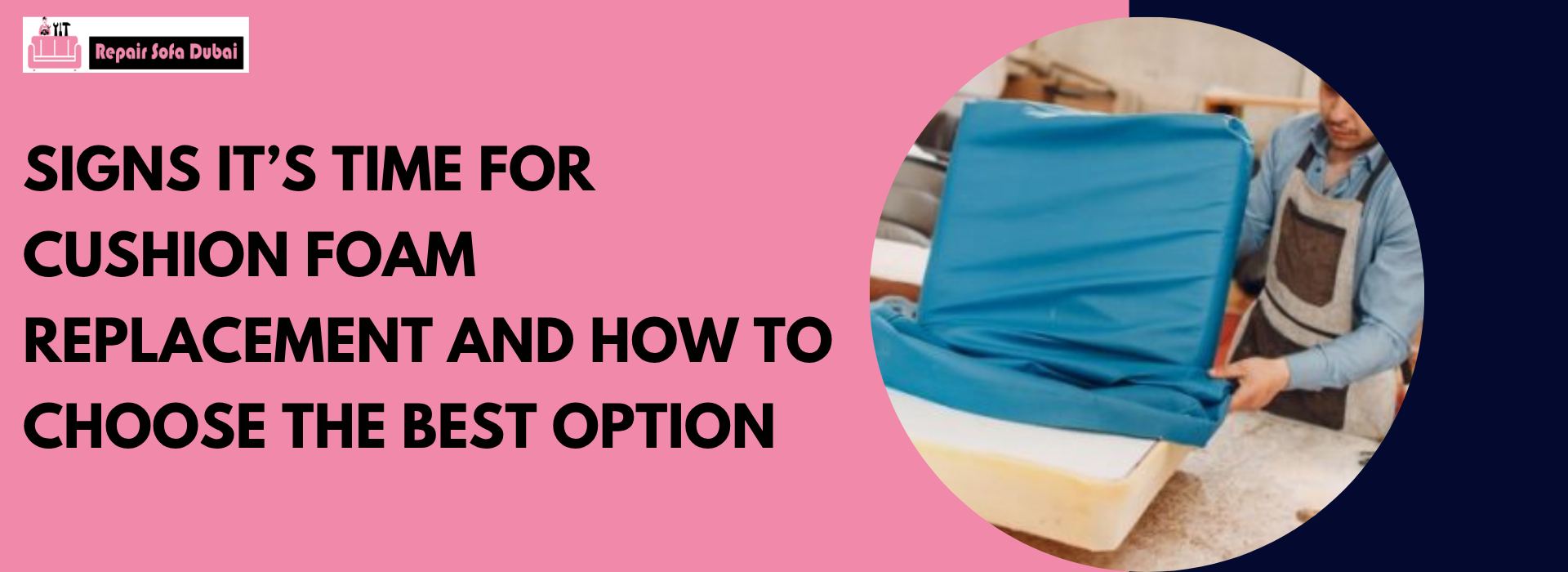
Cushion Foam Guide: Sagging, Bottoming Out & Density Tips

Sofa cushion foam has a lifespan. In Dubai’s climate — with constant air conditioning, heat fluctuations, and heavy daily use — that lifespan is typically shorter than in cooler climates. The question is: how do you know when it’s actually time to replace the foam, rather than just fluffing and repositioning your cushions?

This guide gives you the 8 clearest signs that foam replacement is needed, plus a complete guide to choosing the best replacement option for your specific sofa and lifestyle.

The 8 Signs Your Sofa Cushion Foam Needs Replacing

Sign 1: Visible Sagging Even When No One Is Sitting

Healthy foam returns to its original shape when unloaded. If your sofa cushions show a permanent sag or indentation when the sofa is empty, the foam has lost its resilience and can no longer be revived by fluffing or repositioning. This is the most unambiguous sign that replacement is needed.

Sign 2: You Can Feel the Sofa Frame Through the Cushion

Known as “bottoming out,” this happens when the foam has compressed to the point where it provides negligible support. Sitting on a sofa and feeling the hard frame or springs beneath is uncomfortable and puts unnecessary stress on the sofa’s structural components.

Sign 3: Cushions Look Uneven or Lopsided

If one cushion is noticeably thinner or flatter than the others, the foam inside has worn unevenly. This happens when one seat is used more frequently than others (a common pattern in family sofas where one spot becomes the “favourite”). Even if only one cushion is affected, we typically recommend replacing all seat cushion foam at the same time to ensure consistent support and appearance.

Sign 4: The Sofa “Swallows” You When You Sit Down

Some degree of cushion compression is normal and comfortable. But if you sink so deeply that getting up requires effort, the foam density is too low or has fully degraded. This is particularly common in sofas with economy-grade foam that was too soft to begin with.

Sign 5: Persistent Odour That Doesn’t Respond to Cleaning

Old foam absorbs body oils, sweat, food particles, and humidity over time. These compounds break down inside the foam and create a persistent odour that surface cleaning cannot reach. Steam cleaning can help, but if the smell returns quickly after cleaning, it’s coming from within the foam and replacement is the only solution.

Sign 6: The Sofa Is 5+ Years Old and Has Never Had Foam Replaced

In Dubai’s conditions, standard sofa foam has a practical lifespan of 3–5 years with daily use. High-density foam lasts longer (5–8 years), but even the best foam eventually loses its support properties. If your sofa is approaching or has passed this age range and was never given a foam upgrade, a proactive replacement prevents the deterioration from affecting the structural components.

Sign 7: Back or Hip Pain That Improves When Sitting Elsewhere

If you notice back, hip, or tailbone discomfort specifically when sitting on your sofa — and not in other chairs — the sofa’s foam is likely providing inadequate support. Good quality foam maintains the lumbar curve and distributes weight evenly. Degraded foam allows the pelvis to tilt and the spine to round, causing cumulative discomfort.

Sign 8: Cushion Covers Look Loose or Baggy

When foam loses volume through compression, the cushion covers begin to look loose, wrinkled, or baggy — a sure visual sign that the foam inside has shrunk below its original dimensions. New foam, properly sized, fills the covers correctly and restores the sofa’s original appearance.

How to Choose the Best Replacement Foam for Your Sofa

Once you’ve confirmed that foam replacement is needed, the next decision is which foam to choose. Here’s a quick decision guide:

Your Sofa Use Case Recommended Foam Grade Density Target
Family sofa, daily heavy use High Resilience (HR) Foam 34–38 kg/m³
Standard living room sofa High-Density PU Foam 30–34 kg/m³
Guest room / occasional use Standard PU Foam 26–30 kg/m³
Home with pets or children HR Foam + Dacron wrap 34–38 kg/m³
Premium comfort priority Memory Foam over HD base 40–60 kg/m³ (memory)
Dining chairs High-Density PU 36–40 kg/m³ firm
💡 Always Get the Foam Grade in Writing

When booking a foam replacement service in Dubai, ask the provider to specify the foam density (in kg/m³) on your order confirmation. This protects you from receiving lower-grade foam than quoted. Repairs of Dubai always specifies foam grade on all invoices.

Free Sofa Foam Assessment in Dubai

Not sure if your foam needs replacing? Our technician will assess your cushions during a free home visit and give you an honest recommendation. No obligation, no pressure. Book your free assessment →

FAQs

Can I replace sofa foam myself in Dubai?
It’s possible for simple cushion replacements if you can source correctly graded foam cut to size. However, professional replacement ensures the correct density and firmness, Dacron wrapping for shape, and precise cutting. DIY often results in cushions that are too firm, too soft, or poorly shaped within the covers.
Does foam replacement require removing the sofa fabric?
Usually not for cushion seats. Removable cushion covers are unzipped or stitched open, the old foam removed, new foam inserted and wrapped, and the cover refitted. If the foam is bonded to the sofa frame (as in many tub chairs or armrests), some fabric removal may be necessary.

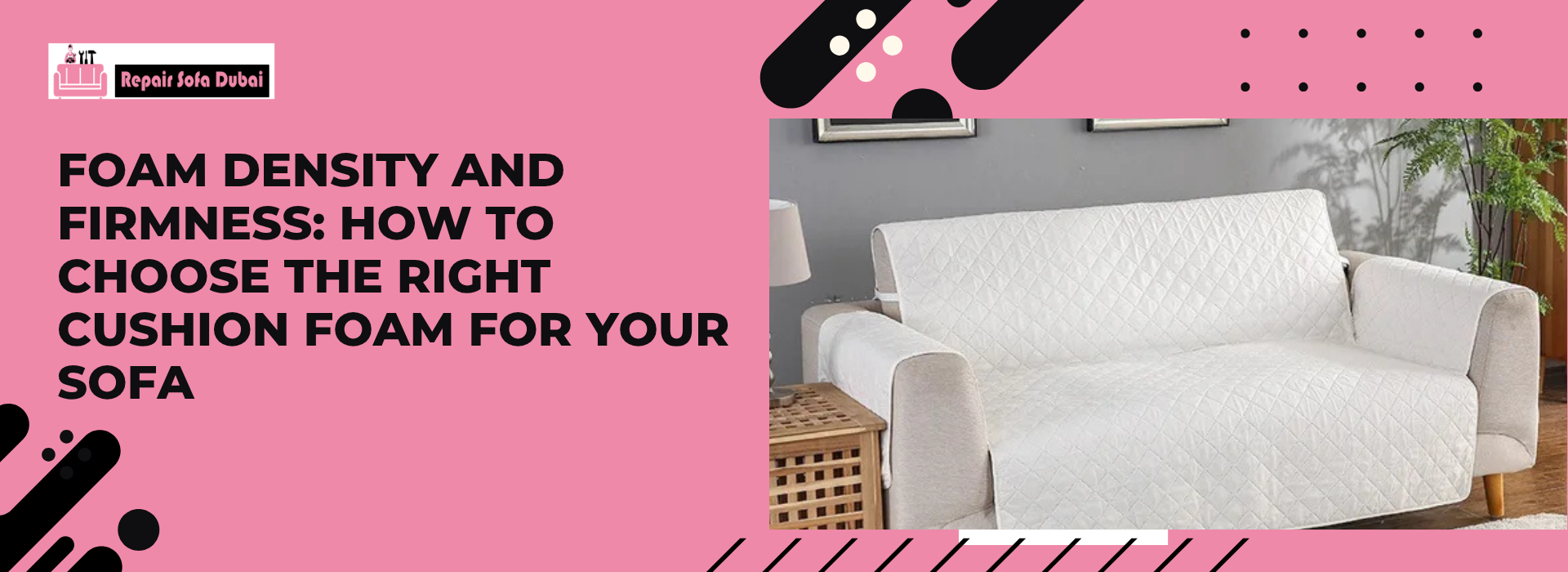
Sofa Cushion Foam Density & Firmness: The Complete Dubai Guide (2026)

Your sofa can look perfectly fine on the outside, yet feel like sitting on a bag of sand — or sinking into a swamp. In most cases, the culprit is not the fabric or the frame; it is the foam inside the cushions. Choosing the wrong density or firmness is the single biggest reason sofas lose their comfort within a year or two, especially in Dubai’s heat.

This guide breaks down everything you need to know about sofa foam density and firmness in plain language — what the numbers mean, which foam type suits your lifestyle, and how Dubai’s climate should influence your choice. Whether you are replacing worn-out cushion foam yourself or booking a professional cushion foam replacement service in Dubai, this guide gives you the knowledge to make the right call.

Why Sofa Foam Quality Matters More Than You Think

Most people focus on a sofa’s upholstery fabric, colour, or frame when they buy furniture. Foam is invisible — yet it determines 80% of your long-term seating comfort. Low-quality foam compresses and “pancakes” within 12–18 months of regular use. Once that happens, you are no longer sitting on the sofa; you are sinking through it, and your spine pays the price.

In Dubai, the problem is amplified. Temperatures above 40 °C, combined with high air-conditioning use indoors, create rapid thermal cycling that degrades cheap open-cell foams far faster than in cooler climates. Choosing the right foam density and firmness is therefore a long-term investment, not just a comfort preference.

💡 Quick fact: A high-quality 2.0 PCF (pounds per cubic foot) foam cushion typically lasts 7–10 years under daily use. A cheap 1.5 PCF foam may flatten within 12–18 months under the same conditions.

Foam Density Explained: What PCF Actually Means

Foam density measures how much material is packed into one cubic foot of foam and is expressed in pounds per cubic foot (PCF). It is the most important spec to look for when replacing sofa cushion foam — more important than colour, thickness, or even brand name.

The Key Rule: Density = Durability (Not Softness)

Many people confuse density with firmness. They are not the same thing. A high-density foam can still feel soft to the touch, while a low-density foam can be stiff. Density tells you how long the foam will hold its shape and support, not how plush it feels on day one.

Density (PCF) Quality Level Expected Lifespan Best For
Below 1.5 PCF Low / Budget 12–18 months Occasional-use furniture
1.5 – 1.8 PCF Economy 2–3 years Spare room sofas
1.8 – 2.5 PCF Standard / Recommended 5–7 years Daily-use living room sofas
2.5 PCF and above Premium / Commercial 7–12 years Hotels, offices, heavy daily use

For most Dubai homes — where sofas are used daily for 4–6 hours — a density of 2.0 PCF strikes the ideal balance between comfort, durability, and value. Commercial spaces such as hotel lobbies or offices should go higher, at 2.5 PCF or above.

Density in Dubai: The Heat Factor

Dubai’s summer heat (regularly exceeding 45 °C outdoors, and cold air-con indoors) means foam undergoes significant daily expansion and contraction. Lower-density foams lose their cellular structure faster under these conditions. For outdoor furniture specifically — balconies, pool areas, garden seating — always choose reticulated or open-cell high-density foam that allows moisture and heat to escape, preventing mould and material breakdown.

Firmness & ILD: Choosing the Right “Feel” for Your Sofa

Once you have chosen the right density, the next decision is firmness — how soft or hard the foam feels when you sit on it. Manufacturers measure firmness using the Indentation Load Deflection (ILD) rating. ILD measures how many pounds of force are required to compress foam by 25% of its thickness using a 50 square-inch disc.

ILD Rating Feel Best Application
10 – 20 ILD Very Soft / Plush Back cushions, decorative cushions, day beds
20 – 30 ILD Medium Soft Bedroom sofas, reading chairs, loungers
25 – 35 ILD Medium (Most Popular) Standard living room sofa seat cushions
35 – 45 ILD Firm Office seating, dining chairs, back pain support
45+ ILD Very Firm Commercial seating, orthopedic needs

🎯 Dubai recommendation: For everyday living room sofas in Dubai, the sweet spot is 2.0–2.2 PCF density with a 28–35 ILD firmness. This provides good back support, resists the heat-related breakdown, and maintains its shape for 6–8 years under typical family use.

Back Pain? Go Firmer Than You Think

If you or anyone in your household experiences lower back pain, resist the temptation to choose the softest-feeling foam. Foam below 25 ILD allows the pelvis to sink, misaligning the lumbar spine. Orthopedic specialists typically recommend seat foam in the 36–44 ILD range for people with chronic back issues, topped with a soft memory foam layer (15–20 ILD) for surface comfort.

The 5 Main Sofa Foam Types: Which One Is Right for You?

Density and ILD specs apply to all foam types. But the type of foam also matters — each material has distinct performance characteristics suited to different households and budgets.

1. High-Density Polyurethane Foam (HR Foam)

The industry standard for sofa seat cushions. Polyurethane foam offers an excellent combination of durability, support, and value. High-Resilience (HR) polyurethane foam is the best version, with a “snap-back” quality that resists permanent compression. This is the foam used in most quality sofas sold in Dubai furniture shops.

  • Density: 1.8 – 2.5 PCF
  • Lifespan: 5–10 years
  • Best for: Daily-use living room sofas

2. Memory Foam

Memory foam (viscoelastic foam) softens with body heat and moulds to your shape, then slowly returns to its original form. It is excellent for pressure relief but can feel warm and sluggish, which can be uncomfortable in Dubai’s indoor temperature swings. Best used as a topper layer over a firm polyurethane core rather than as the sole filling.

  • Density: 3.0 – 5.0 PCF
  • Lifespan: 8–12 years
  • Best for: Luxury sofas, bedroom seating, people with joint pain

3. Latex Foam

Natural latex foam is derived from rubber tree sap and is exceptionally durable, hypoallergenic, and breathable. It does not break down under heat as quickly as synthetic foams, making it well-suited to Dubai’s climate. The drawback is cost — latex is significantly more expensive than polyurethane.

  • Density: 4.0 – 5.5 PCF
  • Lifespan: 10–15 years
  • Best for: Allergy sufferers, premium sofas, long-term investment

4. Rebonded Foam

Rebonded foam is made from shredded recycled foam pieces bonded together. It is very firm, very dense, and very affordable. It is not suitable for seating cushions (too rigid and uneven), but it is commonly used as a base layer under softer foam in high-use commercial furniture.

  • Best for: Base layers, commercial furniture, orthopedic platforms

5. Reticulated (Quick-Dry) Foam

Reticulated foam has an open-cell structure with large pores, allowing water to drain through instantly. It does not harbour mould or bacteria, making it the only suitable foam for outdoor furniture in Dubai — balcony sofas, pool loungers, and garden seating.

  • Best for: All outdoor cushions and poolside furniture

Not Sure Which Foam Is Right for Your Sofa?

Our Dubai experts offer a free home consultation — we measure your cushions, assess the wear, and recommend the exact foam spec for your lifestyle and budget. No obligation.

Book a Free Home Visit →

Buying Sofa Foam in Dubai: A Practical Decision Checklist

Before you order replacement foam or book a professional service, run through these questions to arrive at the right spec every time.

  1. How often is this sofa used? Daily family seating → 2.0+ PCF. Occasional guest use → 1.8 PCF is fine.
  2. Is the sofa indoors or outdoors? Outdoors → reticulated quick-dry foam only.
  3. Does anyone have back pain or posture issues? Yes → 36–44 ILD seat cushion with memory foam topper.
  4. Do you have children or pets? Yes → go higher density (2.2–2.5 PCF) for extra durability.
  5. What is your budget priority? Value → HR polyurethane. Premium → latex or memory foam core.
  6. Are your cushion covers removable? If not, a professional service is required for foam replacement to avoid damaging the upholstery.

How to Measure Your Cushion Foam for Replacement

If you are ordering replacement foam, accurate measurements are critical. Foam that is even 1 cm too small will shift inside the cover; too large and it will bunch and wrinkle.

  1. Remove the cushion from its cover and measure the interior of the cover (not the cushion), in length × width × height in centimetres.
  2. Add 1–2 cm to each dimension to account for the natural compression that gives a “plump” look.
  3. Note the shape — most are square or rectangular, but L-shaped, T-shaped, and wedge cushions require custom cutting.

For professional sofa repair and foam replacement services in Dubai, our team handles all measurements, cutting, and fitting at your home or in our workshop.

5 Signs Your Sofa Cushion Foam Needs Replacing Right Now

Not sure if the foam is really the problem? These are the clearest warning signs that it is time for a cushion foam change in Dubai:

  1. The “sitting pit” effect: You sink noticeably lower than you used to, and the cushion does not spring back when you stand up.
  2. Visible sagging or uneven lumps: The surface of the cushion is no longer smooth; there are flat patches and raised ridges where the foam has broken down unevenly.
  3. You can feel the frame or springs: A sure sign the foam has compressed to almost nothing.
  4. Persistent stiffness or back pain: If sitting on your sofa for more than 30 minutes causes discomfort, your foam is no longer providing proper lumbar support.
  5. The sofa is 5+ years old and used daily: Even if it looks fine, foam degrades chemically over time. A 5-year-old daily-use sofa almost certainly has foam that is past its optimum performance point.

The good news: if your sofa’s frame and upholstery fabric are still in good condition, foam replacement is dramatically cheaper than buying a new sofa — typically 70–80% less expensive — and it can make a 10-year-old sofa feel brand new.

DIY Foam Replacement vs Professional Service in Dubai: Which to Choose?

Factor DIY Professional Service
Cost Lower (foam cost only) Moderate (includes labour & cutting)
Foam sourcing Limited options in retail Access to commercial-grade foam grades
Precision cutting Difficult without tools Machine-cut to exact measurements
Risk of damage High (stitching, zips, fabric) Low (experienced technicians)
Time Half a day minimum Same-day or 2–3 day turnaround
Non-removable covers Not possible Fully managed
Warranty None Service warranty included

For sofas with removable zip covers and simple rectangular cushions, a confident DIYer can source and cut foam themselves. For anything else — L-shaped cushions, non-removable covers, or foam-plus-fibre combination fillings — a professional service delivers far better results at a price that is still far below the cost of new furniture.

Our team at Repairs of Dubai offers free pickup and delivery across all Dubai areas, including Dubai Hills, JVC, Al Barsha, Jumeirah, and Dubai Marina.

FAQs Related to Sofa Cushion Foam Density & Firmness

What is the best foam density?
2.0–2.2 PCF is ideal for daily use in Dubai.

What is ILD?
It measures firmness. 25–35 ILD is best for most sofas.

32 vs 40 density foam?
40 density is stronger and more durable.

How long does foam last?
Typically 5–8 years in Dubai.

Can I replace foam myself?
Yes, if covers are removable and shape is simple.

Best foam for outdoor use?
Reticulated (quick-dry) foam.

Does foam soften over time?
Yes, slightly in the first few months.

Ready to Restore Your Sofa’s Comfort?

Repairs of Dubai provides professional cushion foam replacement across all Dubai areas. Free home visit, machine-cut foam, and free pickup & delivery included.

Get a Free Quote Today →

Best Fabrics for Couch Upholstery in Dubai’s Climate

You pick a fabric that looks stunning in the store. Six months later, it’s faded, peeling, or feels sticky in the heat. Dubai’s climate is brutal on the wrong materials and most people only find that out after spending money.

Choosing the right fabric for your couch upholstery in Dubai isn’t just about what looks good. It’s about what actually lasts here.

Why Dubai’s Climate Changes Everything

Most fabric guides are written for mild climates. Dubai is not that.

Your couch deals with these type of damage every single day:

  • Intense UV exposure that bleaches and weakens fibers
  • Constant temperature shifts between outdoor heat and air-conditioned interiors
  • Humidity that encourages mold in the wrong materials
  • Fine dust and sand that grinds down loose weaves over time

This is exactly why fabric choice for couch upholstery in Dubai matters more than people expect.

Fabrics That Actually Work in Dubai

  1. Solution-Dyed Acrylic

The color is baked into the fiber itself, not sitting on top. So UV rays have nothing to fade. It resists moisture, dries fast, and holds its shape well. Perfect for rooms with a lot of natural light.

  1. Sunbrella Fabric

Originally made for outdoor use, Sunbrella handles direct sun, humidity, and heat without breaking a sweat. It’s become a popular choice for indoor couch upholstery in Dubai for exactly that reason.

  1. Performance Velvet

Traditional velvet would struggle here. Performance velvet is different. It’s engineered with stain resistance and breathability so you get that rich, luxurious look without the heat trap or the maintenance stress.

  1. Microfiber

If you have kids, pets, or just a busy home, microfiber is your friend. Dust and sand don’t settle deep into it, which matters more in Dubai than most people think. Easy to clean and holds up really well over time.

  1. Leather and Faux Leather

Leather has a timeless feel that works beautifully in Dubai as long as it’s not sitting in direct sunlight all day. Condition it regularly and it ages well. Not ready for real leather? Faux leather has improved a lot and gives you solid durability at a friendlier price.

Fabrics to Avoid

  • Linen wrinkles badly and absorbs moisture in humidity
  • Silk fades fast under UV and is hard to maintain
  • Untreated cotton stains easily and breaks down in heat
  • Cheap polyester blends feel uncomfortable in warmth and pill quickly

How to Pick the Right One for Your Space

You don’t need to overthink this. Just think about how your space is actually used.

Getting a lot of direct sunlight? Go with solution-dyed acrylic or Sunbrella.

Formal sitting room with softer light? Performance velvet gives you that elegant finish without the worry.

Busy household with kids and pets? Microfiber. Easy decision.

Your lifestyle points you straight to the right fabric once you stop looking at swatches and start thinking about your day-to-day reality.

The Fabric Is Only Half the Job

Even the best material will underperform if the installation isn’t done right. Poor fitting, wrong padding, and rushed stitching will make expensive fabric look average within a year.

When investing in couch upholstery in Dubai, work with someone who understands the local climate, asks the right questions about your space, and recommends accordingly. Not just someone handing you a catalog.

Your couch should still look great three summers from now. The right fabric and the right hands doing the work make that completely achievable.

If you’re ready to stop guessing, reach out to a professional today and get proper guidance before you decide anything.

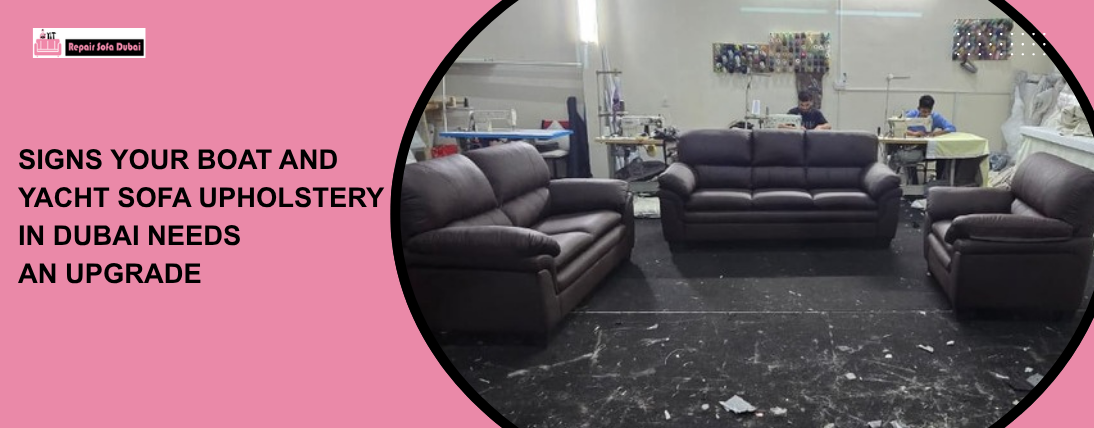
Signs Your Boat and Yacht Sofa Upholstery in Dubai Needs an Upgrade

You step onto your yacht and something feels off. The cushions look tired, there’s a faint smell, and guests are quietly shifting in their seats. That’s your boat telling you something.

Dubai’s heat, UV exposure, and salty sea air are brutal on interiors. Most yacht owners ignore the signs until the damage is too far gone. Let’s make sure that doesn’t happen to you.

6 Clear Signs It’s Time to Upgrade Your Yacht’s Upholstery

  1. Cracking or Peeling Fabric

Once marine vinyl starts cracking, it’s no longer waterproof. Moisture gets into the foam underneath, mold follows, and what looked like a cosmetic issue becomes structural damage fast.

  1. Stains That Won’t Budge

Sunscreen, salt residue, drinks. Quality yacht upholstery resists all of it. But once the protective coating wears off, stains become permanent. No cleaning product fixes compromised fabric.

  1. Flat or Sunken Cushions

Foam degradation is slow and sneaky. You adapt to it without noticing until a guest points it out. For marina clients and luxury property managers responsible for guest experience, uncomfortable seating is simply not acceptable.

  1. A Musty or Mildewy Smell

This is a red flag. Mold living inside the foam won’t go away with sprays or airing out. It needs a full replacement, and breathing mold spores on a long sail is a genuine health concern.

  1. Uneven Fading

Dubai’s UV index is unforgiving. Faded fabric isn’t just an aesthetic issue. UV degradation weakens the fibers, making the material far more vulnerable to tearing and moisture.

  1. Seams and Zippers Coming Apart

Salt crystals act like sandpaper on stitching over time. Once seams separate, water gets inside quickly and damage accelerates. On a moving vessel, loose upholstery is also a safety hazard.

What a Quality Upgrade Actually Looks Like

Not all upholstery work on boats and yachts is the same. When you want to change the upholstery on your boat or yacht sofa in Dubai, here’s what you need to know:

  • Only marine-grade materials, like UV-resistant vinyl, solution-dyed acrylic, or marine leather alternatives
  • Closed-cell foam that doesn’t soak up water but keeps it out
  • Stitching and finishing seams with precision that can handle salt air and constant movement

When done right, quality boat and yacht sofa upholstery services in Dubai can provide the best results.

Don’t Wait Until It Gets Worse

Every week you delay, the damage quietly grows. Cracked vinyl lets in more moisture. Mold spreads. A simple reupholstery job today could become a costly repair project in a few months.

Your yacht is an investment. It should feel like one every time you step on board.

Whether you’re a yacht owner, a marina client refreshing before peak season, or a luxury property manager overseeing a fleet, the condition of your boat and yacht sofa upholstery in Dubai is not a small detail. It sets the entire tone of the experience.

If two or more signs above sound familiar, reach out to a marine upholstery professional today and get it properly assessed.

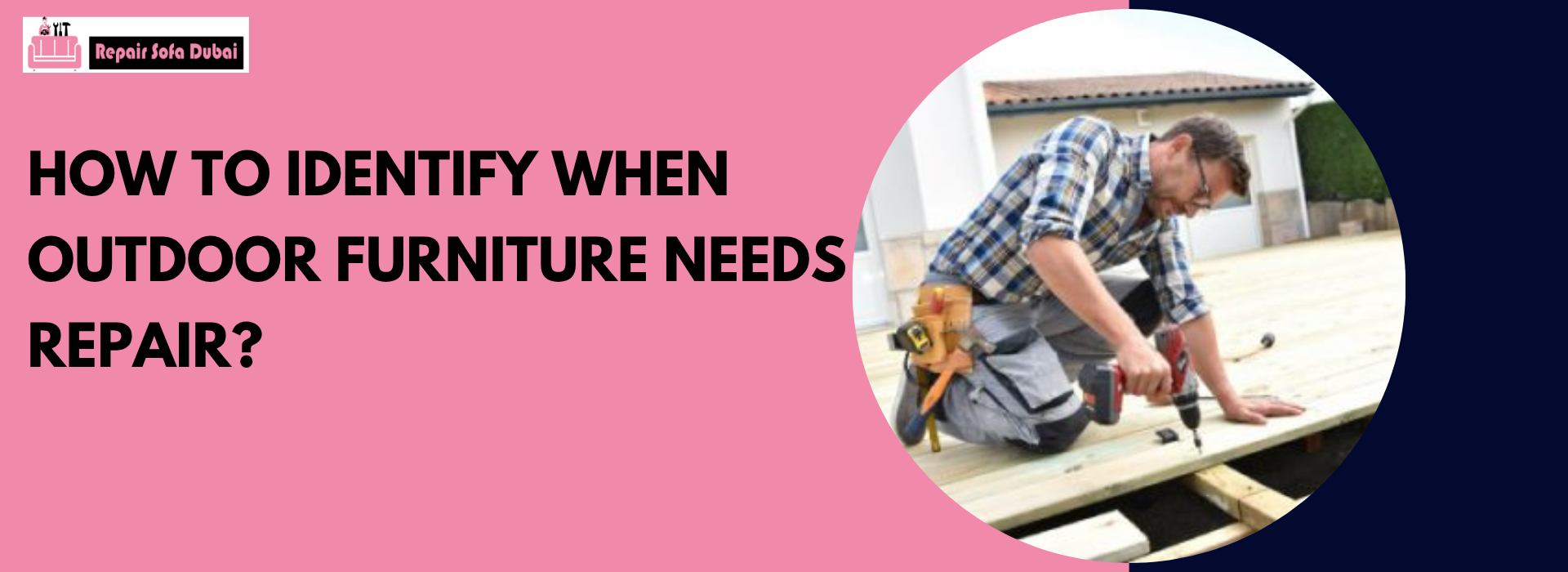
How to Identify When Outdoor Furniture Needs Repair

The clearest signs your outdoor furniture needs repair are a wobbling or unstable frame, visible rust on metal parts, cracked or splitting wood, faded or torn cushions, and joints that have loosened over time. When the underlying frame is still structurally sound, repair is almost always worth pursuing before replacement, especially in Dubai’s climate, where sun, humidity, and sand accelerate wear on every material type.

This guide walks through exactly what to look for across wood, metal, wicker, and fabric, so you can catch problems early and decide whether a repair will hold up.

What are the first signs outdoor furniture needs repair?

The earliest signs are usually cosmetic before they become structural, things like small surface cracks, minor rust spots, slight fading, or a joint that feels slightly looser than it used to. Catching these early signs before they progress is what keeps a repair simple and affordable rather than extensive.

Furniture that’s inspected regularly tends to need smaller, cheaper repairs, since problems get addressed while they’re still isolated to one component. Furniture left unchecked for a season or two often needs multiple repairs at once, since one issue, like a small crack, tends to worsen and sometimes triggers related problems nearby, such as a joint loosening because the wood around it has started to weaken.

How do you know if wood outdoor furniture needs repair?

Wood outdoor furniture needs repair when you see cracks wider than a hairline, soft or spongy spots that indicate rot, joints that have loosened, or a grayish, dried-out surface where the original finish has worn away completely. Small hairline cracks, sometimes called checks, are a normal part of wood aging and don’t usually affect strength.

Humidity swings and direct sun exposure both cause wood to expand and contract repeatedly, which is what creates these surface checks over time. The distinction that matters is depth: a crack that doesn’t go through the full thickness of the wood can usually be filled and sanded, while a crack running through the piece, or any soft, spongy area suggesting rot underneath, needs more involved repair or replacement of that component. We’ve covered the full process for treating cracked and weathered wood in our guide on fixing rust and cracks in outdoor furniture.

How do you know if metal outdoor furniture needs repair?

Metal outdoor furniture needs repair when you notice rust spots, even small ones, since rust spreads and weakens the metal the longer it’s left untreated. Wobbling frames, loose welds, or chipped protective coating that exposes bare metal are also clear signs repair is needed soon.

Rust starts small, typically as brown spotting where moisture has settled, and gets progressively worse the longer it goes untreated, eventually eating through the metal entirely if ignored. Humidity accelerates this process significantly, and furniture near pools or in coastal-adjacent areas of Dubai faces even faster corrosion from salt in the air. Catching rust at the spotting stage means a simple sand, treat, and repaint job, while advanced rust that’s eaten through a support point usually means that section needs full replacement rather than surface treatment.

How do you know if wicker or rattan furniture needs repair?

Wicker and rattan furniture needs repair when individual strands are fraying, cracking, or coming loose from the frame, or when the material feels brittle rather than flexible when pressed gently. Natural wicker is more prone to this than synthetic resin wicker, since it dries out faster under direct sun and heat.

Brittleness is usually the earlier warning sign, appearing before strands actually break or separate from the frame. Furniture that’s kept out of direct sun and given occasional conditioning treatment tends to stay flexible far longer than pieces left in constant exposure. Once multiple strands have broken in the same section, that area typically needs to be rewoven rather than spot-repaired, which is a more involved but still worthwhile repair compared to replacing the whole piece.

When do outdoor cushions and fabric need repair or replacement?

Outdoor cushions and covers need attention when the fabric is visibly faded, when foam has flattened and no longer springs back, when covers show fraying or holes, or when stains have set in permanently despite cleaning. Faded color is usually the first visible sign, appearing well before the foam or structure underneath shows any wear.

Sun exposure breaks down fabric dye faster outdoors than indoors, which is why outdoor cushion covers typically need replacing more often than the cushions themselves. If covers are showing wear but the underlying foam is still supportive, replacing just the covers is usually the more cost-effective option, a process we cover in more detail on our outdoor sofa cover replacement page. If both the fabric and foam have degraded, a fuller cushion rebuild makes more sense than replacing covers alone.

Signs the damage is beyond repair

Damage is generally beyond repair when the frame has rusted through at a structural point, wood has rotted rather than just cracked on the surface, or the same joint or section has already failed once after a previous repair. These issues affect the piece’s core strength rather than its surface appearance, which is the key difference from cosmetic wear.

A frame that wobbles even after tightening every visible joint often has a hidden structural issue, such as a weld that’s failed internally or a wood component that’s rotted from the inside, that surface repair won’t fix. In these cases, it’s worth getting a professional assessment before spending on parts, since replacing the affected component, or the piece entirely, may be more practical than repeated repair attempts.

How Dubai’s climate accelerates outdoor furniture damage

Intense year-round sun, high summer humidity, and blowing sand all accelerate wear on outdoor furniture faster than in milder climates, which is why regular inspection matters more here than in regions with gentler weather. Each material responds to these conditions differently, but all of them age faster under Dubai’s specific combination of heat and humidity swings.

UV exposure breaks down fabric dyes and dries out wood and natural wicker, while humidity, especially during the summer months, accelerates metal corrosion and can encourage mold growth in cushions that don’t dry out fully between uses. Sand carried by wind adds a mild abrasive effect over time, gradually wearing down protective coatings on metal and finishes on wood faster than would happen indoors or in dust-free environments. Furniture positioned in direct, unshaded sun typically shows these effects noticeably faster than pieces kept under a pergola or awning.

Is it worth repairing outdoor furniture or should you replace it?

The short answer

In most cases, yes, it’s worth repairing outdoor furniture, as long as the frame itself, whether wood, metal, or wicker, is still structurally sound. Replacement only makes more financial sense when the core structure has failed.

When replacement makes more sense

Replacement is the better option when the frame has rusted through at a load-bearing point, wood has rotted rather than just cracked, multiple structural repairs have already been attempted at the same point, or the piece is made from low-grade materials that were never built to be repaired more than once.

When repair makes more sense

Repair is the better option whenever the frame is intact and the damage is limited to cushions, surface rust, minor cracks, or fraying wicker strands. It’s also usually the better choice for higher-quality teak, wrought iron, or aluminum pieces, since these materials hold up well to repair even after years of sun exposure.

The verdict

Most outdoor furniture in Dubai homes is a repair case rather than a replacement case, since the materials commonly used in quality outdoor sets, teak, aluminum, and wrought iron, are specifically built to be repaired and refinished repeatedly. The exceptions are narrow: rusted-through metal, rotted wood, and pieces that have already failed at the same structural point more than once.


Frequently Asked Questions

How do I know if my outdoor furniture needs repair?

The clearest signs are a wobbling or unstable frame, visible rust on metal parts, cracked or splitting wood, faded or torn cushions, and joints that have loosened. If the frame itself is still structurally sound, repair is almost always worth pursuing before replacement.

Can rusted outdoor furniture be repaired?

Yes, in most cases. Surface rust can be sanded down, treated, and repainted, and even moderate rust damage can usually be repaired unless the metal has corroded through and lost structural strength.

How does Dubai’s climate affect outdoor furniture?

Intense UV exposure, high humidity, and blowing sand all accelerate wear on outdoor furniture in Dubai, causing faster fading, cracking, and rust than in milder climates, which means outdoor pieces typically need inspection and maintenance more often here.

When should outdoor furniture be replaced instead of repaired?

Replacement makes more sense when the frame has rusted through, wood has rotted rather than just cracked, or the same structural point has already failed after a previous repair, since these issues affect the furniture’s core strength rather than its surface condition.

Get a Free Outdoor Furniture Assessment

If you’re not sure whether a piece is worth repairing, we can usually tell within minutes of seeing it. Our team inspects the frame, cushions, and finish, then gives you an honest recommendation along with a clear cost estimate before any work begins. Visit our outdoor furniture repair services page to see our full range of repair options, or reach out for a free quote.
Choosing the Best Restaurant Chair Upholstery for High-Traffic Dining

Restaurant owners in Dubai face a unique challenge when it comes to their furniture. The chairs in dining spaces work harder than most people realize. Every day, dozens or even hundreds of guests use these seats. This constant use takes a toll on the upholstery.

Selecting the right restaurant chair upholstery is not just about looks. It affects customer comfort, business image, and long-term costs. The wrong choice leads to frequent replacements and unhappy diners. The right choice creates a welcoming space that lasts for years.

Why Quality Upholstery Matters for Business Success

First impressions shape customer perceptions immediately. Guests notice the condition of the seating as soon as they sit down. Worn, stained, or torn upholstery sends a negative message about the establishment. Fresh, well-maintained chairs suggest quality and care throughout the restaurant.

Comfort directly impacts the dining experience and customer satisfaction. Uncomfortable seating makes guests rush through meals. Quality upholstery fabric for restaurants with proper padding encourages people to relax and enjoy their time. This often leads to higher spending and repeat visits.

Best Fabric Materials for Restaurant Chairs

Vinyl Upholstery

Vinyl stands as one of the most practical choices for busy dining spaces. This material resists stains and cleans easily with simple wiping. Spills do not penetrate the surface, making cleanup quick and efficient. Many casual dining establishments prefer vinyl for these reasons.

Commercial-grade vinyl comes in various textures and colors that mimic leather and fabric. Modern vinyl options look sophisticated while offering superior durability. The material handles constant use without showing significant wear for several years.

Leather Options

Leather upholstery brings elegance and sophistication to dining spaces. Real leather develops a beautiful patina over time rather than looking worn. It suits upscale restaurants where ambiance plays a key role. Guests often associate leather seating with quality and luxury.

Proper maintenance keeps leather looking good for many years. The material breathes well, which matters in Dubai’s warm climate. Leather restaurant chairs require regular conditioning but reward owners with longevity.

Microfiber Fabrics

Microfiber combines the soft feel of fabric with practical performance features. Liquids bead up on the surface rather than soaking in immediately. This gives staff time to clean spills before they become permanent marks.

The fabric feels comfortable against the skin and maintains its appearance well. Microfiber does not fade easily under bright lighting or sunlight. It performs especially well in family-friendly dining environments.

Polyester Blends

Durable restaurant upholstery often includes polyester in its composition. The synthetic fibers bounce back from compression better than natural materials. This means cushions maintain their shape and support longer.

Key Features to Consider When Choosing Upholstery

Abrasion Resistance Ratings

The abrasion rating indicates how well the fabric withstands rubbing and friction. This measurement uses double rub tests to determine durability. Residential fabrics typically rate around 15,000 double rubs. Restaurant seating needs ratings of at least 30,000 for adequate performance.

Water and Stain Resistance

Protective coatings on fabric create a barrier against liquids and stains. Untreated fabrics absorb moisture quickly, leading to permanent damage. Water-resistant upholstery maintains its appearance despite daily challenges.

Some fabrics feature built-in stain resistance through their fiber construction. Understanding the type of protection helps with maintenance planning. Stain-resistant upholstery reduces cleaning costs and replacement frequency.

Color and Pattern Selection

Color choice affects both aesthetics and practical maintenance needs. Light colors show stains and dirt more quickly than darker shades. Very dark fabrics highlight dust, lint, and light-colored spills.

Patterns disguise minor stains and wear spots effectively. Small geometric or textured patterns work better than large designs. Solid colors show every imperfection but offer design simplicity. The decision depends on the restaurant’s style and maintenance capabilities.

Making the Final Decision

Choosing restaurant chair upholstery requires balancing multiple factors simultaneously. Durability, comfort, appearance, and budget all play important roles. The best choice depends on the specific restaurant type and customer base. Fast-casual locations need different solutions than fine dining establishments.

How Worn-Out Massage Chair Upholstery Reduces Massage Comfort

You settle into your massage chair expecting relaxation. Instead, you feel rough patches against your skin. The cushions feel uneven. Cracks in the material catch on your clothes. What should be a soothing experience becomes uncomfortable and distracting.

Worn-out massage chair upholstery doesn’t just look bad; it actively ruins the massage experience. Understanding how damaged upholstery affects comfort helps you know when restoration becomes necessary rather than optional.

The Direct Connection Between Upholstery and Massage Quality

Massage chairs work by applying pressure to specific body points. The upholstery acts as the interface between mechanical components and your body. When that interface deteriorates, everything changes.

Fresh upholstery distributes pressure evenly across contact areas. Your body weight spreads naturally. The massage rollers work through smooth, consistent material that transmits their movement properly.

Think about wearing worn-out shoes. The soles still protect your feet technically, but comfort disappears. Massage chair upholstery in Dubai works the same way; deterioration changes the entire experience even when mechanical parts function perfectly.

How Cracked Leather Affects Your Relaxation?

Leather upholstery feels luxurious when new. It’s smooth, cool, and comfortable against the skin. Dubai’s climate challenges leather, though. Heat and humidity cycle constantly between air-conditioned interiors and hot outdoor temperatures.

This cycling causes leather to dry out over time. Oils evaporate from the material. Flexibility decreases. Eventually, small cracks appear that grow into larger breaks.

Peeling leather is worse. Flakes come off during massage sessions. They stick to skin and clothes. Some pieces are sharp enough to actually scratch. That’s the opposite of what spa or wellness center clients expect from their massage chair fabric change in Dubai.

Faded and Stained Materials Create Psychological Discomfort

Comfort isn’t purely physical. Your mind plays a huge role in relaxation. When you see dirty, faded, or stained upholstery, your brain registers “unclean” even if the material is sanitized.

This psychological response prevents full relaxation. Part of your mind stays alert and slightly uncomfortable. You can’t completely let go and enjoy the massage because visual cues keep triggering cleanliness concerns.

Spas and wellness centers in areas like Marina, Arabian Ranches, or Downtown Dubai understand this. Their clients expect premium experiences. Worn upholstery immediately signals lower quality, making true relaxation harder to achieve, regardless of how good the actual massage mechanisms are.

Torn Seams and Loose Threads Interrupt the Experience

Small tears don’t seem like major problems initially. A loose thread here, a small rip there, easy to ignore at first glance.

During massage sessions, though, these defects become major distractions. Loose threads catch on jewelry, watches, or clothing details. Torn seams create edges that press uncomfortably against body parts.

Premium massage chair upholstery maintains structural integrity. Seams stay tight. Material stays smooth. Nothing interrupts the programmed massage experience.

Temperature Regulation Problems with Damaged Upholstery

Quality upholstery materials breathe properly. Air moves through fabric, allowing body heat to dissipate. Leather upholstery has natural porosity that prevents overheating during extended massage sessions.

Damaged upholstery loses these properties. Cracked leather no longer breathes effectively. Worn fabric develops dense spots that trap heat. Synthetic materials break down and become sticky.

During a 20-30 minute massage session, temperature matters significantly. Overheating makes relaxation impossible. You become aware of discomfort and sweating rather than enjoying the massage therapy.

When to Consider Upholstery Restoration

Professional massage chair fabric changes restore original comfort levels. Services specializing in massage chair restoration understand how upholstery affects the full massage experience, not just appearance.

Quality restoration uses materials designed for commercial massage chair use. These fabrics and leathers withstand heat, humidity, and frequent use better than standard upholstery materials. They maintain comfort properties longer under intensive spa or wellness center conditions.