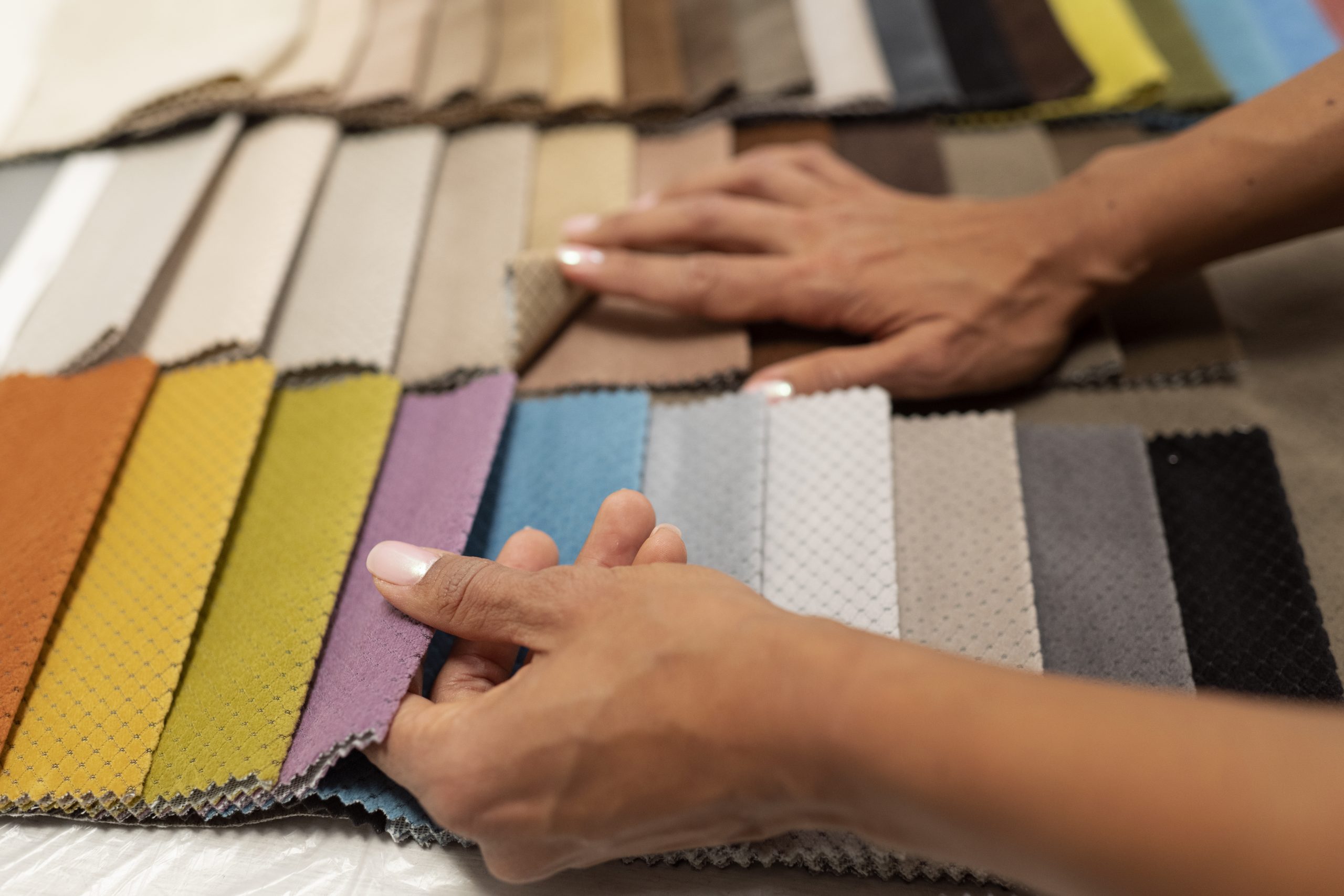
Choosing an upholstery fabric is one of the most important decisions in a reupholstery project — and one of the most confusing. The options are vast, and the terminology used in fabric stores and upholstery workshops can be difficult to navigate without a reference point. This guide explains the most common upholstery fabric types, their real-world strengths and weaknesses, and how to match them to the right sofa and the right household.
How Upholstery Fabrics Are Measured: The Martindale Rub Count
Before getting into specific fabric types, it helps to understand the Martindale rub count — the industry-standard measure of fabric durability. The test measures how many times a fabric can be abraded before it shows wear or breaks down. As a practical guide:
- Under 10,000 rubs — decorative use only, not suitable for furniture
- 10,000–15,000 — light domestic use (a bedroom chair occasionally sat on)
- 15,000–25,000 — general domestic use
- 25,000–40,000 — heavy domestic use or light commercial
- 40,000+ — heavy commercial use or households with children and pets
When choosing fabric for a main living room sofa used daily, aim for a minimum of 25,000 rubs. For households with pets or children, 40,000+ is worth the investment.
The Most Common Upholstery Fabric Types
1. Linen
Linen is a natural fibre made from the flax plant. It has a distinctive look — slightly textured, with an organic, casual elegance that works well in Scandinavian, coastal and relaxed contemporary interiors. Linen is breathable and cool to the touch, which is a genuine advantage in the UAE.
The drawback is durability. Linen wrinkles easily, is susceptible to staining, and typically has a lower rub count than synthetic alternatives. It is also not recommended for households with pets as the loose weave snags easily with claws. Linen works best in low-traffic rooms — a guest bedroom chair or a formal sitting room used occasionally.
Best for: Low-traffic rooms, adult-only households, those who prioritise natural aesthetics.
2. Cotton
Cotton upholstery fabric is versatile, breathable and available in a huge range of weaves, colours and patterns. Plain cotton is soft and natural but not particularly durable on its own. Most cotton upholstery fabrics are blended with polyester or treated to improve stain resistance and durability. Cotton canvas and denim weaves are notably tougher and suitable for heavier use. Look for cotton blends with a rub count of 20,000+ for everyday furniture.
Best for: General domestic use when blended; decorative use when 100% cotton with low rub count.
3. Polyester and Polyester Blends
Polyester is one of the workhorses of modern upholstery. On its own or blended with cotton, it offers good durability, colour fastness, and resistance to pilling and abrasion. It does not breathe as well as natural fibres, but in air-conditioned environments this is less of an issue. Polyester blends are widely available, affordable, and cover a broad middle ground of the market. Microfibre is a type of polyester — just woven at a finer scale.
Best for: Everyday sofas, families, good value reupholstery projects.
4. Microfibre (Microsuede)
Microfibre is tightly woven polyester, processed to have an incredibly fine weave — finer than a human hair at the individual fibre level. This tight construction gives it excellent scratch resistance, makes it difficult for pet hair to embed, and allows most spills to be wiped away before they penetrate. It has a soft, suede-like feel and is one of the most practical everyday upholstery fabrics available. It is widely used in UAE upholstery workshops for family sofas precisely because it performs so reliably.
Best for: Families, pet owners, high-traffic living room sofas.
5. Velvet
Velvet has a cut pile construction that gives it its distinctive soft, light-catching appearance. It is available in cotton, polyester, mohair and silk versions, with polyester velvet being the most practical for furniture. Velvet adds a significant premium to the appearance of any piece — the depth of colour it provides is unmatched by flat-weave fabrics.
The trade-off is maintenance: velvet shows every handprint, marks when the pile is disturbed, attracts pet hair, and requires careful cleaning. Performance velvet exists specifically to address these concerns — it has all the aesthetic appeal of traditional velvet with moisture and stain resistance engineered in. If you want velvet for a main sofa, performance velvet is the more practical choice.
Best for: Statement pieces, adult households, low-traffic areas. Performance velvet for everyday use.
6. Leather (Genuine)
Genuine leather is not a fabric in the traditional sense — it is an animal hide that has been tanned and treated. It comes in several grades: full-grain leather (the most durable, with natural grain intact), top-grain leather (the surface has been sanded for a more uniform appearance, slightly less durable), and corrected-grain (heavily processed, least durable). For upholstery, full-grain and top-grain are the recommended options.
Leather is extremely easy to clean, does not hold odours, and develops a patina over time that many people find attractive. It is an excellent choice for hot climates provided it is kept out of direct sun and conditioned regularly. Our leather sofa upholstery service covers reupholstering, repair and colour restoration — genuine leather can be professionally repaired when it tears or develops colour loss, which extends its lifespan considerably.
Best for: Living rooms used heavily, households without cats, those who want a long-lasting investment piece.
7. Faux Leather (PU Leather, Leatherette)
Faux leather — also called PU leather, synthetic leather or leatherette — is a fabric with a leather-look coating applied to a fabric backing. It costs significantly less than genuine leather, is easy to wipe clean, and looks convincing at first glance. The weakness is longevity: most faux leather starts to peel and crack within five to ten years as the PU coating separates from the backing. It cannot be repaired in the same way as genuine leather. For a detailed side-by-side look at the two options, our post on real vs faux leather upholstery in Dubai covers the decision in full.
Best for: Budget projects, commercial seating, areas where the fabric is replaced regularly anyway.
8. Chenille
Chenille is made by weaving short fibres around a core yarn, creating a tufted, caterpillar-like texture. The result is an extremely soft, warm fabric with a slightly textured pile. It looks rich and inviting, and it is warmer to the touch than most other fabrics — genuinely comfortable in air-conditioned rooms. The downside is that chenille pills over time and can snag relatively easily, so it is not recommended for households with pets. It requires gentle vacuuming and careful cleaning.
Best for: Bedrooms, formal sitting rooms, pet-free households that prioritise comfort and texture.
9. Performance Fabrics (Crypton, Aquaclean, Sunbrella)
Performance fabrics are engineered specifically for furniture that has to handle real life. Crypton and Aquaclean have moisture barriers built into the fibre construction — liquid sits on the surface rather than soaking in, giving you time to clean it up before it stains. Sunbrella was originally developed for marine and outdoor use and is resistant to UV fading, mould and mildew — particularly valuable in the UAE. For outdoor sofas and garden furniture, Sunbrella is the gold standard; our outdoor cushion upholstery service uses UV and weather-resistant fabrics of this grade as standard.
Best for: Any household where practicality is the priority — families, pets, outdoor sofas, restaurants.
10. Tweed and Bouclé
Tweed and bouclé are both textured woven fabrics — tweed with a characteristic flecked pattern, bouclé with a looped, nubby surface. Both are enjoying a strong moment in contemporary interior design, particularly for accent chairs and headboards. They are visually distinctive and add texture to a room. The looped construction of bouclé in particular is vulnerable to snagging, so these are better suited to decorative pieces than everyday sofas subject to heavy use.
Best for: Accent chairs, headboards, decorative pieces, adult-only households.
Choosing the Right Fabric for Your Project
The right fabric is the one that matches both the aesthetic you want and the reality of how the sofa will be used. A useful checklist when making the decision:
- Who uses this sofa? (Adults only, children, pets?)
- How often is it used? (Daily main sofa or occasional guest seat?)
- Where is it positioned? (Direct sun exposure through windows?)
- What is the priority — appearance, practicality, or both?
- What is the budget?
We stock over 200 upholstery fabric options and can show you physical samples matched to your requirements before any work begins. Our sofa upholstery service covers all areas across Dubai and the UAE with free pickup and delivery on all reupholstery projects.
