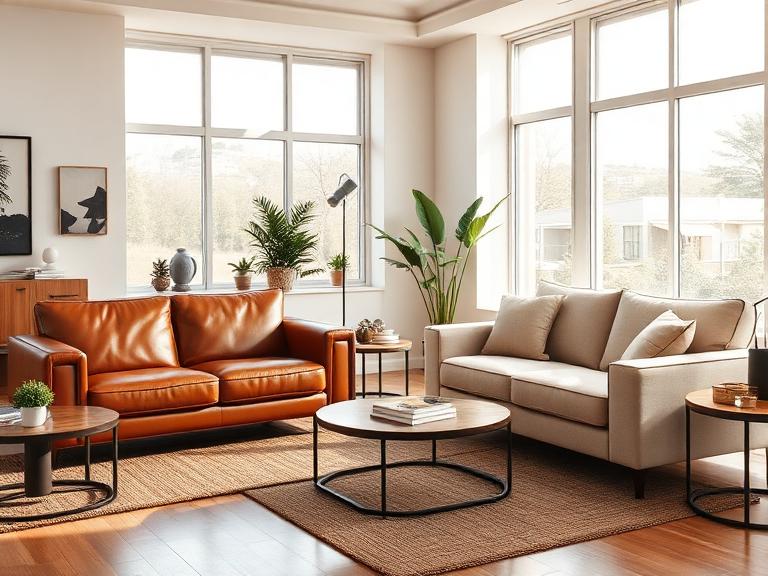
Neither leather nor fabric is universally better. Leather wins on easy wipe-clean maintenance, durability, and a classic look, but needs consistent air conditioning and regular conditioning to avoid cracking in Dubai’s climate. Fabric wins on comfort, breathability, and design variety, but needs more frequent cleaning and sun protection to hold up over time.
The right choice comes down to your household, how consistently your AC runs, and how much maintenance you’re willing to keep up with. This guide compares both materials across the factors that actually matter for a Dubai home.
Durability: which lasts longer?
Full-grain leather typically outlasts most fabric, often lasting 15 to 25 years with proper conditioning, compared to 7 to 15 years for a good quality fabric sofa. Fabric’s durability varies more widely depending on the specific weave and fiber type chosen.
Leather’s durability comes from the density of the hide itself, which resists punctures and general wear better than a woven material. High-performance synthetic fabrics have narrowed this gap significantly in recent years, sometimes matching or exceeding lower-grade leather in raw durability, even though full-grain leather still holds the edge at the top end.
Comfort: which feels better to sit on?
Fabric is generally more comfortable in warm climates, since it breathes and doesn’t trap heat against skin the way leather can. Leather can feel cool initially but warms up and can become sticky in rooms where the temperature isn’t consistently controlled.
This difference matters more in Dubai than in cooler climates, since a leather sofa in a room where the AC gets switched off during the day can feel noticeably less comfortable than the same sofa in a consistently cooled space. Fabric doesn’t have this same sensitivity to temperature swings.
Maintenance and cleaning
Leather requires less frequent cleaning, usually just a wipe with a damp cloth, but needs periodic conditioning to prevent drying and cracking. Fabric needs more regular vacuuming and occasional deep cleaning, but doesn’t require the same conditioning routine leather does.
The maintenance difference is really about frequency versus type rather than one being simply easier than the other. Leather’s upkeep is lighter but more specific, while fabric’s upkeep is more frequent but more forgiving if occasionally skipped.
Stain resistance
Leather resists most spills well, since liquid tends to sit on the surface rather than absorb immediately, making quick cleanup straightforward. Fabric’s stain resistance depends heavily on the specific material, with performance fabrics rivaling leather and untreated natural fibers falling well behind.
Unsealed or aniline leather is the exception here, since it absorbs oil-based stains more readily than finished leather. If stain resistance is the top priority and you’re leaning toward fabric, our guide to stain-resistant fabric covers which materials perform closest to leather on this specific factor.
Cost comparison
Quality fabric sofas generally start lower in price than genuine leather, making fabric the more budget-friendly option upfront. Leather typically costs more initially but can offer better long-term value given its longer lifespan when properly maintained.
Low-quality versions of either material tend to fail faster than expected, so the real cost comparison should weigh quality within each category rather than material type alone. A well-made fabric sofa can outlast a poorly made leather one, and the reverse is just as true.
How Dubai’s climate affects the decision
Dubai’s combination of intense heat, high summer humidity, and constant air conditioning affects leather and fabric differently, which makes climate one of the most important factors in this decision for local homes.
Leather performs best in rooms with stable, consistently run air conditioning, since temperature cycling between hot and cold is one of the leading causes of leather cracking here. If your household regularly switches AC off when the room is empty, fabric is generally the safer choice. Fabric, meanwhile, needs protection from direct sun exposure to avoid fading, and benefits from being cleaned regularly to prevent dust and humidity buildup in the fibers. Our guide to choosing upholstery fabric in Dubai covers climate suitability across every fabric type in more depth.
Style and design flexibility
Fabric offers far more variety in color, pattern, and texture, making it easier to match specific interior styles or update the look during a future reupholstery. Leather offers a more limited but classic aesthetic that tends to suit modern, industrial, and formal interiors particularly well.
For households that like to refresh their interior style periodically, fabric’s flexibility is a real advantage, since changing fabric during reupholstery is far more visually transformative than the more limited color range leather typically offers.
Leather vs fabric comparison table
| Factor | Leather | Fabric |
|---|---|---|
| Durability | 15 to 25 years (full-grain) | 7 to 15 years (varies by type) |
| Comfort in heat | Can feel warm without consistent AC | Breathable, stays cooler |
| Maintenance | Low frequency, needs conditioning | Higher frequency, more forgiving |
| Stain resistance | Good (better if finished) | Varies, excellent with performance fabric |
| Style variety | Limited but classic | Extensive colors and patterns |
| Upfront cost | Higher | Generally lower |
Is leather always better than fabric for a Dubai sofa?
The short answer
No. Leather wins on maintenance simplicity and classic style, but fabric wins on comfort, design flexibility, and forgiveness in rooms without perfectly consistent air conditioning.
When leather is the better choice
Leather works best in rooms with stable, consistently run AC, for households that prioritize easy wipe-clean maintenance, and where a classic, modern, or formal aesthetic fits the room.
When fabric is the better choice
Fabric is the better choice for households with inconsistent AC use, anyone prioritizing comfort and breathability, and those who want more flexibility in color and pattern, especially with children or pets in the home.
The verdict
There’s no universal winner. Match the material to your room’s AC consistency, your household’s daily use, and how much maintenance routine you’re realistically willing to keep up with, rather than choosing based on looks or trends alone.
Frequently Asked Questions
Is leather or fabric better for a sofa?
Neither is universally better. Leather wins on easy wipe-clean maintenance and a classic look, while fabric wins on comfort, breathability, and design variety. The right choice depends on your household, room conditions, and budget.
Does leather crack in Dubai’s climate?
Leather can crack in Dubai if indoor humidity is inconsistent or air conditioning cycles between hot and cold frequently. Leather performs best with stable, consistent AC and regular conditioning.
Is fabric or leather cooler to sit on in hot weather?
Fabric is generally cooler and more breathable than leather, which can feel warm or sticky in rooms without consistent air conditioning, making fabric a more comfortable choice in inconsistently cooled spaces.
Not Sure Which to Choose?
Our team can bring both leather and fabric samples to your home, walk through how your specific room and AC setup affect the decision, and help you land on the right material with confidence. Visit our sofa upholstery services page to see our full range, or reach out for a free consultation and quote.
