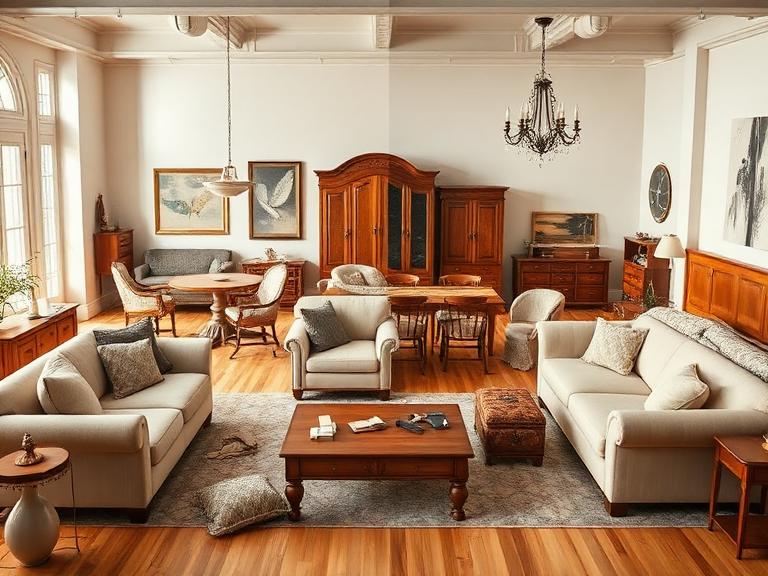
Furniture is worth restoring when the frame or core structure is solid, the materials are higher quality than what you’d find in comparable new furniture at a similar price point, or the piece holds sentimental, antique, or design value a replacement can’t replicate. The frame is the deciding factor in almost every case, since fabric, finish, and hardware can all be redone if the underlying structure is sound.
Not every worn piece deserves the investment, and not every old piece is automatically worth saving. This guide walks through the categories of furniture that consistently make sense to restore, and the situations where replacement is the more practical call.
Solid construction and material quality
Furniture built from solid wood, genuine joinery, and quality frame materials is almost always worth restoring, since these construction methods are increasingly rare in mass-produced furniture sold today. A frame like this can typically be restored multiple times over decades.
This is one of the most common reasons restoration makes financial sense even beyond sentimental value. A dining table or bed frame built decades ago, before flat-pack and particleboard construction became standard, often used materials and joinery techniques that would cost significantly more to replicate in a new piece today. Restoring furniture like this isn’t just preserving the past, it’s often getting access to a build quality that’s hard to buy new at any reasonable price.
Antique and vintage furniture
Antique and vintage furniture is generally worth restoring, both for the craftsmanship it represents and for the value it can hold or increase over time with proper care. Antique frames were typically built using joinery designed to be repaired and restored repeatedly, which makes them well suited to this kind of work.
There’s a nuance worth knowing here: restoring too much of a genuine antique can actually reduce its collector value. As a general guideline, restoring up to around 30 percent of an antique piece is considered acceptable without significantly affecting its worth, while more extensive restoration can start to be seen as reducing what’s original about the piece. If a piece has real collector or appraisal value, it’s worth getting that assessed before deciding how much restoration work to do.
Sentimental and heirloom pieces
Furniture with strong sentimental value, a piece passed down through family, tied to a specific memory or milestone, is almost always worth restoring regardless of how the cost compares to buying new. The value being preserved isn’t purely financial.
For these pieces, the usual cost-benefit calculation matters less than it does for a typical furniture decision. A frame that’s structurally sound can almost always be restored to serve its original purpose again, and for a piece with real personal meaning, that’s often reason enough on its own.
Furniture with a good frame but tired fabric or finish
A piece where the frame is completely solid but the fabric is worn, the wood finish is scratched, or the upholstery is outdated is one of the clearest and most cost-effective restoration cases. This describes a large share of furniture that people consider replacing unnecessarily.
In these situations, the cost of restoration, reupholstery, refinishing, or both, is almost always lower than replacing the entire piece, since you’re only paying for new materials and labor rather than an entirely new frame. If you’re specifically weighing this decision for an upholstered piece, our guide on whether reupholstery is worth it breaks down the cost comparison in detail.
Furniture worth restoring for design reasons
Rare, discontinued, or custom-made pieces are often worth restoring simply because an equivalent replacement isn’t readily available, regardless of cost comparison. If you love the shape, size, or design of a piece you can’t easily find again, restoration is often the only realistic path to keeping it.
This applies to outdoor furniture as much as indoor pieces. High-end teak, aluminum, or wrought iron patio sets, in particular, are frequently worth restoring rather than replacing, since quality outdoor materials are specifically built to be refinished and repaired repeatedly over the years.
When furniture is not worth restoring
Furniture generally isn’t worth restoring when the frame itself is cracked, rotted, or built from particleboard that can no longer hold fasteners securely, or when the piece was low quality to begin with and has no sentimental or design value attached to it.
In these cases, the cost of restoration starts to approach or exceed the cost of an equivalent replacement, which removes the main financial argument for restoring rather than replacing. A frame that wobbles even after every joint has been tightened, or shows soft, spongy wood, is usually signaling damage beyond what restoration alone can fix.
How much of a piece can be restored before it loses value?
For antiques specifically, restoring roughly 30 percent or less of the piece is generally considered acceptable without significantly affecting collector value. Beyond that threshold, extensive restoration can start to be viewed as compromising the piece’s originality.
This guideline matters less for non-antique furniture, where the goal is functional and aesthetic restoration rather than preserving collectible value. For a typical family piece with sentimental rather than monetary value, restoring as much as needed to bring it back to full use is usually the right call, without needing to worry about this threshold.
Is furniture age itself a reason to restore or not restore?
The short answer
No, not on its own. Age matters far less than construction quality and frame condition. Some older furniture is an excellent restoration candidate, while other older pieces were never well built to begin with.
When age works in a piece’s favor
Furniture built before mass-produced, flat-pack construction became common often used solid wood and real joinery, which tends to make older pieces stronger restoration candidates than their age alone would suggest.
When age works against a piece
Older furniture that was cheaply made to begin with, or that’s suffered water damage, pest damage, or prolonged neglect, doesn’t become a better restoration candidate simply because of its age.
The verdict
Judge the frame and materials, not the age on its own. A well-built piece from any era is worth restoring if the structure holds up, while age alone is never a reliable shortcut for that decision.
Frequently Asked Questions
What furniture is worth restoring?
Furniture is worth restoring when the frame or core structure is solid, the materials are higher quality than comparable new furniture at a similar price point, or the piece holds sentimental, antique, or design value that a replacement can’t replicate.
Is old furniture usually better quality than new furniture?
Often, yes. Furniture made before mass-produced flat-pack construction became common frequently used solid wood, real joinery, and higher-grade materials that are harder to find in budget and mid-range new furniture today.
How much of an antique can be restored without losing its value?
As a general guideline, restoring up to about 30 percent of an antique piece is considered acceptable without significantly affecting its value. Restoring beyond that threshold can start to reduce what collectors and appraisers consider original.
Not Sure If Your Piece Is Worth Restoring?
Our team can assess your furniture’s frame and materials and give you an honest recommendation, whether that’s restoration, reupholstery, or letting you know replacement makes more sense. This applies to outdoor furniture as well, where our guide on outdoor furniture repair services covers restoration for teak, aluminum, and wrought iron pieces specifically. Visit our sofa repair and upholstery services page to see our full range, or reach out for a free assessment and quote.
