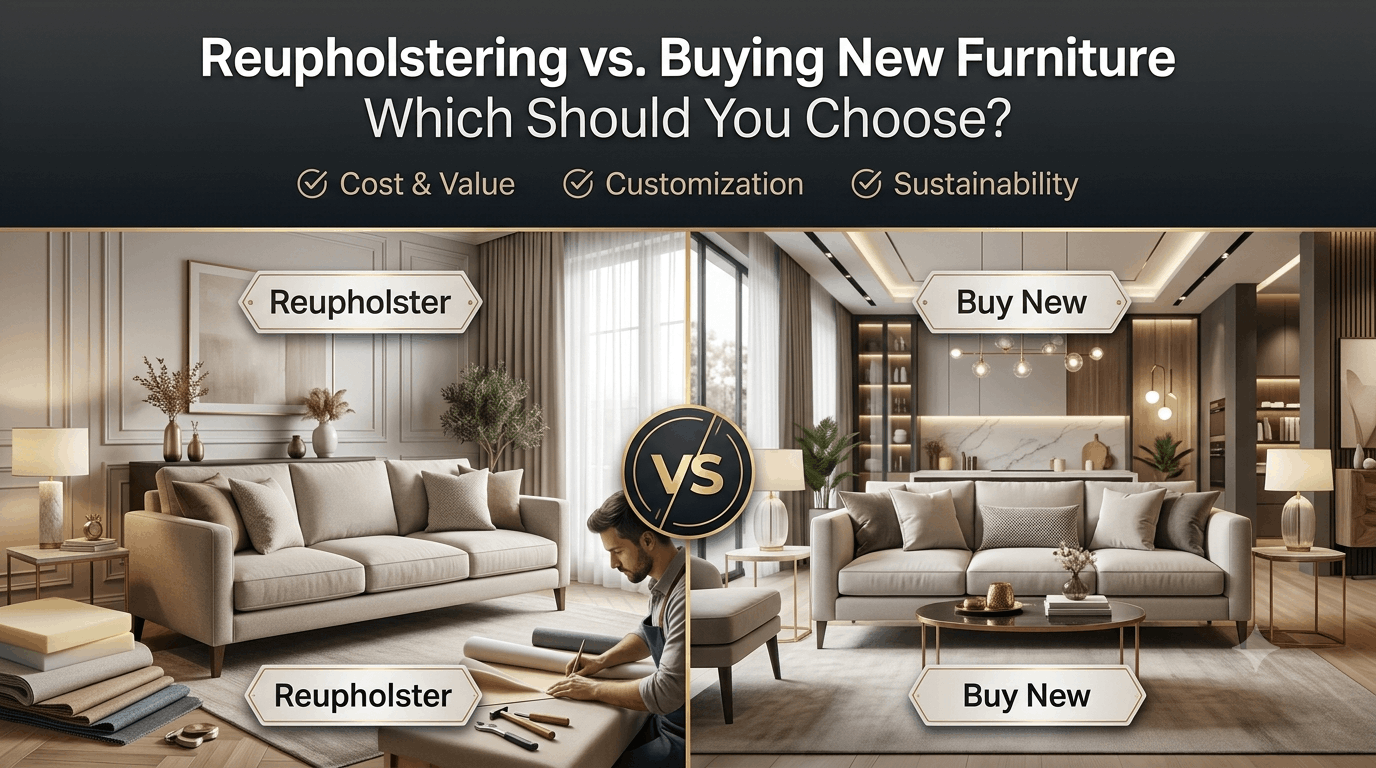
Reupholstering makes sense when you already like the shape, size, and frame quality of your furniture, and just want updated fabric and comfort. Buying new makes more sense when you want a different size or style entirely, or when a longer manufacturer warranty matters more than customization.
Cost is usually the first factor people think about, and we’ve covered that comparison in detail in our guide on whether reupholstery is worth it. This guide looks at the other factors that matter just as much: customization, warranty, fit, timeline, and long-term value.
Customization: what can you actually change?
Reupholstering gives you full control over fabric, color, texture, and finishing details like piping or tufting, but keeps the existing frame shape and size. Buying new gives you access to entirely new shapes, modular configurations, and current design trends that reupholstery can’t change.
If you love your sofa’s proportions and just want a different look, reupholstery covers that completely. If you want a different silhouette altogether, a sectional instead of a standard sofa, for example, that requires a new frame, which only buying new can provide.
Warranty: how coverage differs
New furniture typically comes with an 8 to 10 year manufacturer warranty covering frame and structural defects. Reupholstery work usually carries a shorter workmanship warranty, often 1 to 2 years, covering the materials and labor of the specific job performed.
This gap exists because a reupholstery warranty only covers the new work done, not the age or prior condition of the frame itself. A frame that’s already 15 years old doesn’t come with the same long-term assurance a brand new frame does, even after quality reupholstery work.
Fit and sizing: does the piece already work in your space?
If your current furniture already fits your room’s layout and proportions well, reupholstering keeps that fit intact while refreshing everything else. Buying new introduces sizing risk, since a piece that looks right in a showroom or online listing doesn’t always fit the same way in your actual space.
This matters more in apartments and villas with unusual layouts or built-in space constraints, where finding a new piece that fits exactly right can take considerably more searching than expected. Reupholstering sidesteps that problem entirely, since the dimensions never change.
Timeline: how long does each option take?
Reupholstering a single piece typically takes three to seven working days from pickup to delivery. Buying new furniture can take longer overall once you factor in shopping, comparing options, and delivery lead times, especially for custom or made-to-order pieces.
In-stock new furniture can sometimes arrive faster than a reupholstery job, particularly for simple, mass-produced pieces. Custom or imported new furniture, on the other hand, often takes weeks or months to arrive, which can make reupholstering the faster option overall.
Style and design trends: new vs restored
Buying new gives you direct access to current design trends, modern silhouettes, and manufacturer collections that didn’t exist when your current piece was made. Reupholstering lets you update the look through fabric and color, but the underlying shape stays the same as your original piece.
For most households, updating fabric alone is enough to feel like a genuine refresh. For those chasing a specific new silhouette or structural trend, like a low-profile modern frame replacing a traditional one, buying new is the only way to get there.
Environmental impact
Reupholstering is generally the more sustainable option, since it reuses an existing frame rather than requiring new raw materials, manufacturing, and shipping. Buying new furniture carries a larger environmental footprint from production through delivery, even when the new piece is well made.
Furniture disposal also contributes directly to landfill waste, and reupholstering avoids that outcome entirely by extending what you already own rather than discarding it. For households weighing sustainability alongside style, this factor often tips the decision toward reupholstering.
Resale and long-term value
Well-built furniture with a solid frame tends to hold or even increase in value after quality reupholstery, particularly for antique or imported hardwood pieces. Mass-produced new furniture typically depreciates quickly, similar to how a new car loses value the moment it leaves the showroom.
This is part of why older, solid-frame furniture is often a better long-term investment through reupholstery than through replacement. The frame itself, not the fabric, is usually where the real value sits.
Is it always better to reupholster than buy new?
The short answer
No. Reupholstering wins on cost, sustainability, and preserving a good fit, but buying new wins when you want a different size, shape, current design trends, or a longer manufacturer warranty.
When buying new makes more sense
Buying new is the better choice when you want a different furniture shape or size, need a longer structural warranty, or your current piece has a damaged frame that reupholstery can’t fix.
When reupholstering makes more sense
Reupholstering is the better choice when your current piece has a solid frame, fits your space well, and you mainly want updated fabric, comfort, or color rather than a different shape entirely.
The verdict
Neither option is universally better. The right call depends on whether you’re happy with your furniture’s shape and fit, or whether you’re looking for something genuinely different. For more on what the process involves once you decide, our guide on what furniture reupholstery includes walks through each step, and our piece on upholstery vs reupholstery clears up the related terminology if you’re comparing quotes from different providers.
Frequently Asked Questions
Should I reupholster my furniture or buy new?
Reupholster if your current piece has a solid frame that fits your space well and you’re happy with its shape and size. Buy new if you want a different size, shape, or the newer manufacturer warranties that reupholstery can’t offer.
Does new furniture come with a better warranty than reupholstered furniture?
Usually, yes. New furniture often comes with 8 to 10 year manufacturer warranties, while reupholstery work typically carries a 1 to 2 year workmanship warranty on the materials and labor performed.
Is reupholstering more sustainable than buying new furniture?
Yes. Reupholstering reuses an existing frame, which reduces demand for new raw materials and keeps usable furniture out of landfills, making it a more sustainable choice than buying new in most cases.
Get Help Deciding
Not sure which option fits your situation? Our team can assess your furniture’s frame, talk through fabric and timeline, and give you an honest recommendation, even if that means telling you buying new is the better call. Visit our sofa upholstery services page to see our full range of options, or reach out for a free assessment and quote.
