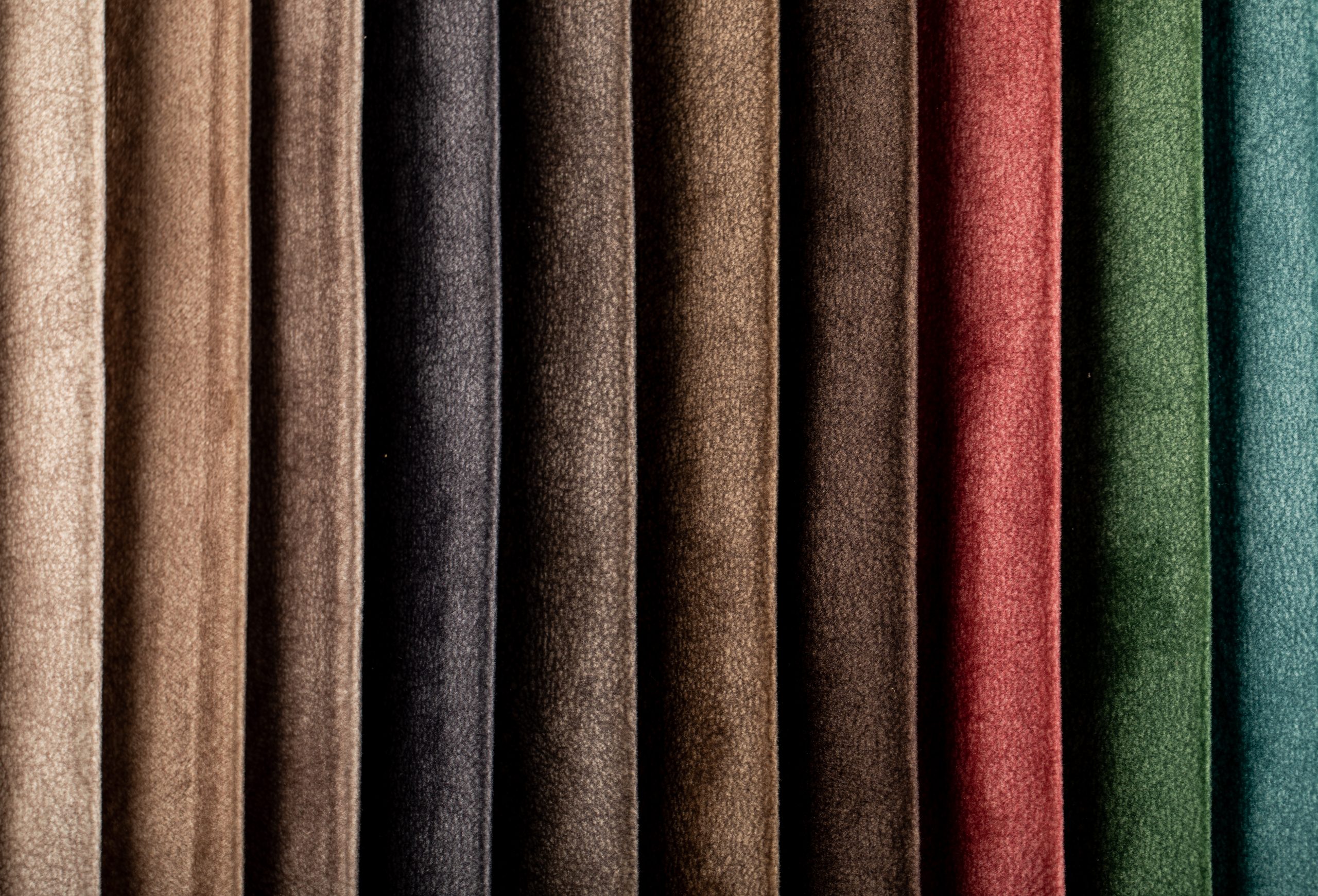
If you have ever browsed fabric for a sofa reupholstery project and felt surprised by the price, you are not alone. Good upholstery fabric costs significantly more than curtain fabric, clothing fabric or general craft material — sometimes several times more per metre. The reasons are real and specific. This post explains exactly what drives the cost of upholstery fabric and how to assess whether a fabric is worth its price tag.
1. The Manufacturing Process Is More Complex
Upholstery fabric is engineered to perform under sustained mechanical stress in a way that most other textiles are not. A curtain fabric only needs to hang and look good. An upholstery fabric needs to resist thousands of hours of contact, friction, compression and extension — the repeated action of sitting and standing, leaning and shifting — without breaking down, pilling, or losing its appearance.
Achieving this requires tighter weave constructions, higher thread counts, stronger yarn twists, and in many cases additional surface treatments or backing layers. All of these add manufacturing time and material cost. The looms used to produce heavy upholstery fabrics are slower, larger and more expensive to run than standard textile looms. The result is a fabric that costs more to make — and that cost is passed through to the price.
2. The Durability Testing Adds Cost
Upholstery fabrics sold through reputable trade channels are tested to the Martindale rub count standard — a mechanical test that abrades the fabric thousands of times to determine when it shows wear. Running these tests, certifying the results and maintaining the documented standards adds cost that commodity fabrics never incur.
When you buy a fabric rated at 50,000 Martindale rubs, you are paying not just for the fabric but for the verified guarantee of its performance. A cheap fabric with no rub count data may cost half as much per metre but fail in two years under normal use — making it far more expensive in the long run.
3. Premium Raw Materials Cost More
The raw material composition directly determines cost. Natural fibres — linen, cotton, wool — cost more than synthetic fibres because they require agricultural cultivation and more processing. Genuine leather costs considerably more than polyester because it is a premium animal product that requires tanning and finishing over many weeks. High-performance synthetic fibres — solution-dyed acrylic for outdoor use, engineered microfibre, Crypton performance fabric — are more expensive than standard polyester because they are manufactured to specific technical specifications.
When you choose a fabric described as “100% Belgian linen” or “Sunbrella solution-dyed acrylic,” you are paying for specific raw materials chosen for their performance properties, not generic commodity textiles.
4. Pattern Repeats Generate Fabric Waste
Any fabric with a visible pattern — a geometric, a floral, a stripe — must be pattern-matched across the panels of a sofa. This means the upholsterer must align the pattern across each section, which requires cutting fabric at specific intervals regardless of where useful material falls. A sofa covered in a fabric with a large pattern repeat may use 30–40% more fabric than the same sofa covered in a plain fabric, purely due to the alignment requirements.
This is not waste in the careless sense — it is a structural requirement of quality upholstery work. But it means the actual fabric cost for a patterned sofa is substantially higher than the raw price per metre suggests. When you are quoted a higher material cost for a patterned fabric, this is one reason why.
5. Width and Yield Affect Cost Per Project
Upholstery fabrics are typically sold in widths of 137cm or 140cm. Some premium designer fabrics come in narrower widths — sometimes as little as 110cm — which means more fabric is needed to cover the same piece. Narrower fabric costs more per metre to use because the yield (usable fabric per metre) is lower.
Additionally, the construction of many sofas requires bias-cut sections or angled panels where cutting against the grain generates offcuts that cannot be reused. The total fabric ordered for a project always exceeds the calculated minimum by a margin that accounts for these realities — typically 15–25% additional fabric is ordered to cover wastage.
6. Designer and Trade Fabrics Carry a Design Premium
Fabrics sold through interior design trade channels — from companies like Kvadrat, Dedar, Zoffany, Designers Guild or similar — carry a significant design premium on top of the manufacturing cost. These companies invest in original design, limited colourways, exclusive patterns and design-led marketing. You are paying for the design intellectual property as much as the physical fabric.
Trade-channel fabrics are not necessarily better performers than well-made commercial fabrics sold at lower price points — but they are differentiated by design exclusivity and brand positioning. If the aesthetic is important to a high-end project, the premium may be justified. If performance is the priority, an excellent high-specification commercial fabric at a lower price point may serve better.
7. Small-Volume Purchasing Increases Unit Cost
When an upholstery workshop buys fabric for a single residential sofa project, they are typically buying two to seven metres from a retail or semi-wholesale supplier. At that volume, the price per metre is at or near retail. Mills and major distributors sell at significantly lower per-metre prices to buyers who take full rolls (typically 30–50 metres). The price you see quoted for a one-sofa project reflects small-volume purchasing, not bulk pricing.
What Is a Reasonable Price for Good Upholstery Fabric?
As a practical guide for the Dubai and UAE market in 2026:
- Entry-level polyester / synthetic blend: AED 25–60 per metre — functional but with lower durability ratings
- Mid-range performance fabric: AED 60–120 per metre — good rub count, reasonable durability, wide colour range
- Premium fabric (performance velvet, quality microfibre, Aquaclean): AED 120–220 per metre
- Genuine leather (top-grain): AED 180–350+ per metre depending on grade and origin
- Designer / trade exclusive fabric: AED 250–600+ per metre
For most residential sofa reupholstery projects in Dubai, a good mid-range fabric at AED 70–130 per metre will deliver excellent performance and longevity. Spending significantly less risks false economy — a cheap fabric on a good sofa frame will wear out and need replacing again within a few years. For guidance on choosing the right fabric for your specific sofa and household, see our comprehensive fabric selection guide.
Is the Cost Worth It?
When you factor in the full cost of a reupholstery project — fabric, foam, labour and delivery — and compare it to buying a new sofa of equivalent quality, reupholstery is almost always more economical for a good-quality original frame. Even at premium fabric prices, keeping a solid sofa frame and replacing the covering costs less than buying a comparable new piece. The fabric cost is real but it is the smaller part of the total value equation. The larger consideration is the quality of the frame you are preserving and the lifespan of the work done. Our sofa upholstery service includes fabric consultation so you can see and feel options before committing.
